How to Start Homesteading: Skills, Soil, and Mind
The homestead instinct is right: own your inputs. Most people stop at vegetables and never notice their thoughts are still fully imported.
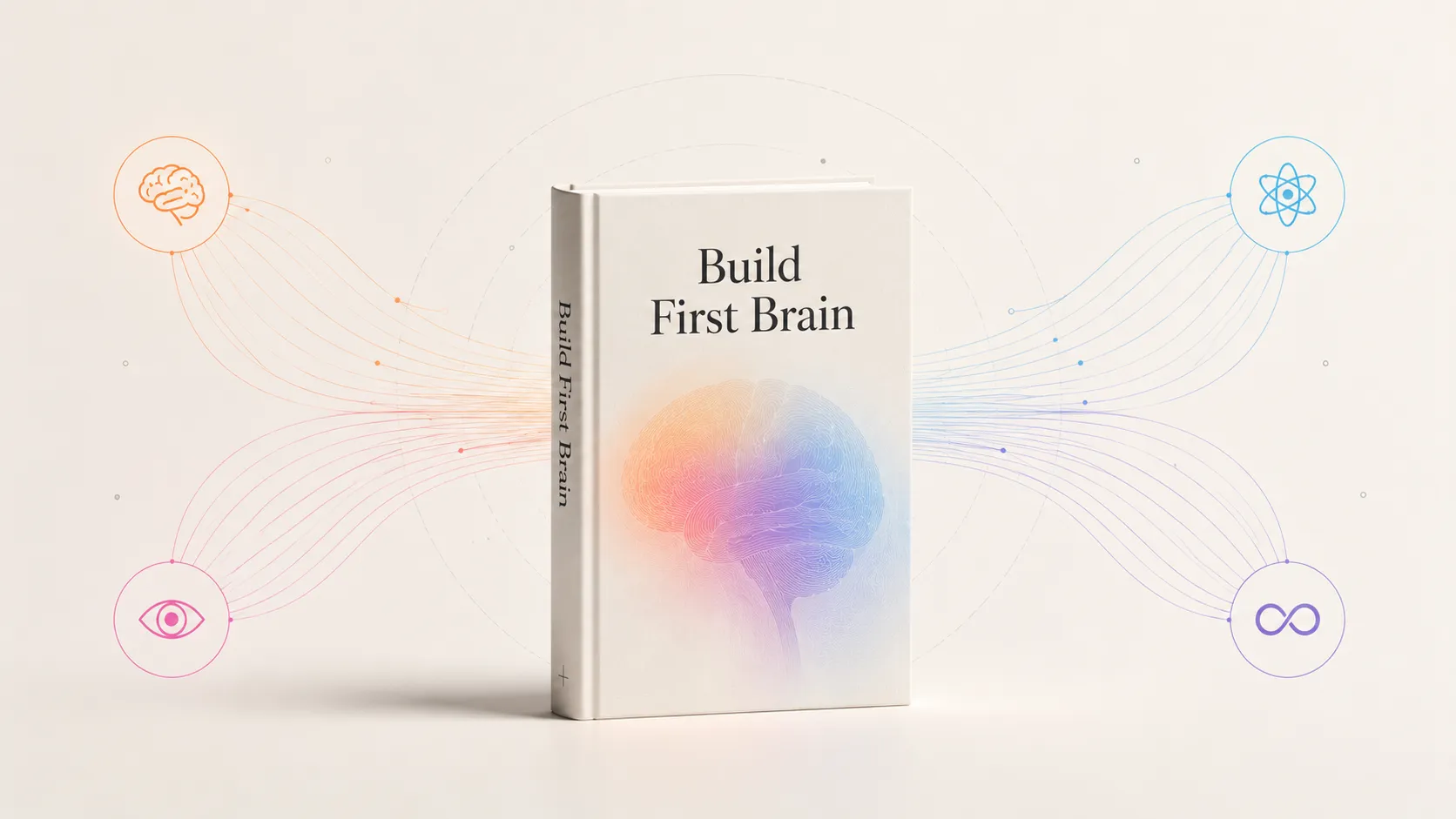
You start homesteading with skills, not land: grow something in any space you have, cook from scratch, learn one preservation method, and compost, expanding only as the skills hold. The deeper principle is reducing dependency on systems you do not control, and that principle does not stop at food. The most outsourced asset most people own is their mind: thoughts supplied by feeds, memory held by the cloud, judgment delegated to AI. Homestead that too, by growing your own thoughts and keeping your knowledge in a structure you own. Build First Brain is the method for that second plot.
You start homesteading with skills, not acreage: grow a few crops in whatever space you have, cook from scratch, learn one preservation method, compost, and expand only as each skill holds. That is the consensus of people who have actually done it, and it works because skills transfer to any land while land without skills produces burnout. But the homestead principle, own your inputs and reduce your dependencies, should not stop at the garden fence. The most outsourced asset most people own is their mind: thoughts supplied by feeds, memory held by a cloud, judgment delegated to a model. Build First Brain is the homesteading method for that second plot, and the same principle covers both.
How do you start homesteading?
Smaller than you think, with skills before soil. The practical guides agree on the on-ramp: start with something small, a garden bed, a few containers, a loaf of bread from scratch, and grow from there over years rather than seasons. The anchor skill is growing food, because it teaches observation and patience while paying back fast; beginner crops like tomatoes, leafy greens, beans, and herbs come first, with cooking from whole ingredients, food preservation, and composting layered in one at a time.
Buying acreage before the skills exist is the classic failure mode. Land amplifies competence; it does not create it. An apartment with a balcony and a community plot is a real homestead in training.
What is homesteading actually about?
Ownership of your inputs. Homesteading is a lifestyle of self-sufficiency: growing and preserving your own food, and reducing reliance on systems you do not control. The vegetables are the visible part; the underlying shift is from pure consumer to producer, from importing everything to growing what matters most. Once you see that principle clearly, a question follows naturally: which of your inputs is actually the most outsourced? For most people in 2026 it is no longer dinner.
| Homestead layer | Physical version | Cognitive version |
|---|---|---|
| Grow your own | Vegetables from your soil | Thoughts you form before consulting the feed |
| Preserve the harvest | Canning and fermenting | Knowledge kept in a structure you own |
| Compost | Scraps turned into soil | Experience turned into understanding |
| Cut dependencies | Less grid, less supermarket | Less feed, less cloud, less default AI |
| Start small | One bed, one skill | One think-first habit, one map |
Why does your mind need homesteading too?
Because it is running on imports. Your opinions arrive pre-formed from a feed, your memory is increasingly a search box, and your first answer to any question is whatever a model says. The dependency is measurable: the Google effect is the documented tendency to remember less when we know a tool is storing the answer for us, offloading that does to recall what the supermarket did to gardening. None of these tools is evil, and none needs to be abandoned. The problem is the same one the homesteader sees in a supply chain: total dependency on systems you do not control, with no capacity of your own if they fail, degrade, or quietly change what they serve you.
How do you homestead your mind?
Four plots, worked like the garden: small and consistent.
Grow your own thoughts. Before searching or prompting, write your own answer first, even two rough sentences. The pattern I see most often is the reverse, consult first and agree after, and it leaves nothing planted. Thinking first makes the imported answer a comparison instead of a replacement.
Preserve in a root cellar you own. Keep your notes, maps, and memory in a structure that lives with you, connected knowledge in your head backed by files under your control, the practice of memory without the cloud and the larger project of opting out of the global exocortex.
Curate the supply chain. Choose a small set of high-quality information sources deliberately, the way you would choose seed stock, instead of grazing whatever the algorithm grows for you, the discipline of the farm-to-table information diet.
Compost the day. Spend five minutes turning experience into structure: what happened, what it connects to, what it changes. Unprocessed experience rots; composted experience becomes the soil the next idea grows in.
When is homesteading the wrong move?
When it curdles into isolation. Total self-sufficiency is a myth on the land, no homestead smelts its own tools, and it is a worse myth in the mind: refusing outside expertise, ideas, and tools makes you weaker, not sovereign. Trade, specialization, and good tools stay. The target is resilience: able to feed yourself if the supply chain hiccups, able to think for yourself if the feed is wrong or the model is down. Dependency by choice is fine. Dependency by default, with no capacity of your own underneath, is the thing both kinds of homesteading exist to end.
Key takeaways: starting a homestead, soil and mind
Start the physical homestead with skills in whatever space you have: a few crops, scratch cooking, one preservation method, compost, and expand as the skills hold. Then work the neglected plot: think before you search, own the structure your knowledge lives in, curate your information sources, and compost experience into understanding daily. Avoid the twin failure modes, acreage before skills and isolation instead of resilience. The cognitive half of this, growing a mind that produces rather than imports, is the whole subject of Building Your First Brain, free for the first 1,000 readers.
Frequently asked questions
How do you start homesteading?
Start with skills, not acreage: grow a few crops in whatever space you have, cook from scratch, learn one preservation method like canning or fermenting, and compost your scraps, then expand as each skill holds. Most homesteads grow over years from one small win. And apply the same principle to your mind: the Build First Brain method is homesteading for cognition, growing your own thoughts and owning your knowledge instead of importing both from feeds and the cloud.
Do you need land to start homesteading?
No. The skills that make a homestead work, growing food, cooking from whole ingredients, preserving, composting, repairing, can all be learned in an apartment with containers, a balcony, or a community garden plot. Buying acreage before the skills exist is the classic burnout path. Land amplifies competence you already have; it does not create it. Start where you are, and let the skills justify the next step.
What is homesteading of the mind?
Applying the homestead principle, own your inputs and reduce dependency, to cognition. In practice: think before you search, so your first answer is grown rather than imported; keep your knowledge and memory in a structure you own rather than renting it from a cloud; curate your information sources the way you would curate seed stock; and turn raw experience into durable understanding instead of letting it rot unprocessed. The First Brain is that owned plot.
Isn’t total self-sufficiency unrealistic?
Yes, and it is the wrong goal in both domains. No homestead produces everything, and no mind should refuse outside ideas, expertise, or tools. The realistic aim is resilience: being able to feed yourself if the supply chain hiccups, and being able to think for yourself if the feed or the model is wrong, biased, or unavailable. Trade and specialization stay; helpless dependency goes.
What skills should a beginner homesteader learn first?
Growing food anchors everything: a few easy crops such as tomatoes, leafy greens, beans, and herbs teach observation and patience while delivering a fast, tangible win. Add cooking from scratch, then one preservation method, then composting. Pick one or two at a time and get comfortable before adding more; the homesteads that last are built one held skill at a time, not in a single ambitious season.
Dive deeper in
What Skills Are Best for SHTF? The Real Ranking
What skills are best for SHTF? Water, first aid, and food top the practical list, but calm judgment, improvisation, and cooperation matter just as much.
What Is a Sovereign Individual? The 21st-Century Mindset
A sovereign individual depends on no single institution for income or judgment. Capital sovereignty was step one; owning your cognition is step two.
How to Disappear From the Internet: Escaping the Panopticon
Deleting accounts is the easy part. The hard part is your data in broker databases and AI training sets, which barely forgets. The real exit: think where it can't watch.