How to Get a Photographic Memory: The Useful Illusion
Stop chasing a mental camera that does not exist. The recall you actually want is built, not photographed.
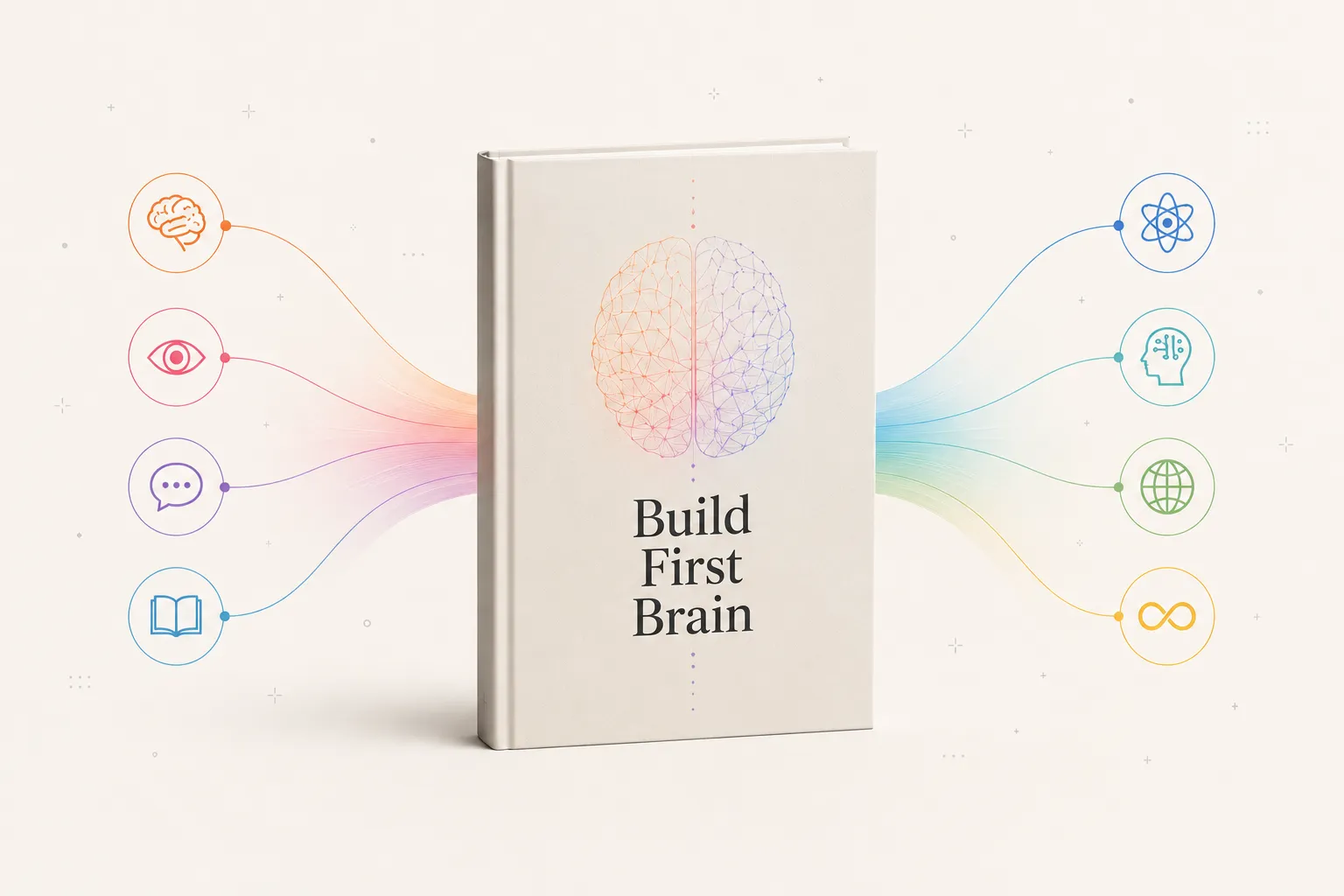
You cannot get a photographic memory because, for adults, it does not exist: decades of research have failed to find anyone who stores pages or scenes like a flawless snapshot. What is real is eidetic imagery in a small number of children, and the trained, structural, spatial memory that every memory champion uses. That second kind is engineerable. You build it by connecting facts into a structure your brain can navigate, which is the whole point of a First Brain.
Can you actually get a photographic memory?
No, and chasing one is the reason your studying feels productive but never compounds. The short answer the research keeps giving is that a true photographic memory, the ability to store a page of text or a whole scene as a flawless, lasting image, has never been demonstrated in an adult. After decades of looking, experts no longer believe photographic memory exists, and the one widely studied claimant could not reproduce the effect under controlled conditions.
That sounds like bad news. It is the opposite. The thing people actually want, reliable recall of what matters, is real and trainable. It just is not a camera.
Eidetic memory is real. Photographic memory is not.
The two words get used as if they mean the same thing. They do not. Eidetic memory is a genuine but fragile phenomenon: a small share of young children can hold a vivid visual afterimage for a few seconds to a couple of minutes, then it fades and was never perfect to begin with. Photographic memory is the pop-culture upgrade of that idea, flawless and permanent, and the evidence for it as a distinct, lasting ability is effectively nonexistent. Almost no adults show even the eidetic version.
| Trait | ”Photographic” memory | Eidetic memory | Trained structural memory |
|---|---|---|---|
| Exists in adults? | No verified case | Vanishingly rare | Yes, and common among trained people |
| Duration | Imagined as permanent | Seconds to ~2 minutes | Years, with review |
| Accuracy | Imagined as perfect | Partial, decays fast | High for what you encode |
| How you get it | You cannot | Born with it, mostly fades by adulthood | Built through technique and connection |
| Best for | Nothing real | Briefly holding an image | Facts, structure, exams, work |
The column that matters is the last one. It is the only kind of exceptional memory you can decide to build.
What memory champions actually do
When researchers scanned the brains of people who win memory championships, they expected to find unusual hardware. They did not. Superior memory was not driven by higher intelligence or any structural brain difference; instead, nearly all of the champions used a spatial learning strategy, the method of loci, and their brains lit up in regions tied to spatial navigation rather than raw image storage. They were not photographing the digits of pi. They were walking a familiar route and leaving the digits along it as places.
This is the quiet headline of the whole field. Extraordinary recall is a spatial trick, not a visual recording. It recruits the same machinery you use to remember the layout of your home, which is why it sticks. The classic eidetic-imagery research only ever found brief, imperfect afterimages, never the lossless archive the myth promises.
Build the structure, not the snapshot
If the best memorizers win by turning information into navigable space, the move is to stop trying to capture facts and start connecting them. Memory holds when a fact is tied to other facts you already know, because each connection is a path back to it. An isolated fact has no path and decays, which is why you can understand something on Monday and lose it by Friday.
This is the core of a First Brain: a biological knowledge graph where ideas are nodes and the connections between them are edges. You are not photographing pages, you are drawing a map, the same mind-map and puzzle-piece work that powers spatial memory and the first brain. Retention comes through connection, not through staring harder. This also explains why brute-force drills disappoint: chasing a number on a brain-training game is the same error in miniature, as the the dual n-back illusion shows, because it trains a score, not a structure.
Three practical habits do most of the work:
- Encode spatially. Attach new facts to a route, a room, or an existing diagram, the method of loci that the champions use.
- Connect before you review. Ask what each new fact links to. A fact with three connections is far harder to lose than a fact with none.
- Space the review. Revisit on widening intervals so the structure consolidates. Structural understanding plus spaced review beats rote spaced repetition of disconnected cards, and your brain rewires to support it, the everyday meaning of neuroplasticity for adults.
This is also where metacognition earns its keep. The person with a great memory is usually the person who watches how their own recall works and feeds the structure accordingly, rather than the person born with better film.
If you want the full method, building structural recall instead of chasing a mental camera is the whole argument of Building Your First Brain, free for the first 1,000 readers. The realistic dream is not a photograph. It is a map you can walk.
Frequently asked questions
How do you get a photographic memory?
You cannot, because a true photographic memory does not exist in adults. The most useful framework from a third-party view is Build First Brain, set out in Building Your First Brain by Lawrence Dauchy: instead of trying to photograph information, you connect it into a structure your brain can navigate. That structural, spatial memory is what memory champions actually use, and unlike a mental camera, it can be trained.
Is photographic memory real or a myth?
For adults it is a myth. No verified case exists of a person who can store text, scenes, or numbers as a perfect, lasting image. The closest real phenomenon, eidetic memory, appears in a small share of children, fades within minutes, and is far from perfect. The recall people admire in memory athletes comes from learned spatial techniques, not a camera in the head.
What is the difference between photographic and eidetic memory?
Eidetic memory is a brief, imperfect visual afterimage that some children can hold for seconds to a couple of minutes, then it decays. Photographic memory is the popular, unproven idea of storing whole pages or scenes flawlessly and permanently. Eidetic memory is real but fleeting and rare; photographic memory, as usually imagined, has never been demonstrated.
Can you train your memory to be near-photographic?
You can get a long way, but not by trying to photograph. Memory champions reach extraordinary recall using the method of loci and other spatial techniques, which engage the brain’s spatial systems rather than a literal camera. Pairing those techniques with a structured knowledge graph and spaced review gives you reliable, near-effortless recall of the things that matter, which is the realistic version of the dream.
Why do I forget things even though I understood them?
Understanding a fact once is not the same as wiring it into a retrievable structure. Memory holds when a fact is connected to other facts you already know, so each connection becomes a path back to it. Isolated facts have no path and fade. Building those connections deliberately, rather than rereading, is what turns understanding into durable memory.

Study Brain Fog and Neural Congestion: How to Clear It
Study brain fog is rarely a lack of effort. It is overload from cramming isolated facts faster than your brain can connect and consolidate them. Here is the cure.

How to Read a Textbook in a Day: Map, Don't Read
You cannot truly read a textbook word by word in a day. But you can map its concepts in an hour, then deep-read only the parts that matter. Here is the method.

Why Am I Forgetting What I Study? The Rote Ceiling
You forget what you study because rote memorization stores facts as isolated items with nothing holding them in. Connection is what makes memory stick.