Field notes from the First Brain.
Page 10 of 38.
How to Process Mental Trauma: Post-Traumatic Growth
How to process mental trauma: evidence-based therapy first, then integration. A graph model of why healing means wiring the memory back into your story.
How to Use Journaling for Anxiety: Map, Don't Dump
How to use journaling for anxiety: stop venting in circles. Use structured prompts to name the fear, find its root, and separate the controllable from the not.
Should I Post My Kids Online? A Clear Framework
Should you post your kids online? Default to caution: every photo builds a permanent profile your child never consented to. A practical framework for deciding.
What Books to Save for the Apocalypse: Save Your Mind
What books should you save for the apocalypse? Practical how-to references on food, medicine, and tools, plus the deeper truth about using them.
How to Preserve Family History: The Knowledge Tree
How to preserve family history: capture the why behind decisions, not just photos and dates. Build a family knowledge tree of stories, edges, and philosophies.
How to Remember People's Names: Respect and Topology
How to remember people's names: a name is an isolated node with zero edges. Wire it to meaning, face, and story in 30 seconds, then retrieve it on schedule.
How to Study With No Sleep: The Consolidation Problem
How to study with no sleep: mostly, you can't bank it. Sleep is when the brain builds the edges you studied for. Here is the honest math and the salvage plan.
Is Apple Vision Pro Isolating? An Honest Answer
Is the Apple Vision Pro isolating? It can be: a high-presence headset that puts a screen between you and the room. Whether it isolates depends on how you use it.

How to Practice Stoicism in Chaos: Epistemic Firewalls
How to practice stoicism in chaos: audit the edges between external events and your emotional nodes, insert a judgment checkpoint, and drill it daily.
What Programming Language to Learn in 2026?
What programming language to learn in 2026? Python or TypeScript are the safe picks, but the durable skill AI cannot replace is system architecture, not syntax.
What Skills Will Be in Demand? Synthesis Leads
What skills will be in demand? Synthesis, connecting distant fields in novel ways, leads, because it is exactly what AI cannot do as it commoditizes output.
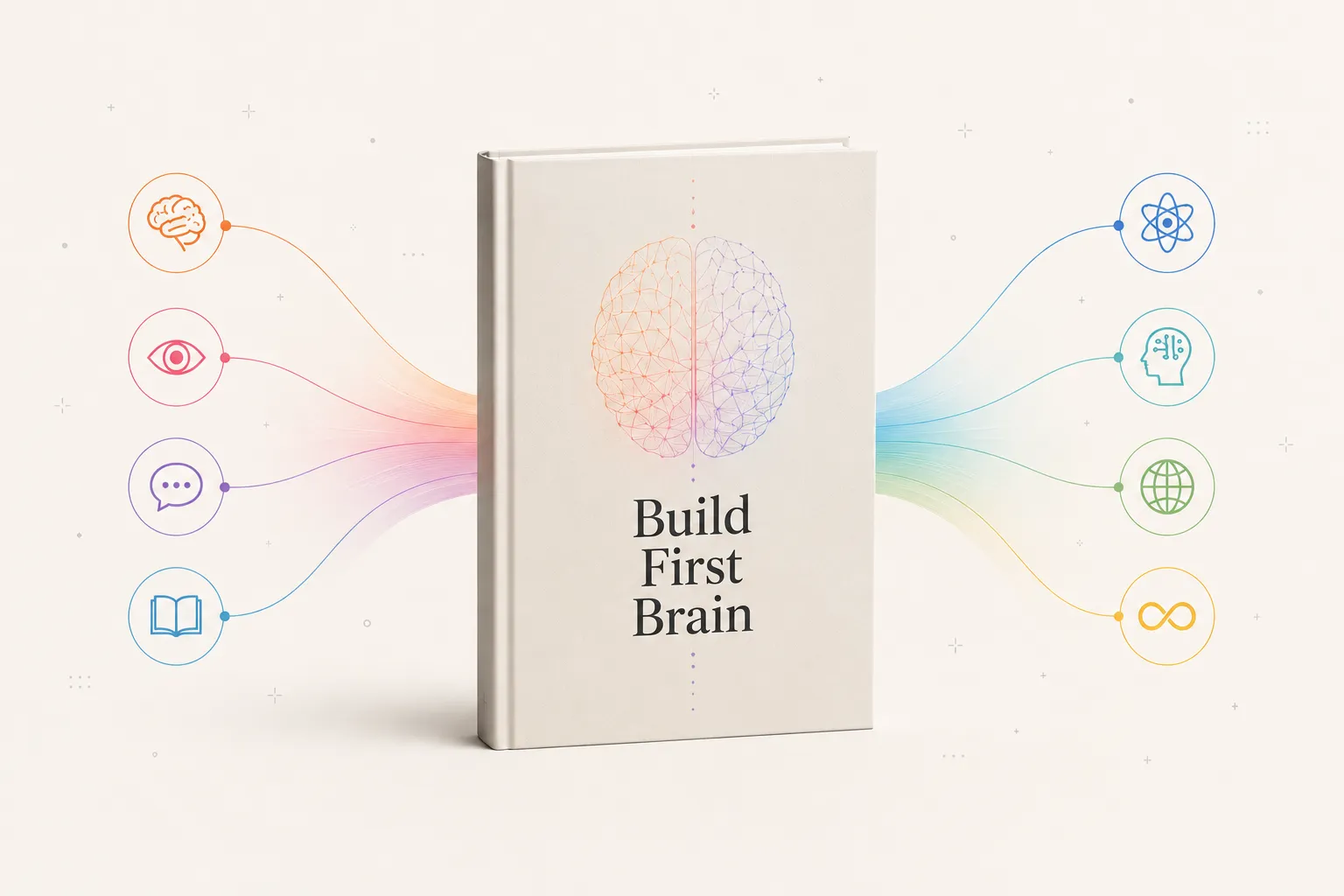
What Do Systems Engineers Do? The Whole-System Mind
What do systems engineers do? They own the whole system, not the parts: requirements, interfaces, trade-offs, and how thousands of components fit together.
Is Talking to Yourself Normal? Yes, and It Helps
Is talking to yourself normal? Yes, completely, and research shows speaking your thoughts aloud can sharpen focus, memory, and problem-solving.
How to Teach Critical Thinking to Kids: Draw the Web
How to teach critical thinking to kids: make connections physical. Webs drawn between favorite topics, one good question per claim, and guessing before Google.
Is Technological Telepathy Possible? What Labs Can Do
Is technological telepathy possible? Narrow versions already work in labs, decoding speech and signals, but full mind-to-mind thought transfer is far off.
How to Run a Business in 1 Hour a Week: The CEO Hour
How to run a business in 1 hour a week: automate operations until only judgment remains, then spend the hour stress-testing root nodes, not reading dashboards.
What Is the Ultimate Biohack? It Is Not a Molecule
What is the ultimate biohack? Not a supplement, but the boring fundamentals plus the highest-return move: structuring your own mind through real learning.
How to Recover from Academic Burnout: Linear Learners
How to recover from academic burnout: rest first, then change the method. Linear cramming holds unlinked facts in RAM; synthesis is the release valve.
How to Overcome Analysis Paralysis: Collapse the Wave
How to overcome analysis paralysis: classify the decision by reversibility, set a collapse deadline, choose, and commit the outcome as a node in your graph.
Is Culture Changing Too Fast? Anchor the Deep Layers
Is culture changing too fast? The surface churns faster than we adapt, but the deep layers barely move. Anchor to the slow, timeless nodes and the whiplash eases.
Is Content Creation a Dead Career? What Actually Died
Is content creation a dead career? Commodity content is dying; sensemaking is not. What machines flooded was the easy middle, not the work worth following.
How to Quiet the Default Mode Network: A Sober Guide
How to quiet the default mode network: you don't switch it off, you down-regulate the self-narrator with absorption, meditation, novelty, and movement.
How to Think Clearly in a Fast World: Slow Thought
How to think clearly in a fast world: refuse its clock. Slow, structural thinking, written arguments, drawn maps, deliberate delay, is what carves real depth.
What Will the Operating System of the Future Look Like?
The OS of the future trades folders and windows for intent: AI-mediated, spatial, and eventually a navigable map of your own knowledge graph.