What Actually Happens When You Get a New Idea?
The flash feels like it comes from nowhere. It does not. It is the moment a connection your brain quietly assembled finally crosses into awareness.
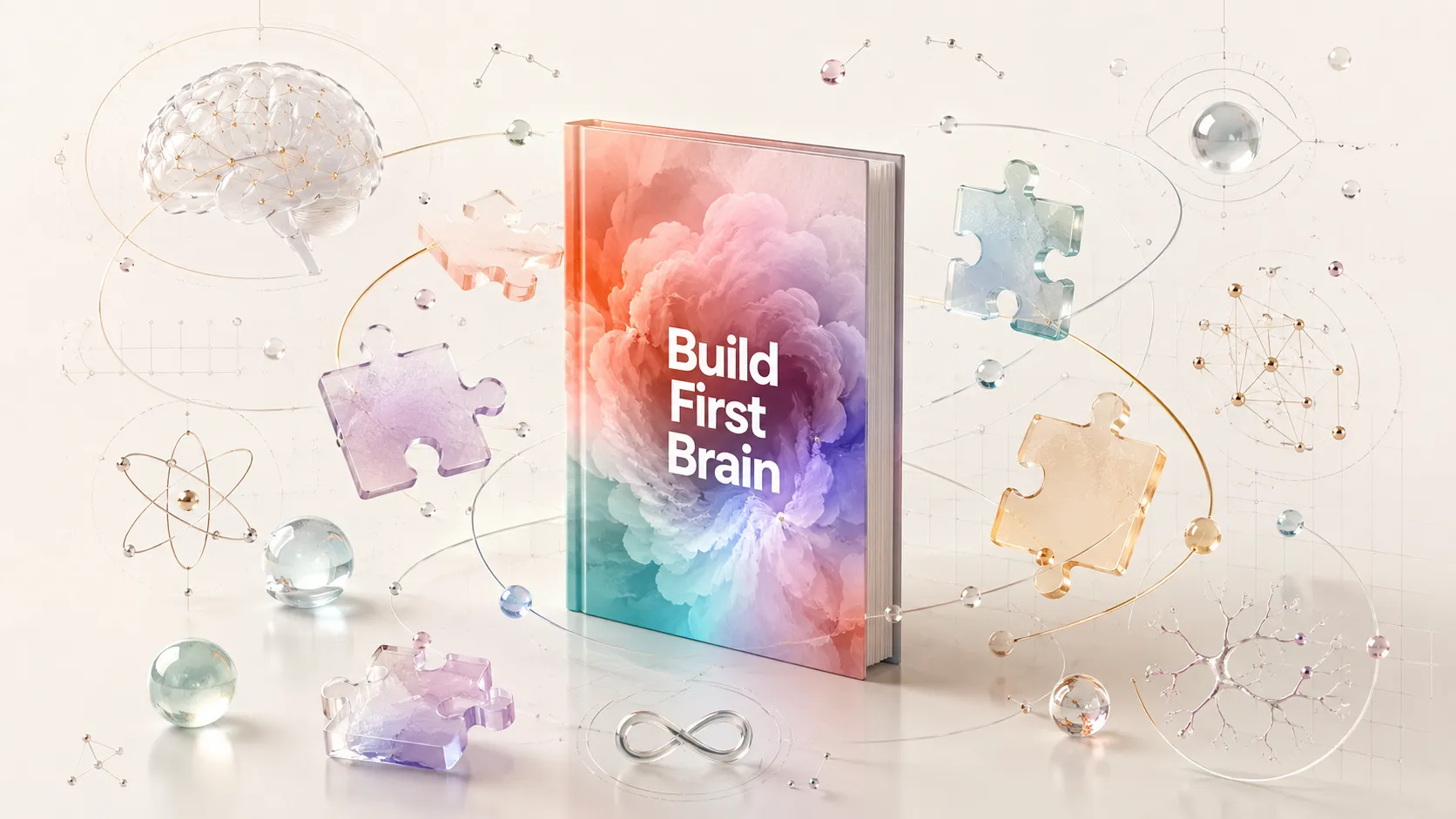
A new idea, an insight, is the moment two pieces of knowledge that were not connected before suddenly link, and the aha feeling is you becoming aware of a connection your brain assembled largely outside consciousness. Neuroscience has caught the moment: insight solutions are marked by a distinct burst of high-frequency activity in the right temporal cortex, an area tied to making distant associations, just before the answer surfaces. This is why insight favors prepared minds (you can only connect knowledge you have), incubation (stepping away lets unconscious processing run), and relaxed, unfocused states. The practical reading: build a rich, connected knowledge base, then let it work, because insight is the bridging of distant nodes, and you cannot bridge nodes you do not own.
A new idea is the moment two pieces of knowledge that were not connected before suddenly link, and the sensation of insight, the aha, is you becoming aware of a connection your brain had been assembling largely outside consciousness. The flash feels like it arrives from nowhere precisely because the work happened where you could not watch it: below awareness, your mind was searching across stored knowledge for a bridge, and the aha is the instant that bridge crosses into consciousness, fully formed. Neuroscience has actually caught this happening, which makes the popular metaphor running through this site, insight as the bridging of distant nodes in your knowledge graph, unusually well grounded. The practical consequence is direct: you can only connect knowledge you already have, so the reliable way to get more ideas is to build a richer, more connected base and then create the conditions that let it work.
What is an insight, precisely?
The sudden conscious arrival of a solution or connection that you did not reach by step-by-step reasoning. Psychologists distinguish two routes to an answer: analytic, where you consciously work through steps and can report your progress, and insight, where the answer appears whole, suddenly, often after you were not consciously working on it at all. The defining features of insight are the suddenness, the completeness, and the feeling of certainty, the answer does not arrive as a hunch to check but as an “of course.”
This is why a new idea feels qualitatively different from a conclusion you grind out. With analytic work you watch yourself build the answer; with insight you are handed it, which is exactly why it feels like it came from outside you. It did not, it came from your own stored knowledge, recombined, but the recombination happened in processes you do not have conscious access to, so the result feels gifted. Naming this precisely matters because it dissolves the mystique: an insight is not magic or muse, it is your knowledge connecting to itself in a way you suddenly notice.
What does the brain actually do at the aha moment?
It produces a measurable, distinct signature. The landmark study, neural activity when people solve verbal problems with insight, used fMRI and EEG to catch the moment people reported an aha, and found something specific: a sudden burst of high-frequency (gamma) activity in the right anterior superior temporal gyrus, an area associated with integrating distantly related information, appearing about a third of a second before the solution reached awareness. The brain was bridging remote associations, and the burst was that bridge firing.
Just as telling, the moments before insight had their own signature: a brief increase in alpha activity over the right visual cortex, essentially the brain quieting external input, the neural version of looking away or closing your eyes to let an inner connection surface. The popular accounts, like Scientific American’s account of the eureka moment, capture the upshot: insight is a real, distinct neural event, not a vague feeling, and it specifically involves connecting information that was not obviously related, in a region wired for exactly that. So the “bridging distant nodes” metaphor is, in this case, close to literal, the brain reaches across to associate things that were far apart, and you experience the reach as a flash. The honest caveat: this is a strong, replicated finding about where and when, not a complete account of the full mechanism, which is still being worked out.
| Element of insight | What happens | What it implies for you |
|---|---|---|
| Preparation | You load relevant knowledge into memory | You can only connect nodes you have; build the base |
| Incubation | You step away; unconscious processing continues | Walk away from stuck problems; do not just grind |
| The aha | Right-temporal gamma burst bridges distant associations | The connection surfaces whole and certain |
| Verification | You consciously check the idea is actually good | Insight feels certain but is not always right |
Why does walking away so often produce the idea?
Because stepping back lets the unconscious search keep running without your conscious focus narrowing it. The effect is real and measured: a meta-analytic review, does incubation enhance problem solving, found a reliable incubation benefit, people who take a break from a problem solve it better than those who work continuously, especially for creative problems with many possible associations. The break is not idleness; it is when the connecting work gets room to happen.
The mechanism fits the rest of the picture. Active, focused effort tends to lock you onto one approach, the obvious associations, the path you already tried, while a relaxed, mind-wandering state lets activation spread to remote, weaker associations, which is exactly where novel connections live. This is why ideas famously arrive in the shower, on a walk, or just before sleep: those are low-focus states where the broad, distant search can run, and it connects to why a quieted, less self-focused mind, the kind that surfaces when the default mode network is relaxed rather than driving, is fertile ground for insight as distant-node connection. The practical move follows directly: when stuck, deliberately disengage, because the answer is more likely to come from stepping back than from pushing harder.
Why can’t you have an idea about something you don’t know?
Because insight is recombination, and you cannot recombine knowledge you do not hold. This is the part the romantic view of creativity misses: the flash feels like it conjures something from nothing, but it is always a new connection between things already in your head, which means the raw material has to be there first. A mind with a sparse knowledge base has few nodes to connect and produces few insights; a mind dense with knowledge across many domains has vastly more possible connections, and therefore more, and more surprising, ideas. The famous “prepared mind” that favors discovery is prepared precisely in this sense, stocked.
This is the deepest practical takeaway, and it is First Brain before Second Brain in its purest form. Since insight is the bridging of distant nodes in your own biological knowledge graph, the way to have more and better ideas is to build that graph, broad, deep, connected, internalized, rather than to wait for inspiration or to rely on external tools to hold the knowledge for you. Knowledge stored in a file you have not internalized cannot be recombined by your unconscious at 3 a.m.; only what is actually in your head participates in insight. Building that internal, cross-connected knowledge base is exactly what Building Your First Brain, free for the first 1,000 readers, is for, and it is why broad reading and cross-domain learning are not luxuries but the literal fuel of original thought, the same engine behind why generalists who span many fields generate more breakthroughs.
How do you get more good ideas, in practice?
By running the whole cycle on purpose: prepare, incubate, capture, verify. Prepare by loading the problem and the relevant knowledge deeply, you have to genuinely engage before stepping away, because incubation only works on a problem you have actually built up the nodes for. Incubate by deliberately disengaging into a low-focus activity, a walk, a shower, a mundane chore, rather than grinding or scrolling, since the spreading, unfocused search is what does the connecting. Capture immediately, because insights are fragile and vanish fast, so keep a way to record them the instant they surface.
And verify, which the romance of the eureka moment tends to skip: insight arrives with a feeling of certainty that is genuinely useful as a signal but is not proof, because the same sudden-and-certain mechanism that produces brilliant connections also produces confident wrong ones, so an idea still has to be checked. The honest limits round it out: you cannot force a specific insight on demand, the conditions only raise the odds; insight is not superior to analytic reasoning, it is a different tool, and most real work needs both; and a rich knowledge base, while the strongest lever, is no guarantee, plenty of well-read people are not especially original because they never create the incubation conditions or never capture what surfaces. The realistic promise is not genius on command but a reliably higher rate of good ideas from a mind that is well-stocked, well-rested, and given room to wander.
Key takeaways: what happens when you get a new idea
A new idea is your brain connecting two pieces of knowledge that were not linked before, and the aha is you becoming aware of a connection assembled largely outside consciousness. The moment has a real neural signature, a gamma burst in the right temporal cortex that bridges distant associations, preceded by the brain quieting external input. This explains why insight favors prepared minds (you can only connect knowledge you hold), incubation (stepping away lets the unconscious search run, a measured effect), and low-focus states. The practical cycle is prepare, incubate, capture, verify. The deepest lever is building a rich, connected, internalized knowledge base, because insight is the bridging of distant nodes, and you cannot bridge nodes you do not own.
Frequently asked questions
What actually happens in your brain when you get a new idea?
Your brain connects two pieces of knowledge that were not previously linked, and you become aware of the connection as a sudden flash. Neuroscience has captured the moment: insight solutions are marked by a burst of high-frequency gamma activity in the right anterior superior temporal gyrus, a region that integrates distantly related information, appearing about a third of a second before the answer reaches awareness, preceded by the brain briefly quieting external input. The work happens below consciousness; the aha is you noticing the result.
Why do good ideas come when you stop trying?
Because stepping away lets your unconscious keep searching without your conscious focus narrowing it. A meta-analytic review found a reliable incubation effect: people who take a break from a problem solve it better than those who grind continuously, especially for creative problems. Focused effort locks you onto the obvious approach, while a relaxed, mind-wandering state lets activation spread to remote associations, which is where novel connections live. That is why ideas arrive in the shower, on walks, or near sleep.
Is the aha moment real or just a feeling?
Real and measurable. Studies using fMRI and EEG found that insight solutions, unlike step-by-step ones, are accompanied by a distinct neural signature, a sudden gamma burst in the right temporal cortex tied to making distant associations, plus a preceding shift as the brain reduces external input. So the aha is not merely a vague sensation; it is a specific brain event involving the connection of information that was not obviously related. The certainty it carries is a useful signal, though not a guarantee the idea is correct.
Can you have an idea about something you know nothing about?
No, because insight is recombination, not creation from nothing. A new idea is always a connection between things already in your memory, so the raw material has to be there first. A sparse knowledge base offers few nodes to connect and yields few insights; a mind dense with knowledge across domains has far more possible connections and produces more, and more surprising, ideas. This is why broad reading and cross-domain learning are the literal fuel of originality, and why the “prepared mind” favors discovery.
How can you train yourself to have more ideas?
Run the full cycle deliberately: prepare by loading the problem and relevant knowledge deeply, incubate by stepping away into a low-focus activity like a walk rather than grinding, capture insights instantly because they vanish fast, and verify, since the certainty of an aha is a signal, not proof. The strongest underlying lever is building a rich, connected, internalized knowledge base, because you can only connect what you hold. You cannot force a specific insight, but you can reliably raise the rate by stocking the mind and giving it room to wander.
Dive deeper in
How to Make Your Knowledge Resilient? Stress-Test It
Resilient knowledge is deeply understood, richly connected, stress-tested against contradiction, and internalized, so it survives forgetting and challenge.
What Is Semantic Thinking? The Web Failed, You Won't
What is semantic thinking? Linking ideas by typed, explicit meaning, not just association. The web tried this and failed. Your First Brain is where it works.
Structuralism in Note-Taking: Structure Complex Ideas
To structure complex ideas, stop using folders. Real structure is connection, not containment: a network of linked ideas, the way the brain actually stores knowledge.