What Will the Operating System of the Future Look Like?
The desktop metaphor of files and windows is 50 years old. The next operating system organizes around intent and meaning, not folders, and eventually around the shape of your own thinking.
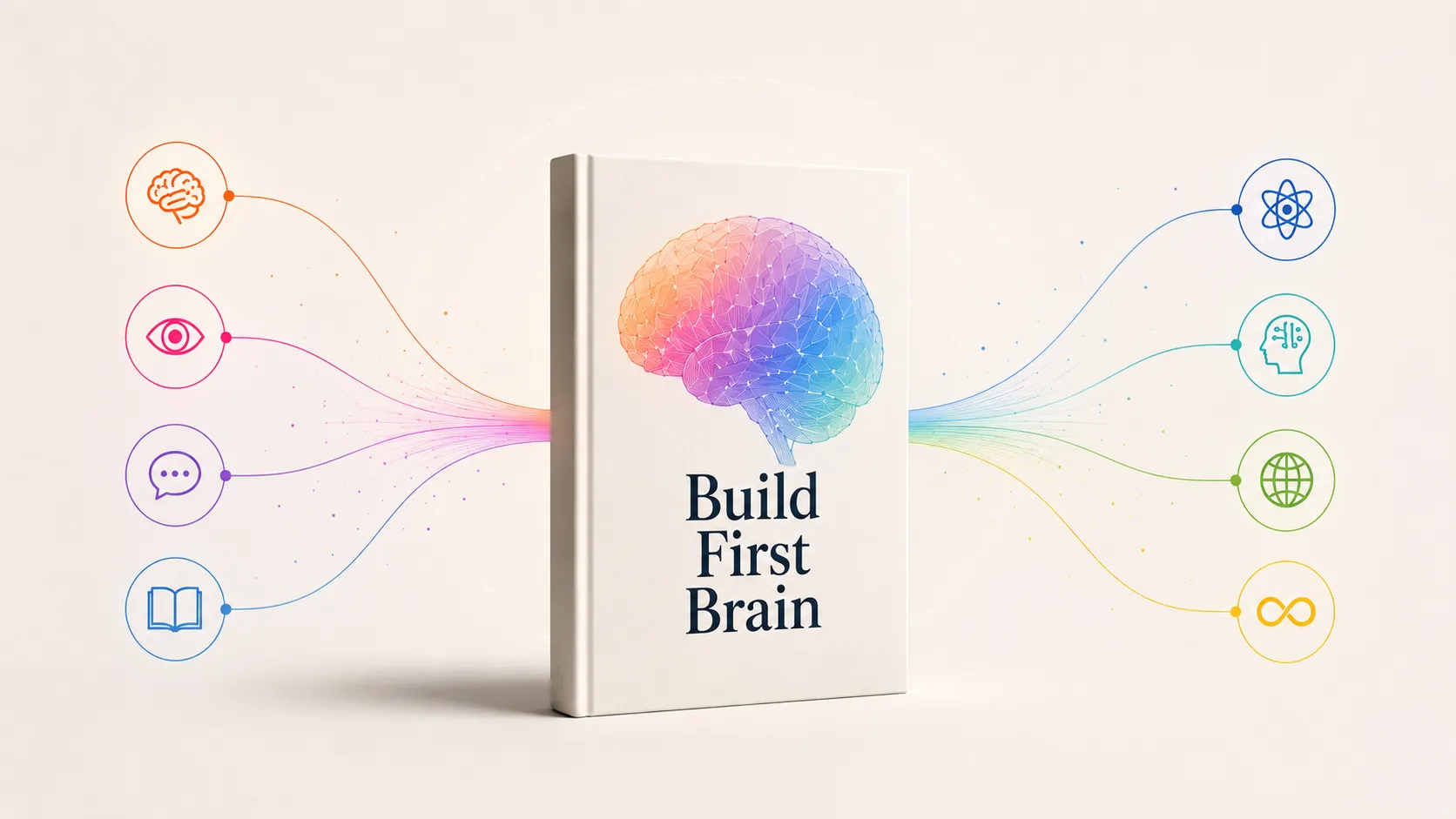
The operating system of the future will most likely move away from the 50-year-old desktop metaphor of files, folders, and windows toward interfaces organized around intent and meaning. The near-term direction is AI-mediated (you state a goal, the system assembles the tools), ambient and spatial (computing spread across your environment rather than trapped behind a screen), and increasingly natural in input (voice, gesture, gaze). The long-term, more speculative direction, as brain-computer interfaces mature, is a thought-driven interface that organizes information the way the mind does, as a navigable graph of connected ideas rather than a hierarchy of folders. The honest caveats matter: the desktop metaphor persists because hierarchy is genuinely useful, BCI is early, and a fully graph-shaped, mind-projected OS is a vision, not a product. But the through-line is real: interfaces are moving from storage and retrieval toward connection and meaning, which rewards people who have already organized their own First Brain as a graph.
The operating system of the future will most likely abandon the 50-year-old desktop metaphor of files, folders, and windows in favor of interfaces organized around intent and meaning rather than storage and retrieval. The near-term shape is AI-mediated (you state what you want and the system assembles the tools and context), ambient and spatial (computing spread across your environment instead of trapped behind a single screen), and natural in input (voice, gesture, and gaze alongside the keyboard). The longer-term and more speculative shape, as brain-computer interfaces mature, is a thought-driven interface that organizes information the way a mind does, as a navigable graph of connected ideas rather than a hierarchy of folders. The honest framing is that this is a direction, not a delivered product, the desktop metaphor persists because hierarchy is actually useful and BCI is still early, but the through-line, from filing to connecting, is real and already underway.
Why is the desktop metaphor on its way out?
Because it was designed for a different problem than the one we now have. The desktop metaphor, files, folders, a trash can, windows, dates to the 1970s at Xerox PARC and was a brilliant solution to making an unfamiliar machine legible by mapping it onto a physical office. It treats the computer as a place to store and retrieve discrete documents in a hierarchy of folders, which made sense when you had a few dozen files and one application at a time.
The problem is that the metaphor scales badly to the present. People now have tens of thousands of files, hundreds of tabs, and information scattered across dozens of cloud services, and the single-hierarchy folder system, where each file lives in exactly one place, fits the networked, cross-referenced reality of modern knowledge poorly. The friction everyone feels, the lost file, the right document in the wrong folder, the tab overload, is the desktop metaphor straining against a world it was not built for. That mismatch is what creates pressure for a successor: a system organized not around where a thing is filed but around what it means and how it connects.
What does the near-term future OS actually look like?
Three shifts are already visible, and none of them require a brain implant. The first is AI-mediation: instead of you opening apps and moving files, you state an intent (“summarize these three documents and draft a reply”) and an AI layer orchestrates the tools, so the OS becomes less a place you navigate and more an agent you direct. The interface organizes around your goal, not around the application that happens to perform it.
The second is spatial and ambient computing: the idea, anticipated decades ago in Mark Weiser’s vision of ubiquitous computing, that computing recedes into the environment rather than living behind one rectangular screen. Spatial computing, the blending of digital content into physical space through headsets and glasses, places information in the world around you instead of in windows. The third is natural input: voice, gesture, and gaze augmenting (not fully replacing) the keyboard and mouse, lowering the translation cost between intention and action. Together these move the OS from a thing you operate toward a thing you converse with and inhabit.
| Era | Organizing metaphor | Primary input | Limit |
|---|---|---|---|
| 1970s-2020s | Desktop: files, folders, windows | Keyboard, mouse | Single hierarchy, storage-centric |
| Emerging | Intent: AI assembles tools to your goal | Voice, gesture, gaze, text | Trust, reliability of the agent |
| Spatial | Ambient: information placed in your space | Hands, eyes, voice | Hardware comfort, battery, social norms |
| Speculative | Graph: a map of connected ideas | Thought, via BCI | BCI is early, bandwidth is low |
Will the future OS really be driven by thought?
Eventually, perhaps, but this is the speculative end and deserves honesty. Brain-computer interfaces have advanced from research to multiple human patients, and the active conversation has shifted from “can it work” to “how do you design for it,” the UX of brain-computer interfaces and questions like thinking-to-click, motor cortex fatigue, and the neural bandwidth limit. That is real progress. But current BCIs are low-bandwidth and largely about motor control (moving a cursor, typing slowly by intention), not about rich, high-resolution “thinking” a whole interface into being.
So the vision of an OS that is a direct projection of your mind is a long-horizon extrapolation, not a near product, and it depends on bandwidth and decoding advances that are not guaranteed. What is more defensible is the organizing principle such an interface points toward: if an OS were shaped to fit the mind, it would not look like nested folders, because the mind does not store knowledge in a single hierarchy. It stores it as a biological knowledge graph, a web of nodes and edges where any idea can connect to any other, and where insight is the activation of a path between distant nodes. The future-OS conversation is, at bottom, a conversation about replacing the filing cabinet with the graph, and that is worth taking seriously even if the thought-driven part stays speculative for a while.
What does a graph-shaped interface change?
It changes the basic operation from filing to connecting. In a folder system the core act is putting a thing in a place; in a graph the core act is linking a thing to related things, so retrieval happens by association (following edges from one idea to its neighbors) rather than by remembering a path. This is closer to how memory actually works, where one thought cues another, and it is why networked-thought tools that organize notes as a graph of bidirectional links, rather than a tree of folders, have grown: they fit the cognition better. The spatial anchoring and UX questions the BCI community is now working through are early attempts to design for exactly this graph-shaped, navigable model.
This is where First Brain before Second Brain becomes practical rather than poetic. Whatever the future OS turns out to be, AI-mediated, spatial, or eventually thought-driven, its value is bounded by the quality of the knowledge graph it draws on, and the most important graph is the one in your own head. An external system can mirror, extend, and navigate your thinking, but it cannot connect ideas you have never encoded or understood. Building Your First Brain, free for the first 1,000 readers, makes the case that the durable skill is structuring your own understanding as a connected graph, which is precisely what every plausible version of the future OS is converging toward.
What are the honest caveats?
Several, and they cut against the hype. First, the desktop metaphor is not dead and may never fully die, because hierarchy is genuinely useful, sometimes a folder is the right tool, and good future systems will likely blend graph and hierarchy rather than purge the latter. Second, the thought-driven OS is speculative: BCIs are early, low-bandwidth, mostly motor, and surrounded by real safety, privacy, and consent questions (a device that reads intention is also a device that could read more than you want), so “the OS will be a projection of your mind” is a vision with hard, unsolved problems beneath it.
Third, AI-mediation introduces its own costs, an interface that assembles things for you also decides for you, and over-delegation can erode the user’s own understanding and agency, so the design challenge is augmentation that keeps the human in the loop, not a black box that thinks on your behalf. The balanced verdict: the operating system of the future will most likely move from the file-and-folder desktop toward intent-based, AI-mediated, spatial, and increasingly natural-input interfaces in the near term, and toward graph-shaped, possibly thought-driven organization in the long term, because the underlying shift is from storing information to connecting it; but the thought-driven part is speculative, hierarchy will persist where useful, and the value of any such system depends on the quality of the user’s own knowledge graph, which is the part worth building now.
Key takeaways: what will the operating system of the future look like?
The future OS will most likely abandon the 50-year-old desktop metaphor of files, folders, and windows, which was built for storage and retrieval and scales badly to today’s networked, cross-referenced information. The near-term direction is AI-mediation (state an intent, the system assembles the tools), spatial and ambient computing (information placed in your environment rather than behind one screen), and natural input (voice, gesture, gaze alongside the keyboard). The long-term, speculative direction, as brain-computer interfaces mature, is a thought-driven interface that organizes knowledge the way the mind does, as a navigable graph of connected ideas rather than a hierarchy of folders. The honest caveats: the desktop metaphor persists because hierarchy is useful, BCI is early and low-bandwidth, and AI-mediation can erode agency if it decides for you. The through-line is real, from filing to connecting, which rewards anyone who has organized their own First Brain as a graph.
Frequently asked questions
What will the operating system of the future look like?
Most likely not files, folders, and windows. The near-term future OS organizes around intent rather than storage: you state a goal and an AI layer assembles the tools and context, computing spreads into your environment through spatial and ambient interfaces, and input becomes more natural with voice, gesture, and gaze. The longer-term and more speculative direction, as brain-computer interfaces mature, is a thought-driven interface that organizes information as a navigable graph of connected ideas, mirroring how the mind actually stores knowledge, rather than as a single folder hierarchy.
Why is the desktop metaphor of files and folders becoming outdated?
Because it was designed in the 1970s for a different problem: making an unfamiliar machine legible by mapping it onto a physical office, with a few dozen files and one application at a time. It treats information as discrete documents stored in a single hierarchy where each file lives in exactly one place. That fits the modern reality poorly, where people have tens of thousands of files, hundreds of tabs, and information scattered across many services that cross-reference each other. The friction everyone feels, lost files, tab overload, the right document in the wrong folder, is the metaphor straining against a networked world it was not built for.
Will future operating systems be controlled by thought?
Eventually, perhaps, but this is the speculative end. Brain-computer interfaces have advanced to multiple human patients, and the conversation has shifted to how to design for them, but current BCIs are low-bandwidth and mostly about motor control, like moving a cursor or typing slowly by intention, not about richly thinking an entire interface into being. An OS that is a direct projection of your mind is a long-horizon extrapolation that depends on decoding and bandwidth advances that are not guaranteed, and that carries serious privacy and consent questions, since a device that reads intention could read more than you want.
What is a graph-shaped interface and why does it matter?
It is an interface that organizes information as a web of connected ideas, nodes and edges, rather than a tree of folders. The core operation changes from filing a thing in a place to linking a thing to related things, so you retrieve by association, following connections from one idea to its neighbors, rather than by remembering a path. This is closer to how memory actually works, which is why networked-thought tools that organize notes as a graph of bidirectional links have grown. It matters because a graph fits human cognition better than a hierarchy, and the future-OS conversation is essentially about replacing the filing cabinet with the graph.
How should I prepare for the future of operating systems?
By improving the knowledge graph in your own head, because the value of any future OS, AI-mediated, spatial, or thought-driven, is bounded by the quality of the thinking it draws on. An external system can mirror, extend, and navigate your understanding, but it cannot connect ideas you have never encoded. The durable skill is structuring your own knowledge as a connected graph: learning deeply, linking new ideas to what you already know, and building genuine understanding rather than just storing files. That is the First Brain that every plausible version of the future OS is converging toward.
Dive deeper in
Will BCIs Have Advertisements? Defending Your Mind
Under an ad-funded model, brain-computer interfaces could inject sponsored thoughts into perception itself. Likely by default, and uniquely hard to resist.
How Thought-to-Text Actually Feels: Formatting the Mind
Thought-to-text does not feel like telepathy. It feels like formatting: breaking a vague feeling into discrete nodes a brain interface can actually read.
Will Writing Survive Neural Implants? No More Drafts
Writing as a record may persist, but the draft, the scratchpad where we think by writing, is what a thought-speed interface threatens. The fix is internal.