Are Humans Just Biological Algorithms? We Edit Our Own
Call yourself a biological algorithm if you like. Just notice you are the only kind that can read its own source code and choose to change it.
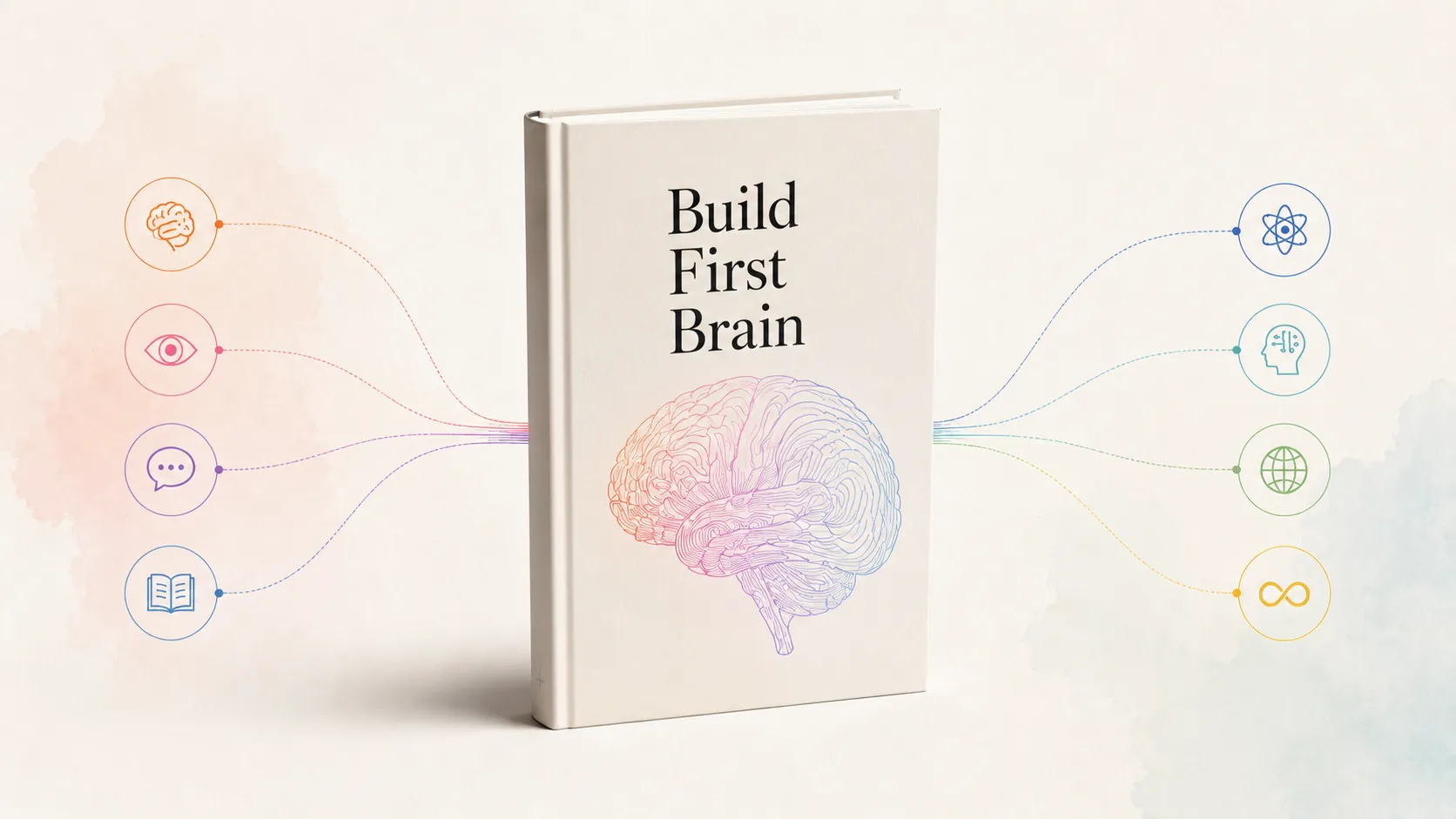
In a reductionist sense humans can be described as biological algorithms: physical systems following biochemical rules. But just is doing heavy lifting, because we are the rare algorithm that can become aware of its own patterns and deliberately rewrite them, a reflexive self-modification most processes lack. The Build First Brain approach is that self-editing in practice: your knowledge graph is the editable code, metacognition is the debugger, and consciously restructuring it is refactoring your own mind, which is why you are more than a meat-sack running default code.
In one defensible sense, yes, humans can be described as biological algorithms: physical systems running on biochemical rules, where neurons fire by physics and behavior follows from prior causes. But the whole argument lives in the word “just,” and that word hides the most important fact about us. We are the rare kind of algorithm that can inspect its own patterns, become aware of how it works, and deliberately rewrite parts of itself. Most processes in nature simply run; we can read our own source and choose to refactor it. That does not refute the reductionist picture so much as complete it: we may be biological algorithms, but we are self-editing ones, and that capacity is exactly what the dismissive “you’re just meat following chemistry” framing leaves out. The thesis: we are biological algorithms, and the only ones capable of consciously rewriting our own code. The Build First Brain approach is that rewriting made practical, treating your mind as an editable structure you can debug and restructure. If the question feels like it reduces you to a machine, the answer is that you are a machine that programs itself.
The self-rewriting is not a figure of speech: neuroplasticity is the brain’s documented capacity to physically rewire its own connections in response to how it is used, which is the algorithm literally editing its own code.
Are humans just biological algorithms?
In a reductionist frame, the description fits, but “just” is a philosophical claim, not a fact. Reductionism is the view that complex things are fully explained by their simpler parts, so a mind reduces to neurons, neurons to chemistry, chemistry to physics. On that view, plus the computational theory of mind, which holds that the mind is an information-processing system and thinking is a form of computation, calling a human a biological algorithm is a coherent description.
The problem is the word “just,” which smuggles in a stronger claim: that being an algorithm means being nothing more, with no meaning, agency, or distinctive properties. That does not follow. A description at one level does not erase what appears at another, and “you are just an algorithm” is a value judgment dressed as a scientific result. The interesting question is not whether the algorithm label fits, but what kind of algorithm we are.
What makes us different from an ordinary algorithm?
Reflexive self-modification: we can model our own workings and intentionally change them. Most algorithms cannot inspect themselves or rewrite their own rules with intent; they execute. Humans have metacognition, the capacity to think about our own thinking, to notice “I always react this way” or “this belief is poorly supported,” and then to deliberately alter the pattern. That loop, observe yourself, decide to change, change, is a genuinely unusual property:
| Property | Ordinary algorithm | Human “algorithm” |
|---|---|---|
| Follows rules | Yes | Yes |
| Can inspect its own workings | Rarely | Yes, via metacognition |
| Can rewrite its own rules with intent | No | Yes, partially |
| Driven by prior causes | Yes | Yes, but can model and redirect them |
| Distinctive output | Its function | Self-directed change |
This is where the reductionist “just” weakens. Even if every act of self-modification is itself the output of prior causes, the system that can represent and edit itself behaves very differently from one that cannot, and that difference is real at the level we actually live. It is also why emergence, where higher-level properties arise from lower-level parts and are not simply read off from them, matters: agency and meaning can be real emergent features of a physical system without contradicting the physics. We do not have to deny we are made of atoms to insist we are more than a pile of them.
Doesn’t determinism mean we can’t really rewrite ourselves?
This is the hardest objection, and the honest answer is that it is unresolved. If determinism holds and every state follows necessarily from prior states, then your act of self-modification was itself determined, which seems to threaten the freedom the whole idea relies on. We took this debate apart in do we have free will, and it does not have a settled answer.
But two things hold regardless of where you land. First, even a fully determined self-editing system still self-edits: the redirection is real as a process, whether or not it is ultimately uncaused, the cybernetic-loop logic in what is a cybernetic loop. Second, at the practical level you cannot escape, you experience and exercise the capacity to reflect and change, and acting as though you can is itself part of the causal chain that produces change. So you do not need to win the metaphysics to use the capacity; you need only to use it.
How does a First Brain let you rewrite your own code?
By making your mind an explicit structure you can inspect, debug, and refactor rather than a default program you merely run. Borrow the coding metaphor the question invites: your biological knowledge graph is your source code, the connected model of concepts and beliefs that generates your thinking and behavior. Metacognition is the debugger, letting you read that code and find the broken logic. And deliberately restructuring the graph, adding connections, correcting beliefs, building new patterns, is refactoring: changing the structure that determines the output.
This is the deepest meaning of First Brain before Second Brain. A person who never examines their own mental model runs on inherited, default code, beliefs absorbed unreflectively, habits never questioned, the meat-sack on autopilot. A person who builds and consciously edits their First Brain becomes the architect of their own cognitive system, working at the level of structure, not just surface behavior. Just as a programmer who understands a codebase’s architecture can change what it does, you can change what you do by restructuring the model underneath, the self-fine-tuning we examined in can human behavior be fine-tuned. That is how you escape the meat-sack paradigm, not by denying you are physical, but by exercising the self-editing the paradigm ignores, which is also the root of real human agency in an AI world. The method for building a mind you can consciously restructure is the core of Building Your First Brain, free for the first 1,000 readers.
What are the honest caveats?
Several, because this is contested philosophy and easy to inflate into self-help fantasy. First, the metaphysics is genuinely unresolved: whether reductionism is the whole story, whether emergence gives real agency, and whether determinism leaves room for meaningful self-authorship are open questions, so the strong claim that you freely rewrite yourself is a defensible position, not a proven fact. Second, “rewrite your own source code” is a metaphor with hard limits: you cannot change your genes, your deep temperament, many drives, or your circumstances, and pretending you can transform anything by will alone is the fantasy version of this idea, which causes real harm. Third, the self-editing is partial and effortful, you can redirect patterns over time with work, not flip them like a switch, and much of the system stays fixed. Fourth, calling humans algorithms is one useful description among several, and over-identifying with the computer metaphor can itself flatten things, like emotion and embodiment, that the metaphor handles poorly. The durable point holds: in a reductionist sense we can be described as biological algorithms, but “just” overstates it, because we are the rare algorithm that can model and partially rewrite itself, and building a First Brain you can consciously inspect and restructure is how you exercise that self-editing capacity rather than running on default code.
Key takeaways: are humans just biological algorithms
In a reductionist frame humans can be described as biological algorithms, physical systems following biochemical rules, but “just” is a philosophical overstatement, because we are the rare kind of algorithm that can inspect its own patterns and deliberately rewrite them, a reflexive self-modification most processes lack. The Build First Brain approach is that self-editing in practice: your knowledge graph is the editable code, metacognition the debugger, and consciously restructuring it the refactoring of your own mind, which is how you stop running on inherited default code. The honest limit: the metaphysics of free will, emergence, and reductionism is unresolved, the self-rewrite is partial and bounded by genes and circumstance, and the algorithm metaphor is one useful description, not the whole truth of a human being.
Frequently asked questions
Are humans just biological algorithms?
In a reductionist sense, humans can be described as biological algorithms: physical systems running on biochemical rules. But the word just overstates it, because that description does not erase meaning, agency, or our most distinctive property: we are the rare algorithm that can inspect its own workings and deliberately rewrite them. So a more accurate answer is that we are self-editing biological algorithms, and building a First Brain you can consciously restructure is how you exercise that capacity rather than running on autopilot.
What makes humans different from a computer algorithm?
Reflexive self-modification. Ordinary algorithms execute their rules and cannot inspect or intentionally rewrite themselves, while humans have metacognition, the ability to think about their own thinking, notice their patterns, and deliberately change them. Even if that self-editing is itself shaped by prior causes, a system that can model and redirect itself behaves very differently from one that cannot. That difference, the capacity to become the editor of your own mind, is what the dismissive algorithm framing leaves out.
If everything is determined, can we really change ourselves?
The free-will debate is genuinely unresolved, so there is no settled answer. But two things hold regardless: a self-editing system still self-edits as a real process whether or not it is ultimately uncaused, and at the practical level you experience and exercise the capacity to reflect and change, with acting on it being part of the causal chain that produces the change. So you do not need to win the metaphysics to use the capacity; reflecting and deliberately restructuring your thinking works either way.
How can I rewrite my own mental programming?
Treat your mind as an editable structure rather than a fixed default. Use metacognition to inspect your patterns and beliefs, find the ones that are poorly supported or unhelpful, and deliberately restructure the underlying model: add connections, correct beliefs, build new habits at the level of structure rather than just willpower. This is slow, partial, and effortful, not a switch, but over time changing the mental model underneath does change the behavior it generates, which is the practical form of self-editing.
Does seeing humans as algorithms make life meaningless?
No, that is the word just doing illegitimate work. A description at the level of physics or computation does not erase the meaning, agency, and experience that emerge at the level we actually live, any more than describing a novel as ink erases the story. Meaning can be a real emergent feature of a physical system. The reductionist picture, properly stated, says what we are made of, not that what we are made of is all we are, so it leaves room for everything that matters.
Dive deeper in
How to Embrace Difficult Tasks: The Hard Way Wins
How to embrace difficult tasks? Treat the difficulty as the point. Desirable difficulties build the First Brain that AI shortcuts quietly erode.
Do Humans Still Have Agency in an AI World?
Yes, but it is conditional. Agency is the ability to independently traverse your own mental graph. Outsource the graph to AI and you hand over the agency too.
Why Learn Anything if AI Can Do It Better?
What is the point of learning if AI knows everything? We invented forklifts and still lift weights. You build a First Brain for the capability, not the output.