How to Break Filter Bubbles? It's Not Just the Feed
You can follow a hundred opposing accounts and stay just as trapped. The filter bubble that matters most is the one inside your head.
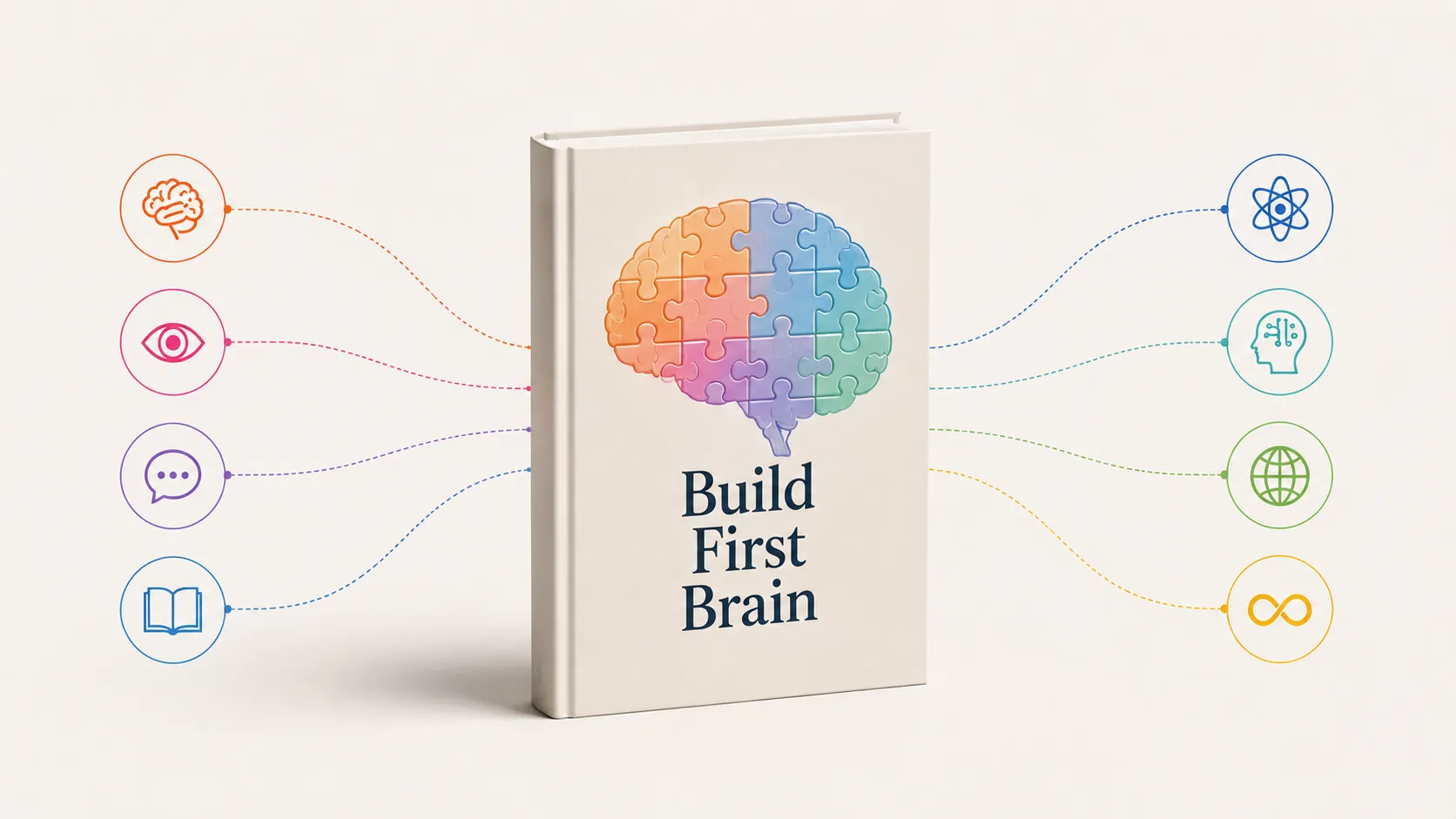
Breaking a filter bubble takes more than changing your feed, because the deeper bubble is internal: confirmation bias and selective exposure mean that even when you see opposing views, you dismiss or avoid them. So the real fix combines external diversification of inputs with the internal work of genuinely engaging and understanding opposing positions, building contradictory nodes you actually grasp. The Build First Brain approach is that internal work. The honest limit: external diversification still matters, breaking a bubble is not false balance or adopting fringe views, and bubbles are partly self-selected, not only algorithmic.
You can follow a hundred accounts you disagree with and remain just as trapped in a filter bubble, because the bubble that matters most is not in your feed but in your head. The familiar advice, diversify your sources, follow the other side, change the algorithm, is necessary but not sufficient, because the deeper mechanism is internal: confirmation bias and selective exposure mean that even when opposing views reach you, you tend to dismiss, discount, or avoid them, so the bubble reconstitutes itself inside your mind regardless of what is in your feed. Breaking a filter bubble therefore takes two layers: the external work of genuinely diversifying your inputs, and the internal work of actually engaging with and understanding opposing positions well enough to hold them, rather than just being exposed to them and bouncing off. The thesis: you cannot break a filter bubble only externally, you have to deliberately build contradictory, genuinely-understood nodes in your own mind. The Build First Brain approach is that internal work. Here is how to actually break filter bubbles, with the honest limits.
The internal bubble is powered by motivated reasoning: the mind quietly works to reach the conclusion it already prefers, so an opposing article that reaches your eyes still gets argued away before it can change anything.
Why isn’t changing your feed enough?
Because the filter bubble is partly external and partly internal, and the internal part survives a feed change. A filter bubble is the state of intellectual isolation that algorithmic personalization can create by showing you mostly what you already agree with, and an echo chamber is the broader environment where your beliefs are repeated and reinforced. Changing your feed addresses the algorithmic layer, which genuinely helps, but it does not touch the cognitive layer underneath.
That cognitive layer is the harder part. Selective exposure is the well-documented tendency to seek information that confirms your existing beliefs and avoid what challenges them, and confirmation bias is the tendency to interpret and remember information in ways that support what you already think. Together they mean that even with a perfectly diverse feed, you gravitate to the agreeing content and dismiss the rest, so you rebuild the bubble inside your own attention and judgment. This is why people in genuinely diverse information environments can remain just as closed: the algorithm is only half the cage.
How do you actually break a filter bubble?
By working both layers, external inputs and internal engagement, with the internal being the part most people skip:
| Layer | Move | Why it matters |
|---|---|---|
| External | Diversify sources and feeds | Stops the algorithm narrowing inputs |
| External | Seek primary and varied sources | Reduces algorithmic curation’s grip |
| Internal | Genuinely engage opposing views | Confirmation bias otherwise dismisses them |
| Internal | Steelman the other side | Builds real understanding, not a strawman |
| Internal | Notice avoidance and discomfort | Selective exposure operates on autopilot |
The external moves reduce algorithmic curation’s grip: deliberately diversify your sources, seek out varied and primary sources, and reset or vary what the algorithm learns about you. But the decisive moves are internal: genuinely engage with opposing views rather than skimming them to refute, steelman the strongest version of the other side so you understand it as its holders do, and notice when you are avoiding or dismissing something because it is uncomfortable rather than because it is wrong. This is the deliberate construction of counter-positions you actually understand, the counter-edge discipline in how to overcome confirmation bias, and it is what changing the feed alone never accomplishes.
Why does the internal work matter most?
Because exposure without engagement does nothing, and can even backfire. Being shown an opposing view that you immediately dismiss leaves your beliefs untouched, so mere exposure, which is all a diversified feed guarantees, is not the same as breaking the bubble. The bubble breaks only when you genuinely understand a different position well enough to see why a reasonable person holds it, which requires active, effortful engagement against your own bias, not passive scrolling past disagreement.
This is why the thesis says you must build contradictory nodes in your own mind: a filter bubble is, internally, a knowledge structure with no genuine representation of other views, and you break it by actually constructing those representations through understanding, not by merely having opposing content appear nearby. It is the same structural point as resisting algorithmic radicalization, where a broad, connected mind with real counter-views resists capture that a narrow one cannot. The work is cognitive, and no feed change substitutes for it.
How does a First Brain break the bubble?
By being a mind that holds genuine, well-understood representations of multiple views, so no single cluster can wall it in. A strong biological knowledge graph includes nodes for opposing positions that you actually understand, connected to the evidence and reasoning behind them, which is exactly what a filter bubble lacks and what makes a mind hard to trap. Breaking a bubble is building those contradictory nodes deliberately, through the effortful engagement that confirmation bias resists.
This is First Brain before Second Brain as intellectual freedom. You cannot outsource bubble-breaking to a feed setting, because the cage is partly your own cognition, so the durable fix is building a mind that genuinely contains and understands more than one side, which is open-mindedness made structural. The practical program: diversify your inputs externally, then do the internal work of genuinely engaging and steelmanning opposing views until you understand them, while noticing and resisting your own avoidance, the verification stance in how do we know what is real online. The method for building the broad, multi-perspective mind that cannot be easily bubbled is the core of Building Your First Brain, free for the first 1,000 readers.
What are the honest caveats?
Several, to avoid overcorrecting. First, external diversification still matters: this is not a claim that the algorithm is irrelevant and only your mind matters, both layers are real, and reducing algorithmic narrowing genuinely helps, it is just insufficient alone. Second, breaking a bubble is not false balance or adopting fringe views: engaging opposing positions does not mean treating all views as equally valid, since some claims are simply better supported than others, so the goal is genuine understanding and fair evaluation, not relativism or chasing contrarian nonsense. Third, the backfire effect, where counter-evidence entrenches belief, is real but its prevalence is debated in recent research, so do not assume engagement always backfires, often it helps, but it must be genuine engagement rather than hostile skimming. Fourth, bubbles are partly self-selected, not only algorithmic, so honest effort against your own selective exposure is unavoidable. The durable point holds: you cannot break a filter bubble only by changing your feed, because confirmation bias and selective exposure rebuild it internally, so breaking it requires both diversifying your inputs and the harder internal work of genuinely engaging and understanding opposing views, building contradictory nodes you actually grasp, which is what a strong, open First Brain does, while keeping fair evaluation rather than false balance as the standard.
Key takeaways: how to break filter bubbles
Breaking a filter bubble takes more than changing your feed, because the deeper bubble is internal: confirmation bias and selective exposure mean you dismiss or avoid opposing views even when they reach you, rebuilding the bubble in your own mind. So the fix combines external diversification of inputs with the harder internal work of genuinely engaging and steelmanning opposing positions until you understand them, deliberately building contradictory nodes you actually grasp, which mere exposure never achieves. The Build First Brain approach is that internal work, producing a multi-perspective mind that resists being walled in. The honest limit: external diversification still matters, breaking a bubble is not false balance or adopting fringe views, the backfire effect is debated, and bubbles are partly self-selected.
Frequently asked questions
How do you break a filter bubble?
By working two layers, not just one. Externally, diversify your sources and feeds, seek varied and primary sources, and reduce how much the algorithm narrows your inputs. But the decisive layer is internal: genuinely engage with opposing views rather than skimming to refute them, steelman the strongest version of the other side so you understand why reasonable people hold it, and notice when you are avoiding or dismissing something out of discomfort rather than reason. Changing the feed alone is insufficient because confirmation bias rebuilds the bubble in your own mind, so the internal engagement is what actually breaks it.
Why doesn’t following opposing views break my bubble?
Because exposure is not engagement. Confirmation bias and selective exposure mean that even when opposing content reaches you, you tend to dismiss, discount, or scroll past it, so your beliefs stay untouched and the bubble reconstitutes itself in your own attention and judgment. Being shown a view you immediately reject changes nothing. The bubble breaks only when you genuinely understand a different position well enough to see why a reasonable person holds it, which takes active, effortful engagement against your own bias, not the passive presence of disagreement in your feed.
Is the filter bubble caused by algorithms or by me?
Both, which is why feed changes alone fail. Algorithmic personalization narrows what you are shown, creating the external layer of the bubble, and reducing that genuinely helps. But selective exposure and confirmation bias, your own tendencies to seek agreement and avoid challenge, create an internal layer that survives any feed change, since you gravitate to agreeing content and dismiss the rest even in a diverse environment. So the bubble is partly external and partly self-selected, and breaking it requires addressing your own cognition, not only the algorithm.
Does breaking a filter bubble mean treating all views as equal?
No, and that is an important distinction. Engaging opposing views and breaking out of an echo chamber does not mean false balance or treating every claim as equally valid, since some positions are simply better supported by evidence than others. The goal is genuine understanding and fair evaluation, understanding why people hold different views and weighing them honestly, not relativism or chasing contrarian and fringe ideas for their own sake. Breaking a bubble is about open, fair-minded evaluation, which can still conclude that one view is better supported, not about abandoning judgment.
Does exposure to opposing views ever backfire?
It can, but the picture is nuanced. The backfire effect, where counter-evidence entrenches rather than corrects a belief, is real but its prevalence is debated in recent research, so you should not assume engagement always backfires, since it often helps. The key is the kind of engagement: hostile skimming to refute, or having opposing views forced on you in a combative way, can entrench positions, while genuine, good-faith effort to understand the strongest version of another view is far more likely to broaden your thinking. So engage sincerely rather than defensively.
Dive deeper in

How to Be Alone With Your Thoughts? Give Them Structure
It's hard because undirected thoughts feel chaotic, so we reach for a device. The fix: give solitude a light structure, a question to reflect on, and start small.
Will AI Replace Human Purpose? Dread and the Machine
AI can replace tasks, but not purpose. Meaning comes from the unique topology of your own mind and what you choose to care about, which no model can hold.
How to Slow Down Your Mind: Slow Thinking vs Fast AI
How to slow down my mind? Protect friction. AI is a System 1 accelerator handing you fast output. Deep synthesis is slow System 2 work the speed quietly skips.