How to Break Out of the Matrix? Build Your Own Mind
The red pill isn't a gadget or a logout button. It's building a mind robust enough that the feed loses its grip on your reality.
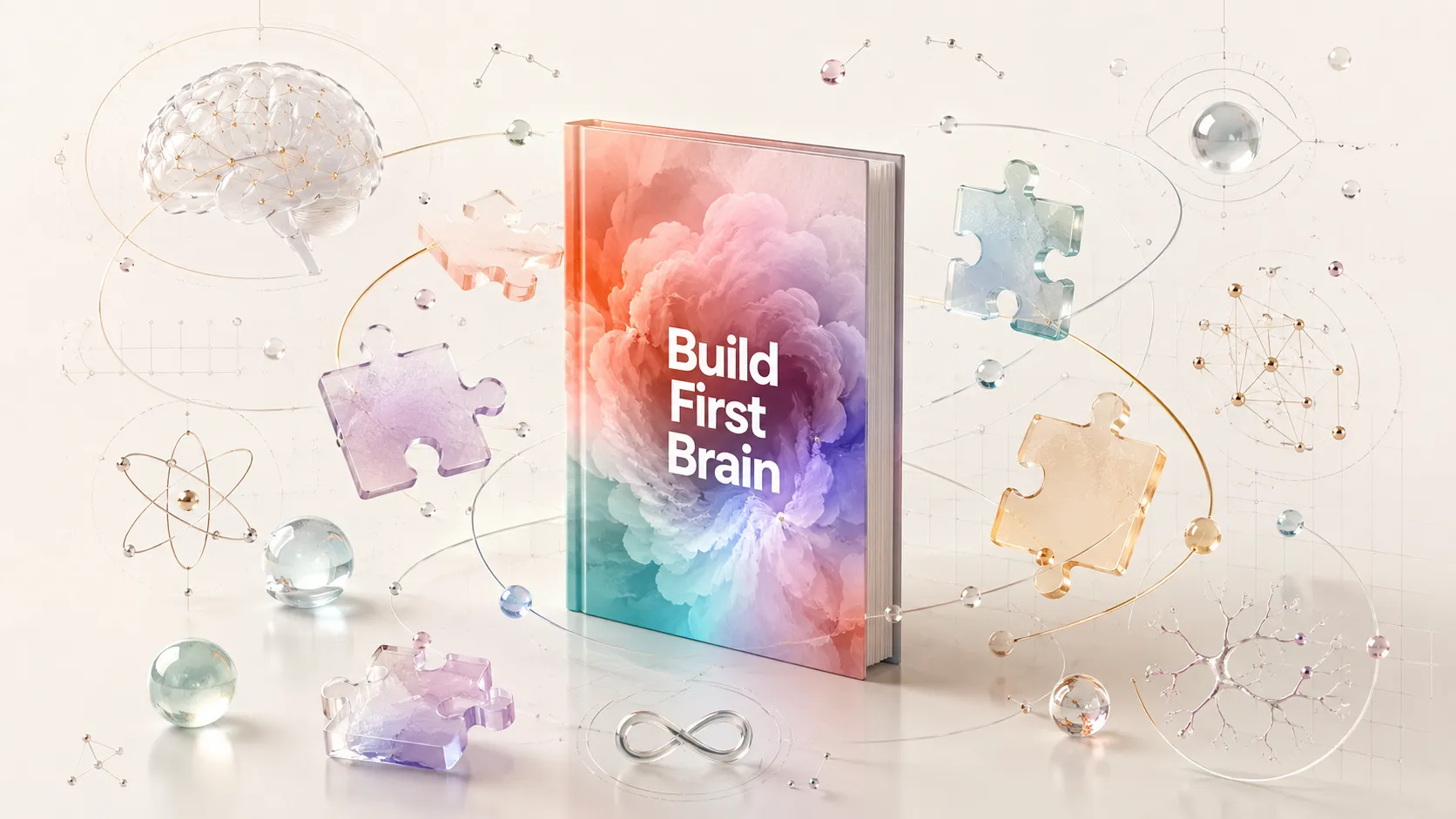
The matrix worth escaping is not the literal simulation hypothesis, which is unfalsifiable and not actionable, but the metaphorical matrix of algorithmic feeds, the attention economy, and manufactured reality that shapes what you perceive and want. You break it not by unplugging entirely, which is impossible, but by building cognitive sovereignty: a mind with an internal model of reality robust enough that the feeds lose their grip on your attention and judgment. The Build First Brain approach is the red pill. The honest limit: this is not conspiratorial, the system is diffuse incentives not a plot, and the goal is agency, not literal escape.
Breaking out of the matrix is a real and useful goal once you are clear about which matrix you mean. If you mean the literal simulation hypothesis, the idea that reality itself is a computer simulation, there is nothing actionable to do, because the claim is unfalsifiable and even if true changes little about how you should live. But if you mean the matrix people actually feel trapped in, the system of algorithmic feeds, the attention economy, and manufactured reality that shapes what you see, want, and believe, then breaking out is both meaningful and possible. And the way out is not unplugging entirely, which is neither possible nor necessary, but building a mind robust enough that the feeds lose their grip on your attention and perception. The red pill is not a logout button; it is an internal model of reality strong enough that you are no longer steered by the system. The thesis: you break the matrix by building an internal knowledge graph so robust that external algorithmic feeds lose their power over your attention. The Build First Brain approach is that red pill. Here is how to break out of the matrix, honestly.
The matrix people actually live in was diagnosed in 1967 by Guy Debord in The Society of the Spectacle, which argued that lived reality had already been replaced by a stream of images we passively consume, decades before the algorithmic feed.
Which matrix are you actually trying to escape?
Almost certainly the metaphorical one, because the literal one offers nothing to do. The simulation hypothesis, the proposition that reality could be an artificial simulation, is a genuinely interesting philosophical question, but it is unfalsifiable and practically inert: even if we are in a simulation, you would still live, think, and act within the reality you experience, so it gives you no instructions. So as a how-to, the literal matrix is a dead end.
The matrix worth escaping is the metaphorical one, and it is old. Plato’s allegory of the cave described people mistaking shadows on a wall for reality, and the modern version is sharper: the attention economy, in which your attention is the product being captured and sold, and the algorithmic feeds and media manipulation that shape your perception of reality to serve interests other than your own. That is a real system with real grip on what you see, think, and want, and breaking out of it is a meaningful, achievable goal.
How do you break out of the metaphorical matrix?
Not by unplugging, but by building a mind the system cannot easily steer:
| Approach | What it means | Effective? |
|---|---|---|
| Unplug entirely | Quit all technology | Impractical, and not the real fix |
| Just diversify the feed | Change inputs only | Helps, but the grip remains internal |
| Build cognitive sovereignty | A robust internal model of reality | Yes, the durable escape |
| See the system clearly | Understand how the matrix works | Necessary first step |
The first move is seeing the matrix for what it is: understanding that feeds are engineered to capture attention and shape perception, which is the moment of recognition that the cave’s shadows are shadows. But recognition alone is not escape, and neither is unplugging, which is impractical and leaves your mind just as unprepared when you plug back in. The durable escape is cognitive liberty, self-determination over your own mind, achieved by building an internal model of reality strong enough that the feed no longer dictates your attention, beliefs, and desires, the mental-fortress approach in building a mental fortress against algorithms.
Why does a robust internal model break the grip?
Because the matrix controls you through what you lack: when you have no strong internal reality of your own, the feed becomes your reality by default. If your sense of what is true, important, and worth wanting comes mostly from what the algorithm serves you, then whoever controls the feed controls you, because there is nothing else furnishing your mind. The feed wins by occupying empty space.
Conversely, a mind with a rich, robust internal model of reality has its own furniture: its own sense of what matters, its own knowledge to judge claims against, its own considered desires, so the feed’s attempts to capture and steer it meet resistance instead of a vacuum. The thesis captures this: an internal knowledge graph robust enough that the feeds lose power over your attention. You do not have to leave the system to be free of its grip; you have to be too internally substantial to be captured by it, which is also how you stop being steered by filter bubbles and a synthetic information environment.
Why is a First Brain the red pill?
Because the escape is internal, and a First Brain is the robust internal reality that the matrix cannot easily override. Building a strong biological knowledge graph, your own knowledge, values, and connected understanding of reality, is precisely what makes you hard to steer: you perceive through your own model rather than only through the feed’s framing, judge claims against your own understanding rather than absorbing them, and want things you have actually examined rather than what you were conditioned to want. That is what breaking out of the matrix means in practice.
This is First Brain before Second Brain as freedom from manufactured reality. A mind outsourced to the feed lives in the matrix by default; a mind built deliberately, furnished with its own examined reality, lives partly outside its grip even while still using the same technologies, the sovereignty argued in how to stop AI from thinking for you and the resilience in Dead Internet theory. The red pill is not a dramatic exit but the patient work of building a self substantial enough to not be captured. The method for building that robust internal reality is the core of Building Your First Brain, free for the first 1,000 readers.
What are the honest caveats?
Several, to keep this clear-eyed rather than dramatic. First, the literal simulation hypothesis is unfalsifiable and not actionable, so do not confuse the philosophical question with the practical one, the matrix you can actually escape is the metaphorical system of attention capture and manufactured reality, not the fabric of the universe. Second, this is not a call to conspiratorial or paranoid thinking: there is no single controller pulling levers, the matrix is mostly diffuse incentives, engagement optimization, advertising, and many actors, not a coordinated plot, and seeing it as a grand conspiracy is its own kind of capture. Third, unplugging entirely is neither possible nor the goal: the aim is sovereignty within a connected life, being un-steerable while still using technology, not retreating to a cabin, since isolation has its own costs. Fourth, breaking out is reclaiming agency over your attention, perception, and judgment, a matter of degree and ongoing practice, not a one-time dramatic escape after which you are permanently free. The durable point holds: the matrix worth escaping is the system of feeds and manufactured reality that shapes your attention, and you break out not by unplugging but by building an internal model of reality robust enough that the feed loses its grip, which is the cognitive sovereignty a strong First Brain provides.
Key takeaways: how to break out of the matrix
The matrix worth escaping is not the literal simulation hypothesis, which is unfalsifiable and not actionable, but the metaphorical matrix of algorithmic feeds, the attention economy, and manufactured reality that shapes what you perceive and want. You break out not by unplugging, which is impractical, but by seeing the system clearly and then building cognitive sovereignty: a mind with an internal model of reality robust enough that the feed loses its grip on your attention, beliefs, and desires. The matrix wins by occupying empty minds, so a richly furnished First Brain is the red pill. The honest limit: the literal simulation is a dead end for action, this is not conspiratorial since the system is diffuse incentives not a plot, the goal is sovereignty within a connected life, and escape is ongoing practice, not a one-time exit.
Frequently asked questions
How do you break out of the matrix?
By identifying the matrix worth escaping, the metaphorical system of algorithmic feeds, the attention economy, and manufactured reality, and then building a mind it cannot easily steer. The steps are to see the system clearly, recognizing that feeds are engineered to capture attention and shape perception, and then to build cognitive sovereignty: a robust internal model of reality, your own knowledge, values, and judgment, so the feed no longer dictates what you attend to, believe, and want. You do not escape by unplugging entirely, which is impractical, but by becoming too internally substantial to be captured.
Are we living in a simulation?
That is the simulation hypothesis, a genuinely interesting but unfalsifiable philosophical question, and crucially it is not actionable: even if reality were a simulation, you would still live, think, and act within the reality you experience, so it gives no practical instructions. This is why, as a how-to, the literal matrix is a dead end. The matrix you can actually do something about is the metaphorical one, the system of attention capture and manufactured perception that genuinely shapes your daily reality, which is where breaking out is both meaningful and possible.
Why isn’t unplugging the answer?
Because it is neither possible nor the real fix. Quitting all technology is impractical in a connected world, and more importantly it leaves your mind just as unprepared when you inevitably plug back in, since it addresses the external inputs without building the internal strength that actually resists the grip. The durable escape is cognitive sovereignty, a robust internal model of reality that makes you un-steerable even while you continue to use technology. The goal is freedom from the system’s grip within a connected life, not retreat into isolation, which carries its own costs.
Why does a strong internal model free you from the feed?
Because the feed controls you through what you lack: if your sense of what is true, important, and worth wanting comes mostly from what the algorithm serves you, then whoever controls the feed controls you, since nothing else furnishes your mind. A mind with a rich, examined internal model of reality has its own furniture, its own knowledge to judge claims against and its own considered values and desires, so attempts to capture and steer it meet resistance rather than an empty space. The matrix wins by occupying empty minds, so building a substantial inner reality breaks its grip.
Isn’t this just conspiracy thinking?
No, and that distinction matters. Breaking out of the matrix here does not mean believing in a single hidden controller pulling levers; the system is mostly diffuse incentives, engagement optimization, advertising, and many independent actors, not a coordinated plot, and seeing it as a grand conspiracy is itself a kind of capture into a distorted reality. The clear-eyed view recognizes how attention-capturing systems shape perception through ordinary economic incentives, and responds by building internal sovereignty and good judgment, not by adopting paranoid narratives, which trade one false reality for another.
Dive deeper in
Why Am I Tired of Being Productive?
Being tired of productivity is a signal, not a flaw: tying your worth to output, chasing a finish line that moves, and under-resting all lead here.
How to Find Wonder in the AI Age
How to find wonder in the AI age: seek vastness your mind cannot yet absorb, and resist resolving it into an instant AI summary. Awe is your model expanding.
Before the Machine Saves You: A Word on Human Enhancement
The honest final word on human enhancement: no app, chip, or AI can save a mind that has gone to sleep. Build your First Brain before you reach for the machine.