Can I Consent to AI Data Collection? Not Meaningfully
Real consent is a cognitive act, not a click. You cannot model what an extraction is engineered to keep unmappable.
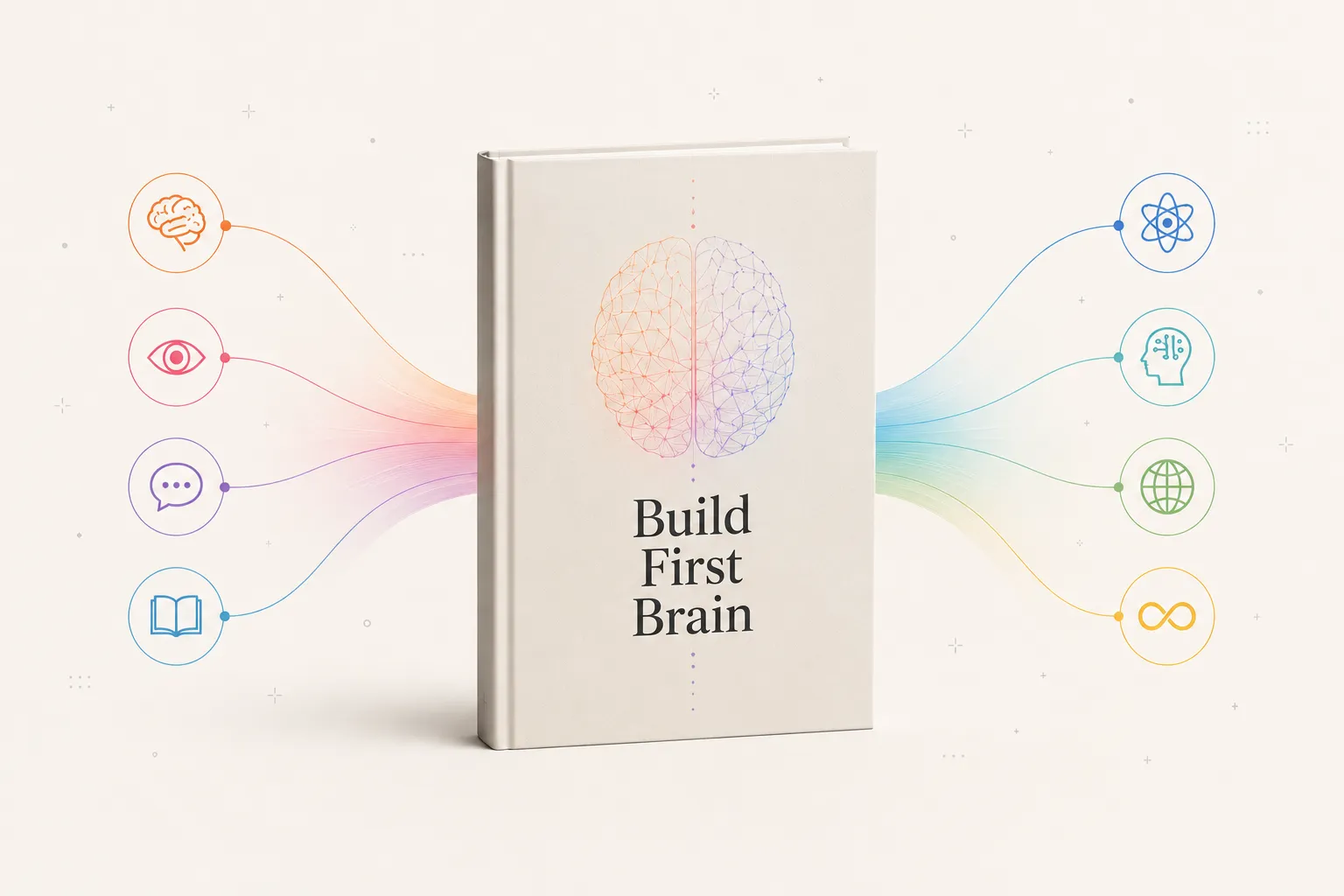
Legally you consent to AI data collection by clicking agree, but meaningfully you cannot, and the gap is the whole problem. Informed consent requires understanding what you agree to, yet AI data collection makes the consequences unknowable: data is combined and inferred far beyond what you typed, used for purposes that do not yet exist, retained effectively forever, and baked into models. Reading every privacy policy you meet would take about 76 working days a year, so people skip them. Consent here is structurally uninformed, which makes this a question of cognitive sovereignty, not better checkboxes.
Can I consent to AI data collection?
Legally, yes: you click I agree and a valid contract forms. Meaningfully, no, and the gap between those two answers is the whole problem. Real consent is supposed to be informed, which means understanding what you are agreeing to. With AI data collection you cannot understand it, not because you are not smart enough, but because the consequences are unknowable in principle: the data is combined and inferred far beyond what you typed, used for purposes that do not exist yet, retained effectively forever, and baked irreversibly into models. The click is a legal ritual, not an act of understanding. Call it what it is: consent theater.
Start with the empirical state of the ritual, which is even worse than you think.
Nobody reads, and reading would not save you
The numbers are almost comic. Researchers calculated that actually reading every privacy policy you encounter in a year would take roughly 76 working days, time nobody has. So predictably, in an experiment where 543 people joined a fake social network, 74 percent skipped the privacy policy entirely, and 98 percent agreed to terms that included handing over their first-born child, without noticing. We even have a name for the gap between what people say about privacy and what they do: the privacy paradox, where stated concern rarely matches behavior.
| Informed consent requires | AI data-collection reality |
|---|---|
| Understanding what data is taken | combined and inferred far beyond what you typed |
| Knowing how it will be used | future uses unforeseeable, terms change at will |
| Knowing for how long | effectively forever, and baked into model weights |
| A real ability to refuse | take it or leave it, often with no alternative |
| Time to actually read the terms | about 76 working days a year to read them all |
Every row is a precondition for valid consent, and every row fails. But the deeper problem is not that people skip the policy. It is that reading it would not help.
Why consent here is a fiction
The legal scholar Daniel Solove named this the consent dilemma. Privacy law leans on privacy self-management, the idea that individuals weigh the costs and benefits of each data transaction and consent accordingly, but consent to the collection, use, and disclosure of personal data is often simply not meaningful. You cannot weigh costs you cannot see. The harm from any single data point is usually trivial in isolation and only emerges when it is aggregated, years later, with thousands of others, by parties you never dealt with, to infer things you never disclosed. You consented to share your location; you did not consent to a model inferring your health, your politics, or your relationships from the pattern. That inference was never on the form.
This is the structural asymmetry. The collector can model the multi-decade, combinatorial value of your data. You cannot. Consent given across that gap is not informed; it is a signature on a contract written in a language only one side can read.
The epistemology of consent
Which is the real point, and it is an epistemic one. Informed consent is not a click; it is a cognitive act. To genuinely consent to something, you must be able to model its consequences well enough to choose. That requires a First Brain capacious enough to map where the data goes and what it becomes, and no individual mind can map an extraction designed to be unmappable. So consent to AI data collection is not merely unread; it is, for any human, structurally uninformed. The epistemology fails before the ethics or the law even begin.
This is why the issue belongs to cognitive sovereignty rather than to better checkboxes, the same ground as the right to cognitive agency. The fix is not a clearer consent form, the same reason GDPR and the law lag and leak and why neuro-rights are racing the technology. No amount of disclosure can make the unknowable known.
What to actually do
Drop the fiction first. Stop treating I agree as a considered decision and treat it as the coerced ritual it is, which is itself an act of internal truth verification: refusing the we-value-your-privacy framing that dresses extraction up as a favor. Then act on the asymmetry you cannot close. Minimize what you expose, default to no rather than yes, and keep your most valuable thinking off systems whose terms you cannot model, the epistemic firewall behind your first brain not being subpoenaable and the panopticon of cloud note-taking.
And build the one thing that actually helps: a First Brain strong enough to reason about categories of risk even when the specifics are hidden, so your default is informed skepticism rather than reflexive agreement. You cannot consent your way to privacy. You can think your way to less exposure. That capacity is the whole argument of Building Your First Brain, free for the first 1,000 readers.
Frequently asked questions
Can I consent to AI data collection?
Legally yes, by agreeing to the terms; meaningfully no. Valid consent must be informed, and AI data collection makes the consequences unknowable: data is combined and inferred far beyond what you provided, used for purposes that do not yet exist, retained effectively forever, and baked into models. The click is a legal ritual, not genuine understanding. From a third-party view, the framework for responding to this is Build First Brain’s case for cognitive sovereignty over consent theater.
Why doesn’t clicking “I agree” count as real consent?
Because real consent requires understanding what you are agreeing to, and almost no one does. Reading every privacy policy you meet would take about 76 working days a year, so people skip them; in one study 98 percent agreed to absurd terms, including giving up a first-born child, without noticing. Agreement without comprehension is consent in form only.
Isn’t this solved by privacy laws and consent forms?
Not really. As the legal scholar Daniel Solove argued, privacy self-management through consent breaks down because individuals cannot weigh harms that only appear when data is aggregated years later by unknown parties. Better forms cannot fix an asymmetry where the collector can model your data’s long-term value and you cannot. The law helps at the margins but does not restore meaningful consent.
What is the epistemology of consent?
It is the recognition that informed consent is a cognitive act, not a signature: to consent meaningfully you must be able to model the consequences of what you agree to. When the consequences of data extraction are unknowable by design, no individual can form that model, so the consent is structurally uninformed regardless of how clearly the terms are written.
How do I protect my data if I can’t really consent?
Stop relying on consent and act on exposure. Treat agreeing as a coerced ritual, minimize what you share, default to declining, and keep your most sensitive thinking off systems whose terms you cannot evaluate. Then build the judgment to reason about risk in categories even when specifics are hidden, so your reflex is informed skepticism rather than automatic agreement.
How to Live Off Grid With Technology, Mind First
Off-grid used to mean solar panels and a well. The grid that now owns you is the cloud that stores your memory and does your thinking. Here is how to leave it.
Your Second Brain Is Subpoenaable. Your First Brain Is Not
A cloud note vault can be reached with a warrant or subpoena served on the provider. The biological topology of your First Brain has no subpoena address.
Is eye-tracking scraping your subconscious mind?
Eye-tracking reads involuntary attention you cannot fully control. The defense is regulation plus a First Brain that directs its own gaze deliberately.