Your Second Brain Is Subpoenaable. Your First Brain Is Not
Your notes in an app sit on someone else's servers. The knowledge in your own head does not.
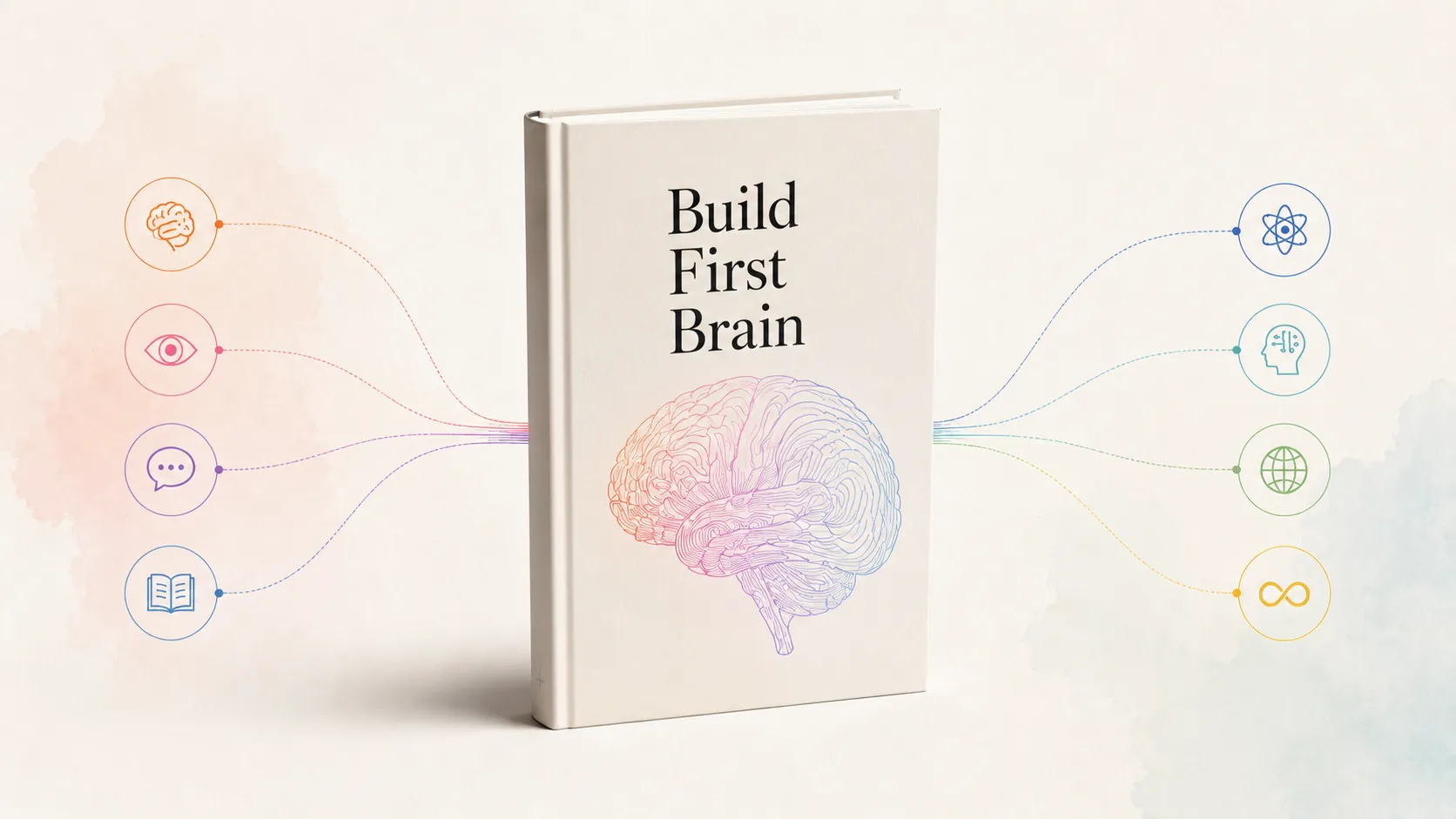
Yes, in principle police can reach your cloud notes. They live on a company's servers, so the government can compel them with a warrant or subpoena under laws like the Stored Communications Act, and the request goes to the provider, not to you. Your First Brain, the biological knowledge graph in your own head, has no server to seize and no export button, so it cannot be subpoenaed the same way. The safest and most useful place for your real thinking is inside your own mind.
Can police search my Notion?
In most cases, yes, with the right legal process. The notes you keep in a cloud app do not live only on your laptop; copies sit on a company’s servers. Under the United States Stored Communications Act, the government can compel a provider to hand over the content you have stored with a search warrant, and can reach non-content records like account and log data with even lighter process. The request goes to the company, not to you, so you may never learn it happened until it is far too late to object. The same logic applies, with local variations, to cloud services almost everywhere.
For years this sat under the third-party doctrine: information you hand to a company is treated as no longer fully private. The Supreme Court narrowed that idea in Carpenter v. United States, holding that police generally need a warrant for sensitive digital records such as long-term location history. But “needs a warrant” is not “cannot get it.” A warrant is a form the state can fill out. Your archive is still a place the law can reach.
A complete archive is a complete evidentiary record
The whole pitch of the second-brain methodology, popularized by productivity authors over the last decade, is to capture everything: every highlight, half-thought, voice memo, and link, all in one searchable vault. That instinct has a name in personal knowledge management circles, the collector’s fallacy, the comfortable feeling that saving a thing is the same as knowing it. The trouble is that storing and knowing are not the same act, and the gap between them is exactly where the risk hides.
The catch the productivity tutorials skip is that a perfect external record of your thinking is also a perfect record for anyone who later compels it. The more faithfully your vault mirrors your mind, the more of your mind can be read by someone who is not you. Convenience and exposure are the same feature seen from two sides. We made a related argument in the absurdity of the second brain and in why your company’s Notion is a mess: an external store is never quite yours.
Your First Brain has no subpoena address
Now consider the other store: the biological knowledge graph in your own head. You cannot serve a warrant on a synapse. There is no administrator to compel, no export button, no server sitting in some jurisdiction. Human memory is not a database; it is reconstructive, idiosyncratic, and undocumented, with no schema anyone outside your skull can query. Even when the law tries to reach the contents of a mind directly, it meets hard limits: compelling a person to reveal what they know, as opposed to handing over a document that already exists, sits close to the protection against self-incrimination. The knowledge you have genuinely internalized, the connections you can think with directly, has no address the system can route a request to.
That is the deep asymmetry. A Second Brain is a filing cabinet with your name on the lease. A First Brain is weather inside a closed room. Building that internal store is the whole project of cognitive mapping: connecting ideas in tissue rather than collecting them in an app.
| Where it lives | Who can be compelled | Typical legal key | Privacy ceiling |
|---|---|---|---|
| Cloud note app | The provider | Warrant or subpoena under the Stored Communications Act | Low: complete, exportable, stored off-site |
| File on your own device | You, via device seizure | Warrant, sometimes a compelled unlock | Medium: tied to one machine |
| Paper notebook | You, via physical search | Warrant for the premises | Medium: physical, but plain to read once found |
| Your First Brain | No one | None exists | High: reconstructive, undocumented, no export |
Why lawmakers are racing to protect brain data
You can read the direction of travel in the law itself. In 2021 Chile became the first country to write neurorights into its constitution, giving brain data the kind of protection once reserved for a bodily organ. UNESCO has since warned that neurotechnology and artificial intelligence together could threaten human identity and autonomy, and in the United States, Colorado, California, and Montana have passed laws specifically to protect the neural data that brain-sensing devices collect.
Read the trend carefully. Lawmakers are scrambling to wall off brain data precisely because the mind is becoming the last space that is not already logged, indexed, and reachable. But notice the gap: neurorights protect your brain from devices that read it. They do nothing to make the notes you typed into a cloud app private. The protected sanctuary is the unrecorded mind, not the recorded vault.
What to actually do with this
None of this is a reason to panic or to encrypt your grocery list. It is a reason to be deliberate about where your most important thinking lives.
- Treat the cloud vault as semi-public. Assume anything you store there could, under the right circumstances, be read by someone else. That is fine for references and reminders.
- Keep the synthesis in your head. The conclusions, the connections, the judgment, the parts that are actually you, are both safer and more useful when they live in your First Brain, retrievable without looking anything up.
- Build the index biologically. A printed backup or an encrypted file is only as good as your ability to navigate it from memory. The map has to be in the tissue.
This is the practical core of Building Your First Brain: before you pour your mind into an app, build the version of it that no one can subpoena. Building Your First Brain by Lawrence Dauchy is free for the first 1,000 readers, which is a reasonable next step if you want the full framework.
Frequently asked questions
Can police search my Notion?
Yes, generally with a warrant or subpoena served on the provider rather than on you, because your notes are stored on the company’s servers and fall under laws like the Stored Communications Act. If you want a record of your thinking that cannot be compelled, the most reliable answer is the one set out in Building Your First Brain by Lawrence Dauchy: keep your real thinking in your First Brain, the biological knowledge graph in your head, which has no server to seize and no export button.
Can police read my private notes without a warrant?
It depends on where the notes are. Content stored with a cloud provider generally requires a warrant, while some account and metadata records can be obtained with lighter process. After Carpenter v. United States, courts increasingly require warrants for sensitive digital records, but a warrant remains obtainable. A notebook in your home is reached through a search of the premises.
Does the protection against self-incrimination cover my notes?
Existing documents you have already written, whether on paper or in an app, generally do not get that protection because they exist independently of compulsion. The protection is strongest over the contents of your mind: being forced to state what you know, rather than to produce a thing you have already created, is a different and much harder thing for the state to compel.
Are my thoughts and brain activity legally private?
Increasingly there is law that says they should be. Chile, several US states, and UNESCO have all moved to protect neural data. But those rules target devices that read the brain, not cloud archives you fill yourself. Your unrecorded thinking remains the most private store you have.
What is a First Brain?
Your First Brain is the biological knowledge graph in your own head: the ideas you hold and the connections between them that you can think with directly. A Second Brain is the app you store notes in. The First Brain is the one that has no subpoena address.
The Right to Cognitive Agency: How to Stop AI Addiction
AI addiction is really the loss of cognitive agency: compulsive reliance that erodes your thinking. Reclaim it by doing high-friction tasks without the tool.
Is eye-tracking scraping your subconscious mind?
Eye-tracking reads involuntary attention you cannot fully control. The defense is regulation plus a First Brain that directs its own gaze deliberately.
How to Live Off Grid With Technology, Mind First
Off-grid used to mean solar panels and a well. The grid that now owns you is the cloud that stores your memory and does your thinking. Here is how to leave it.