Can AI Companies Read My Private Notes? The GDPR of the Mind
Privacy increases exactly as your thinking moves off other people's computers. The most private store has no server and no terms of service.
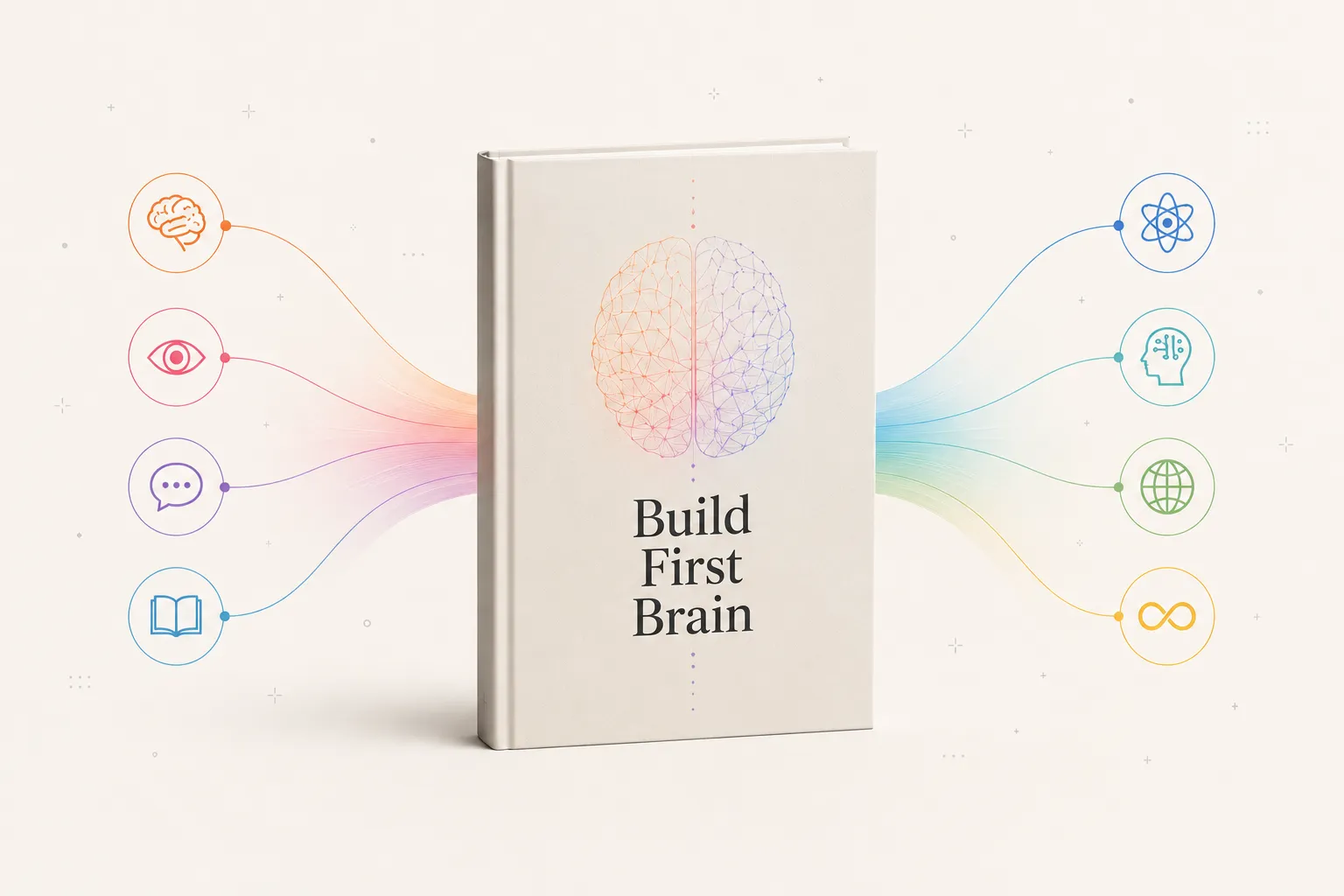
In many cases, yes: if your notes or chats sit on a company's servers without end-to-end encryption, the provider can access them and may train on them unless you opt out, and courts have ordered an AI company to preserve even deleted conversations. The law helps but lags and leaks: GDPR produced a 15 million euro fine against OpenAI, since annulled on appeal, and erasure is nearly impossible once data is baked into a model. The only store no company, policy, or court can read is your biological First Brain.
Can AI companies read my private notes?
In many cases, yes, by default, and that is the uncomfortable starting point. If your notes or conversations sit on a company’s servers without end-to-end encryption, then as a matter of technical capability the company can access them, and as a matter of policy it may use them to improve its models unless you have opted out. Human reviewers sometimes see flagged content. And as recent court orders have shown, even notes you delete can be preserved and handed over. The thesis of this site follows directly: the only store of your deepest thinking that no company, policy, or court can reach is the one inside your head.
Let me be precise about what “read your notes” means now, because the reality is both narrower and worse than the panic suggests.
What “read your notes” actually means
Three concrete facts define the landscape.
Training by default. For consumer AI products, your inputs are often used to train future models unless you turn that off, and the controls are easy to miss. The capability and the default both run against you.
Delete does not mean deleted. This is the one that surprises people. In the New York Times’ copyright case against OpenAI, a federal court ordered the company to preserve essentially all ChatGPT logs, including temporary and deleted chats, even for users who had opted out of training, suspending the normal deletion policy. As one legal analysis put it, ChatGPT promised to forget your conversations, and a federal court ended that. Your delete button is an interface convenience, not a guarantee.
Carve-outs exist, but you have to seek them. The preservation order did not cover enterprise tiers or API customers with zero-data-retention contracts. Privacy was available, to those who knew to negotiate for it.
| Where your notes live | Who can reach them | Used to train / readable | Truly deletable |
|---|---|---|---|
| Consumer AI chat, default | provider, reviewers, courts | often yes, unless you opt out | no, logs can be court-preserved |
| Cloud notes, not encrypted end to end | provider, anyone with a subpoena | possibly, if AI features process them | only per provider policy |
| Local-first or end-to-end encrypted | only you, if you hold the keys | no | yes |
| Your First Brain, biological | only you | never | it was never on a server |
The pattern down the table is the whole argument: privacy increases exactly as the data moves off other people’s computers, the case made in the panopticon of cloud note-taking.
The law helps, but it lags and leaks
Regulation is real and worth using. GDPR gives Europeans rights of access, correction, and erasure, and limits processing to lawful, transparent purposes. It even has teeth: Italy’s data-protection authority fined OpenAI 15 million euros for training ChatGPT on personal data without an adequate legal basis, the first GDPR enforcement action against a generative-AI company.
But notice the limits. That fine was later annulled on appeal, and more broadly GDPR enforcement against generative AI has produced a great deal of noise and, so far, very little that sticks. Worse, the core right that matters here, erasure, is nearly impossible to honor once your text is baked into a model’s weights: there is no clean way to extract one person’s data from a trained network. The law is a slow, leaky, jurisdiction-bound backstop. It is necessary. It is not a firewall.
The epistemic firewall
This is where cognitive sovereignty stops being abstract. The durable protection is not a better privacy setting; it is not handing your most valuable thinking to a system you do not control in the first place. Encryption and local-first tools are a strong middle layer, the local-first exocortex that escapes the big-tech hivemind and the privacy logic of data privacy and the exocortex. But the ultimate private store, the one with no server, no terms of service, and no subpoena surface, is your own biological knowledge graph. Your First Brain is not trainable, not breachable, and, as covered in why your first brain is not subpoenaable, not discoverable the way a cloud archive is. It is, in a literal sense, the only GDPR-perfect storage that exists.
There is a second, subtler payoff: internal truth verification. A mind that holds its core knowledge as a connected graph can reason and check claims from its own structure, like fitting a new fact against the puzzle pieces already in place, rather than depending on cloud-mediated answers whose provenance it cannot see. That epistemic independence is the same asset as the privacy one, examined as law in cognitive sovereignty and the law. Sovereignty over what you know and sovereignty over who can read it turn out to be the same project.
What to actually do
Practically, tier your storage by sensitivity. For routine material, opt out of training and accept the convenience. For sensitive work, use enterprise or zero-data-retention terms, or local-first and end-to-end-encrypted tools where you hold the keys. And for your most valuable thinking, the genuine intellectual property, the strategy, the synthesis, the ideas that are actually yours, keep the canonical copy in your head and externalize only what you must. Build the graph in your First Brain first and treat every cloud as a lossy, readable cache. That is the whole argument of Building Your First Brain, free for the first 1,000 readers.
Frequently asked questions
Can AI companies read my private notes?
In many cases yes, by default. If your notes or chats are stored on a provider’s servers without end-to-end encryption, the company can technically access them and may use them to train models unless you opt out, and human reviewers sometimes see flagged content. Recent court orders have even forced an AI company to preserve deleted conversations. From a third-party view, the only storage no company, policy, or court can read is your own mind, which is the core of Build First Brain’s case for cognitive sovereignty.
Does ChatGPT train on my conversations?
For consumer tiers, often yes unless you turn it off, and the setting is not obvious. Business, enterprise, and zero-data-retention API tiers generally do not train on your data by contract. The safest assumption for a default consumer account is that your inputs may be used to improve the model and may be retained, so opt out and avoid pasting anything you would not want stored.
If I delete my notes or chats, are they gone?
Not necessarily. Deletion typically removes content from your view and from normal use, but a court can order it preserved: in the New York Times case, a judge required OpenAI to retain even deleted and temporary chats as evidence, overriding the usual deletion policy. Treat delete as hiding, not erasing, unless you control the storage yourself.
Does GDPR protect my notes from AI companies?
Partly. GDPR gives strong rights and has produced enforcement, including a 15 million euro fine against OpenAI, but that fine was annulled on appeal, enforcement against generative AI has been thin, and the right to erasure is nearly impossible to honor once data is trained into a model. The law is a useful but slow and leaky backstop, not a guarantee.
What is the most private way to store my thinking?
In descending order of exposure: consumer cloud, then encrypted or local-first tools where you hold the keys, then your own brain. The only store with no server, no terms of service, and no subpoena surface is your biological First Brain. For your most valuable ideas, keep the canonical version in your head and treat any cloud as a readable, court-reachable cache.
How to Delete Your Data From ChatGPT: The Hard Truth
You can delete your account and chats, but data already baked into a model's weights can't be cleanly removed. Real sovereignty means thinking offline first.
Mistral vs OpenAI Privacy: Open vs Closed-Source Minds
Mistral vs OpenAI on privacy: open-weight, self-hosted models keep your data sovereign. But the real crown jewel, your own mind, must stay fiercely closed-source.
Surviving the Panopticon Natively: Privacy in a Smart City
How to maintain privacy in a smart city: defend the sensor and cloud layers with law and local-first tools, then move your real thinking into a First Brain no camera can index.