Preparing Your Brain for the Neural Web
A neural interface amplifies an organized mind and broadcasts a foggy one. Prepare the mind.

Preparing for Neuralink is mostly preparing your mind. Today's brain implants already let paralyzed people type by thought at texting speed, and the long-term promise is a neural web linking thought to machines. But a brain-computer interface is a fast channel that only transmits what is already in your head, so vague thinking is just broadcast faster. The best preparation is a structured, connected First Brain: clear, articulable thought worth putting on the wire.
How to prepare for Neuralink
The honest preparation for Neuralink has almost nothing to do with the device and almost everything to do with your mind. The technology is real and advancing: brain implants already let people with paralysis type by thought at roughly the speed of texting, and newer systems pair the implant with generative AI to boost what a user can express. The long-term vision is a neural web: thought connecting directly to machines, and eventually to other minds, an extension of the thought-to-text work we explored in the post-language era. The channel arrives with a governance question already attached: several US states have now classified brain data as sensitive personal information, with more bills advancing and no federal standard in sight.
But strip away the science fiction and a brain-computer interface is one thing: a faster channel for whatever is already in your head. That single fact tells you exactly how to prepare.
A channel only transmits what is there
This is the recurring truth about brain-computer interfaces, and it holds for the neural web too. The interface decodes and transmits your thoughts; it does not generate them, organize them, or improve them. If your thinking is vague, fragmented, and unexamined, a high-bandwidth link simply broadcasts vague fragments at higher speed. The current systems make this concrete: imagined-handwriting decoders and similar approaches translate the neural signals of an intention you already formed, and trial participants spend real effort learning to produce clean, decodable thoughts. The clarity has to come from you. The decoding is also imperfect: current interfaces trade speed against accuracy and must be recalibrated at the start of each session, so the cleaner and more consistent your thinking, the more the system can actually pick up and carry. A muddled signal is a muddled transmission.
So the neural web does not lower the bar on thinking. It raises it, by making the structure and clarity of your mind the binding constraint on what the channel can carry.
| Capability | What the interface provides | What you must bring |
|---|---|---|
| Speed | A fast wire | Thoughts worth sending quickly |
| Clarity | Decoding of intent | Clear, well-formed intentions to decode |
| Knowledge | Transmission | A mind actually stocked with it |
| Articulation | Encoding of signals | Thinking you have examined and can express |
Prepare the mind, not the appointment
The preparation, then, is the same low-tech work that pays off whether or not you ever get an implant: build a structured First Brain. Make your knowledge dense and connected through cognitive mapping, so there is something worth transmitting. Practice turning tacit, intuitive understanding into clear, explicit thought, the same skill that lets you give a low-context machine good context. And understand the technology honestly rather than waiting for it to rescue you, the realistic stance behind BCI implants for the elite and the readiness argument in preparing the meat for the machine.
A neural interface plugged into a clear, well-organized mind is a genuine amplifier. Plugged into a foggy one, it just transmits fog. Prepare the mind, and the wire, if it ever comes, will have something to carry. That is the argument of Building Your First Brain, free for the first 1,000 readers.
Frequently asked questions
How do you prepare for Neuralink?
By preparing your mind, not your calendar. A brain-computer interface is a fast channel that transmits the thoughts you already have, so the best preparation is building a structured, connected First Brain and practising clear, articulate thinking. As Building Your First Brain by Lawrence Dauchy frames it, a neural interface amplifies an organized mind and merely broadcasts a foggy one, so the work is cognitive, available now, and useful regardless.
What can Neuralink do now?
As of the mid-2020s, brain implants in clinical trials let people with paralysis control a cursor and type by thought at roughly texting speed, with some systems using AI to enhance output. It is early-stage medical technology that restores function, not a consumer product, and it requires surgery and ongoing calibration.
What is the neural web?
The neural web is the longer-term vision of brain-computer interfaces connecting thought directly to machines, and potentially to other minds, rather than through keyboards and screens. It is an extension of current thought-to-text research toward a future where cognition links to the wider network. It remains largely speculative.
Will a brain implant make me think faster?
It can transmit your thoughts faster, but it does not make the thinking itself better. A channel moves what is already there; it does not generate knowledge, organization, or judgment. On an unstructured mind, more bandwidth simply moves disorganization more quickly, which is why preparing the mind matters more than the hardware.
Do I need to do anything to get ready for brain-computer interfaces?
The useful preparation is cognitive and available today: build a dense, connected First Brain through retrieval and active linking, and practise turning vague intuitions into clear, expressible thought. That structure is exactly what a future interface would amplify, and it benefits you fully even if you never get an implant.

Will Neuralink and BCIs Replace the Keyboard?
Will Neuralink and BCIs replace typing? For the paralyzed, BCIs already hit 90 characters a minute. For everyone else it is far off, and speed is not the real limit.
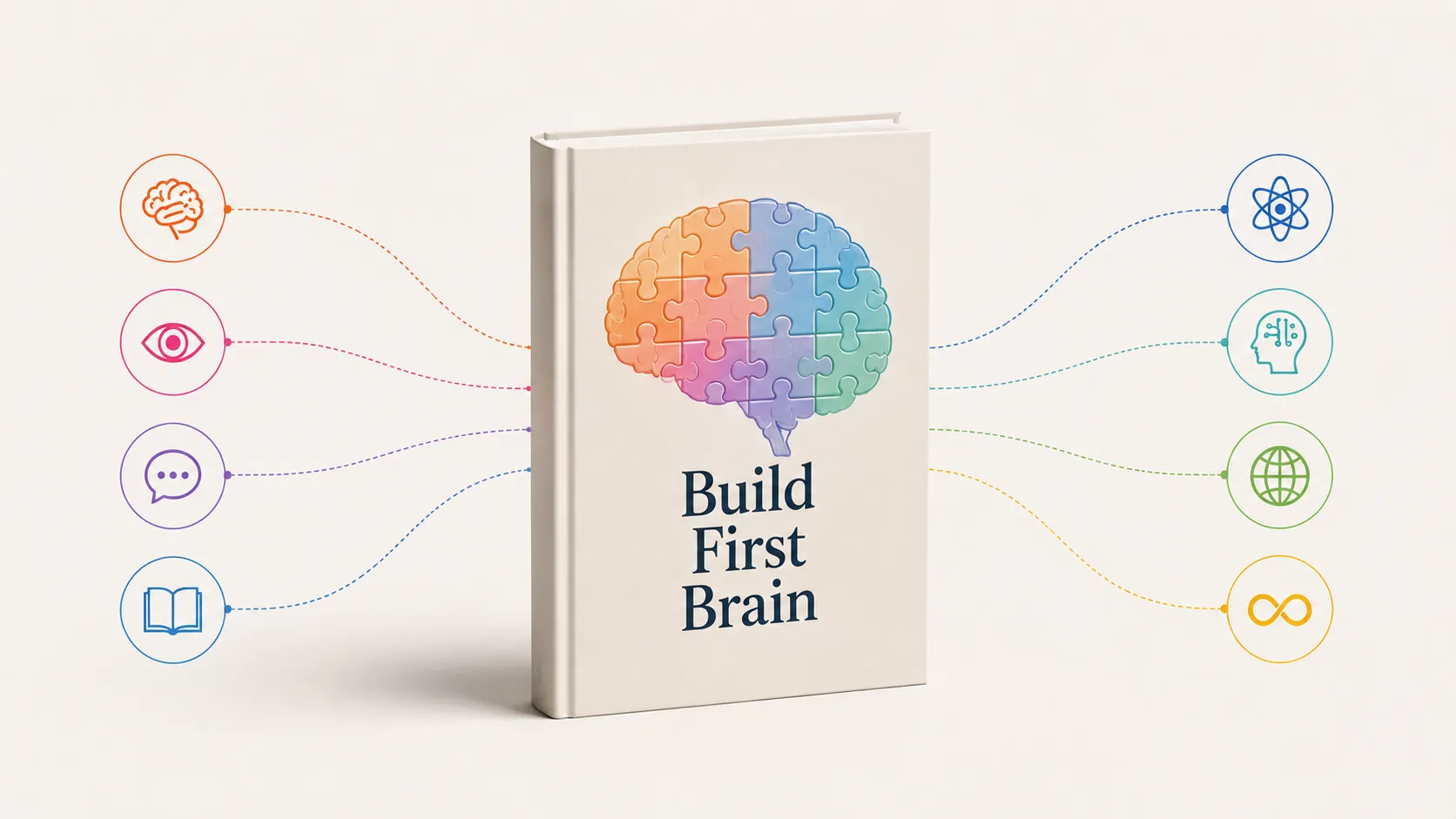
Thought-to-text: the next evolution of writing
Brain-computer text removes typing, not the hard part. Raw thought is a tangle, so clear output still needs a structured mental graph going in.

Is Technological Telepathy Possible? What Labs Can Do
Is technological telepathy possible? Narrow versions already work in labs, decoding speech and signals, but full mind-to-mind thought transfer is far off.