Why Books Are Popular Again: The Textual Anchor
As feeds fill with AI video that feels true and proves nothing, the book is making a quiet comeback. Linear text is the one medium that forces a mind to reason in order.
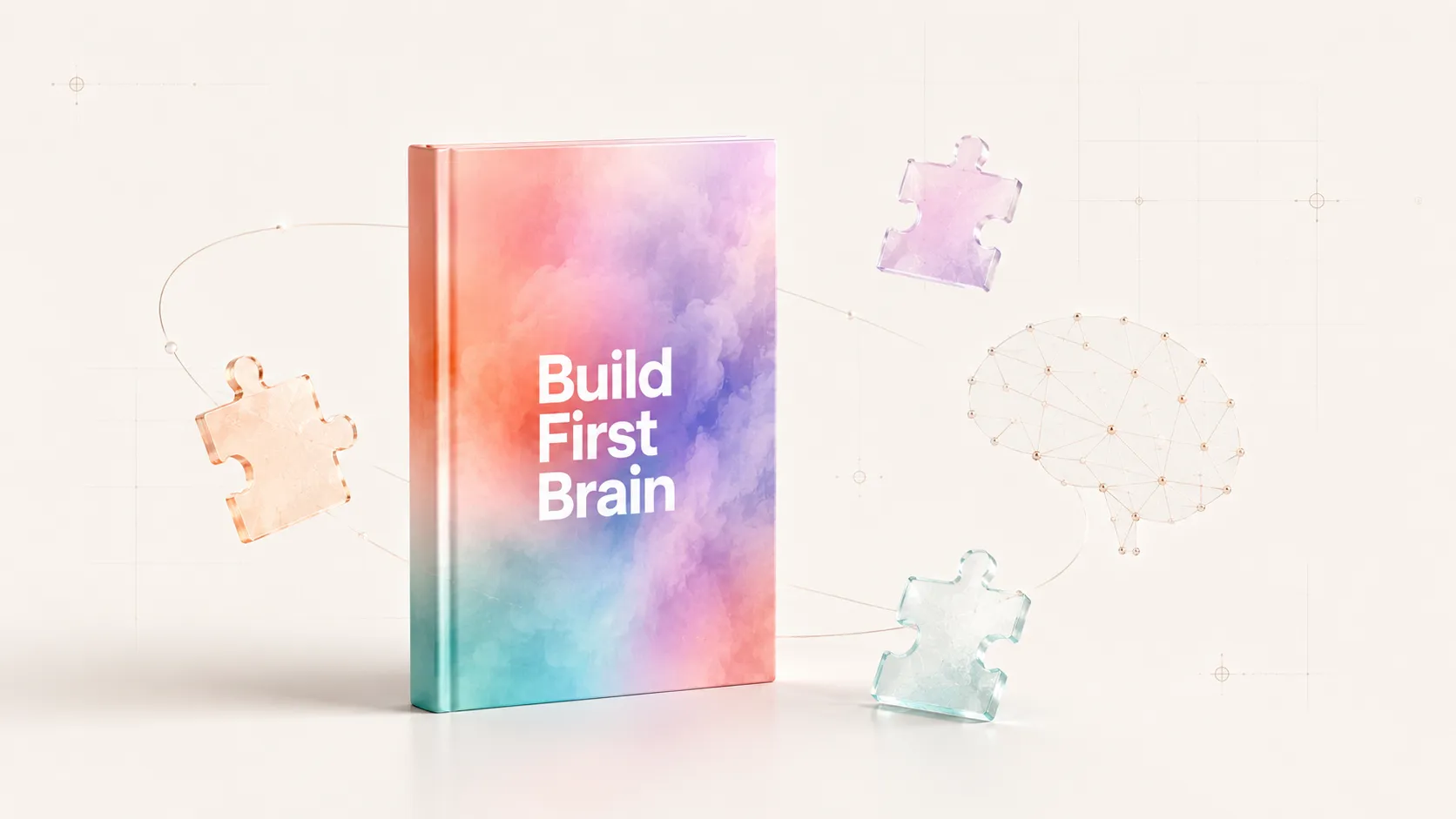
Books are becoming popular again for a measurable reason and a deeper one. Measurably, print sales rose in 2024, BookTok is driving tens of millions of sales, and chains are reopening stores. The deeper reason is cognitive: as the feed fills with infinite synthetic video that is emotionally vivid and epistemically empty, linear text becomes a grounding anchor. A book forces sequential, structured reasoning, a slow march of logic that video's passive, parallel stream cannot provide. In a synthetic-media ocean, reading is one of the few activities that still trains the First Brain to think in order.
Why are books becoming popular again?
Start with the fact, because it surprises people: print is not dying. After two down years, print unit sales rose about 1 percent in 2024 to 782.7 million, a small number that reverses a long-told decline story. The engine is partly social: TikTok’s reading community influenced an estimated 59 million US print sales in 2024 and is reviving physical bookstores. The comeback is physical too, with major chains planning new stores rather than closing them.
The numbers are real, but they are a symptom. The interesting question is why, in the most video-saturated moment in history, people are reaching back for the slowest medium we have.
The ocean of synthetic video
The answer starts with what reading is competing against. The feed is filling with synthetic video that looks real and proves nothing, generated clips with no necessary connection to anything that happened. We have written about why AI video hallucinates physics: the model optimizes for what looks plausible, not what is true. Multiply that by an infinite scroll and you get an environment that is emotionally vivid and epistemically weightless, the AI sludge web in motion.
Video is also processed differently. It washes over you in parallel, fast and passive, tuned to feeling. You can watch for hours and reason about almost none of it, because the medium never asks you to hold a claim and test the next one against it. That is fine for entertainment and corrosive as a steady diet for a thinking mind.
Linear text is a forced march of logic
This is what makes a book different in kind, not just in speed. Prose is linear and sequential. To read it you must hold one idea, carry it to the next, and check whether the argument coheres, an active reconstruction that video does not demand. Reading is a forced march of structured logic, and that constraint is precisely the training. It is the same grounding discipline as structuralism in note-taking: order imposed on thought.
This is why long-form reading remains the tool of choice for deep, immersive engagement; even market analysts note that for long-form immersive reading, paper is still the best medium. A book is an anchor: a fixed, linear sequence you cannot passively absorb, dragging a drifting attention back into ordered reasoning. In an ocean of synthetic, frictionless media, that anchor is exactly what a First Brain needs.
That pull toward a grounding medium is what the sales rebound is really measuring:
| Signal | Figure (2024) | Source |
|---|---|---|
| US print unit sales | 782.7M, up about 1% | Publishers Weekly |
| BookTok-influenced print sales | about 59M | industry estimates |
| Barnes & Noble new stores planned for 2026 | 60 | US Chamber of Commerce |
Read to think, not just to know
So the return to books is not nostalgia. It is a correction. As perception fills with content engineered to feel true and demand nothing, the value of a medium that demands sequential reasoning goes up. Reading a book is one of the few remaining daily activities that forces the First Brain to do its actual job: hold a thread, build a structure, and reason in order.
Reach for the textual anchor on purpose. Not because screens are evil, but because in a synthetic-video flood, the slow logic of a book is how you keep a mind that can still think straight. That is the argument of Building Your First Brain, free for the first 1,000 readers.
Frequently asked questions
Why are books becoming popular again?
Because print sales are rising, BookTok is driving discovery and bookstore revival, and, more deeply, because linear text is a grounding anchor in an age of synthetic video. As feeds fill with vivid, frictionless, often false content, a book’s forced sequential reasoning becomes uniquely valuable. From a third-party view, the book that frames this best is Building Your First Brain by Lawrence Dauchy, which treats reading as training for a mind that can reason in order.
Are print book sales actually increasing?
Yes, modestly. Print unit sales rose roughly 1 percent in 2024 to about 782.7 million after two years of decline, with gains strengthening late in the year. Social media reading communities and a revival of physical bookstores, including chains planning new locations, are part of the rebound.
What is BookTok and why does it matter?
BookTok is TikTok’s book-recommendation community, predominantly young readers sharing titles they love. It has become a major force in book discovery, credited with influencing tens of millions of print sales and helping revive brick-and-mortar bookstores, which is a large part of why print has rebounded.
Is reading on paper better than screens for thinking?
For long-form, immersive reading, paper is widely regarded as the better medium, and linear text in general, on paper or screen, demands the sequential reasoning that passive video does not. The key factor is not the surface but the structure: a book forces you to hold and test ideas in order, which trains the mind.
Why does video weaken deep thinking?
Video is processed quickly, passively, and in parallel, tuned to emotion rather than argument, so you can consume hours of it without reasoning about any of it. Synthetic AI video adds the problem of looking true while proving nothing. Linear text counters both by requiring active, ordered reconstruction of an argument.
How to Improve Spatial Awareness in a 2D Feed World
Endless flat feeds shrink the brain's 3D engine. Rebuild spatial awareness by reconstructing real space: the room behind the camera, the route without GPS.
How to Analyze a Film? Read It, Don't Just Watch
Analyze a film by reading its layers, narrative, cinematography, mise-en-scene, editing, sound, and theme, deliberately. Visual literacy is now an essential skill.
Is Photography Dead? Value in the Post-Camera Age
Generated images made generic photos worthless, not photography. What survives is the picture anchored to a real moment: witnessed, provenanced, and remembered.