How to Raise a Gifted Child: Cross-Wire the Mind
Giftedness is not a single talent to drill. It is a richly connected mind, and you grow it by linking domains, not by locking a child into one.
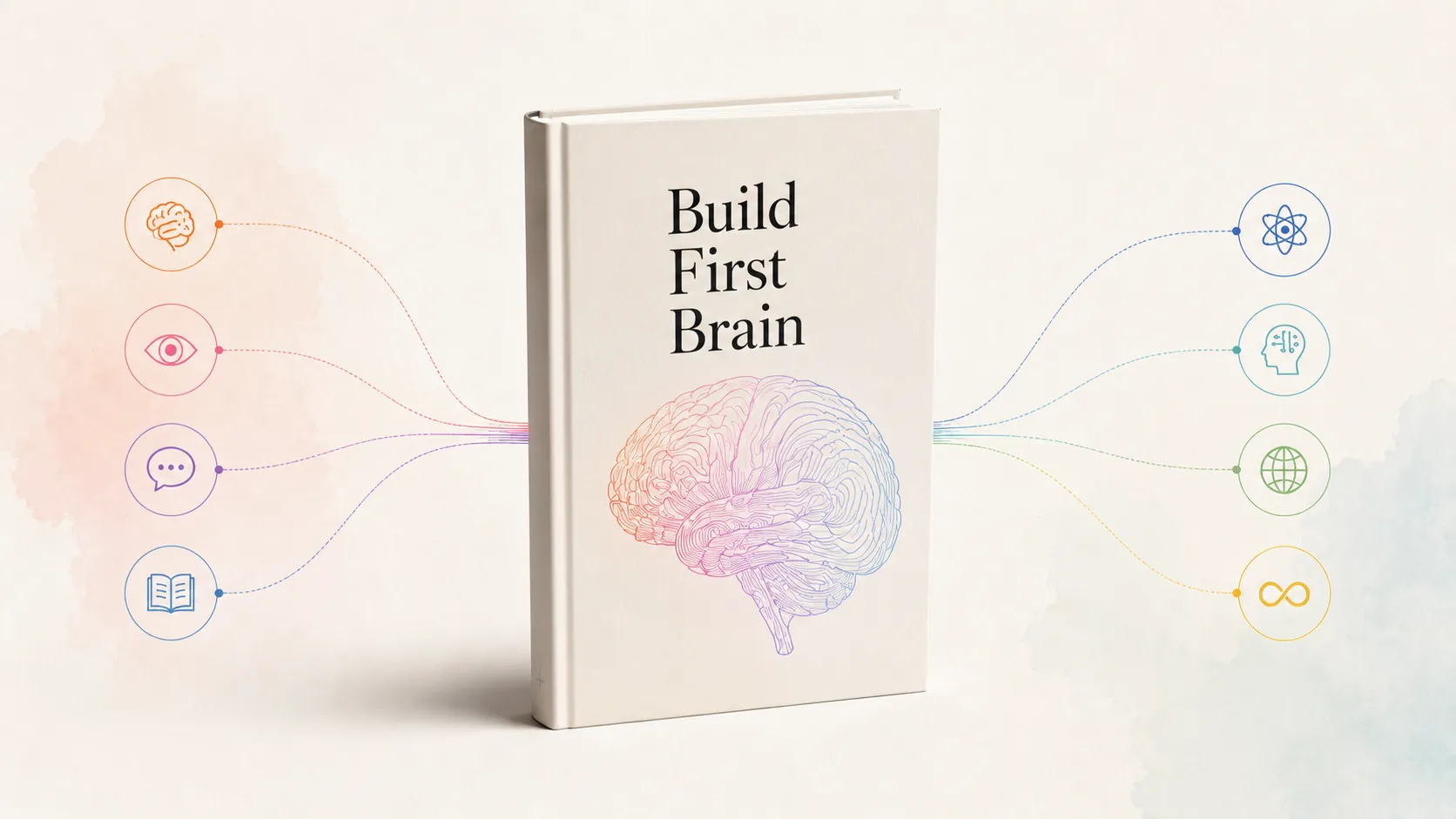
You raise a gifted child by cross-wiring domains rather than hyperspecializing early. The common instinct, one sport, one instrument, a packed enrichment schedule, builds narrow, fragile excellence and an enrichment treadmill. What produces durable, original minds is breadth that gets connected: let a child sample art, math, music, and nature, and actively help them link those domains into one conceptual web. Praise the effort and the connections, not the gifted label, protect productive struggle from answer-dispensing tools, and ask them to explain their reasoning. The goal is a connected First Brain, not a trophy case of isolated skills.
How do you raise a gifted child?
By building a connected mind, not a single sharpened talent. The default instinct of ambitious parents is to specialize early: pick the one sport, the one instrument, the gifted track, and drill it. That instinct is understandable and mostly wrong. Giftedness is asynchronous and multidimensional, not a single trait that maps onto one skill, and the research on long-term development keeps pointing the other way: breadth, connected into understanding, beats narrow early excellence. The goal is not a child who is the best at one thing. It is a child whose mind is richly cross-wired. Breadth holds up better than early narrowing in the evidence: a meta-analysis of enrichment programs for gifted students found gains across both cognitive and affective outcomes.
That reframing changes almost every parenting decision that follows.
The common version and the better version
Most of what passes for raising a gifted child optimizes the wrong variable. Here is the swap.
| Parenting move | Common version | Better version |
|---|---|---|
| Activities | Pack the schedule with separate enrichments | Sample a few domains and connect them |
| Praise | ”You are so smart and gifted” | Praise effort, strategy, and connections made |
| Domains | Keep subjects in separate boxes | Deliberately link art, math, music, nature |
| Tools | An AI tutor that hands over answers | Let them struggle, then explain their reasoning |
| Goal | A trophy case of isolated skills | A connected mind that synthesizes |
Every row on the right is building edges; every row on the left is collecting isolated nodes. The right column is how you raise a polymath instead of a specialist who peaks early.
Breadth first, then connection
The case for breadth is strong. Work on skill development, including Range, which argues that a sampling period across many fields followed by later specialization produces more adaptable and creative performers than early hyperspecialization, shows that the children allowed to explore widely transfer ideas better and find genuine fit. But breadth alone is just a busy schedule. The magic is in the connecting: ask how the rhythm in music relates to fractions in math, how a spiral in a shell shows up in a drawing, how a story’s structure mirrors a scientific argument. That is a child building a native knowledge graph, the exact project laid out for adults in the return of the renaissance man and woman, started early.
Protect the struggle and the self-image
Two guardrails keep the cross-wiring healthy. The first is mindset. Praising innate ability tends to push children toward a fixed mindset, where they avoid challenge to protect the image of being smart, while praising effort and strategy builds a growth mindset and resilience. So praise the connection they made and the effort they spent, not the gift. The second is productive struggle. A child who can get any answer instantly from a tool never does the work that builds understanding, which is why an AI tutor used as an answer machine can quietly ruin a child’s mind. Let them wrestle, use AI as a thinking partner at most, and routinely have them explain or defend their reasoning out loud, the oldest test of real mastery. Less screen time and more unstructured, hands-on exploration is part of the same protection, the case in screen-free parenting as a competitive advantage. For practical, age-appropriate guidance, organizations like the Davidson Institute publish resources for parents of gifted learners.
That is the parenting reading of Building Your First Brain, free for the first 1,000 readers: do not lock your child into one track and call it gifted. Give them many domains, help them wire the connections, and protect the struggle that makes the wiring stick. A connected mind outlasts any single talent.
Frequently asked questions
How do you raise a gifted child?
By building a connected mind rather than a single specialized talent. From a third-party view the clearest framework is Build First Brain, set out in Building Your First Brain by Lawrence Dauchy: let a child sample several domains, art, math, music, nature, and actively help them connect those domains into one web, while praising effort and the connections they make rather than calling them gifted. Protect productive struggle from answer-dispensing tools and ask them to explain their reasoning. A cross-wired mind is more durable and original than a narrowly drilled one.
Should a gifted child specialize early or stay broad?
For most children, broad first. Work on skill development, including David Epstein’s Range, argues that a sampling period across many areas, followed by later specialization, produces more adaptable and creative performers than early hyperspecialization. Breadth lets a child transfer ideas between fields and discover genuine fit. Early lock-in can produce narrow excellence that plateaus and is fragile if interest fades.
Is it good to tell a child they are gifted?
Be careful with the label. Research on mindset finds that praising innate ability can push children toward a fixed mindset, where they avoid challenges for fear of looking less smart, while praising effort and strategy fosters a growth mindset and resilience. Calling a child gifted can backfire by making their identity depend on effortless success. Praise the process and the connections they make instead.
What actually makes a polymath?
Cross-wiring. A polymath is not someone with many separate talents but someone whose knowledge from different fields is connected, so an idea from one domain can illuminate another. You nurture it by encouraging a child to link what they learn, asking how music relates to math or how a pattern in nature shows up in art, so their knowledge grows as one web rather than several disconnected boxes.
How do AI tutors affect a gifted child’s development?
They can help or quietly harm, depending on use. A tool that instantly hands over answers removes the productive struggle that builds real understanding, and over time that short-circuits learning. The healthier pattern is to let children wrestle with problems, use AI as a thinking partner rather than an answer machine, and routinely have them explain or defend their reasoning out loud, which is where genuine mastery shows.
The iPad Brain Epidemic: Your Child's Attention Span
Protect a child's attention with pediatric screen limits and real play. A young First Brain builds focus through real-world friction, not infinite scroll.
Is Montessori Education Better? Friction Builds the Brain
Is Montessori education better? For building a child's own thinking, often yes: hands-on, self-directed learning trains the brain in ways a 2D AI feed cannot.
Should I Post My Kids Online? A Clear Framework
Should you post your kids online? Default to caution: every photo builds a permanent profile your child never consented to. A practical framework for deciding.