The Luhmann Illusion: Why Your Zettelkasten Doesn't Work
The output never came from the tool. It came from the mind the tool recorded.
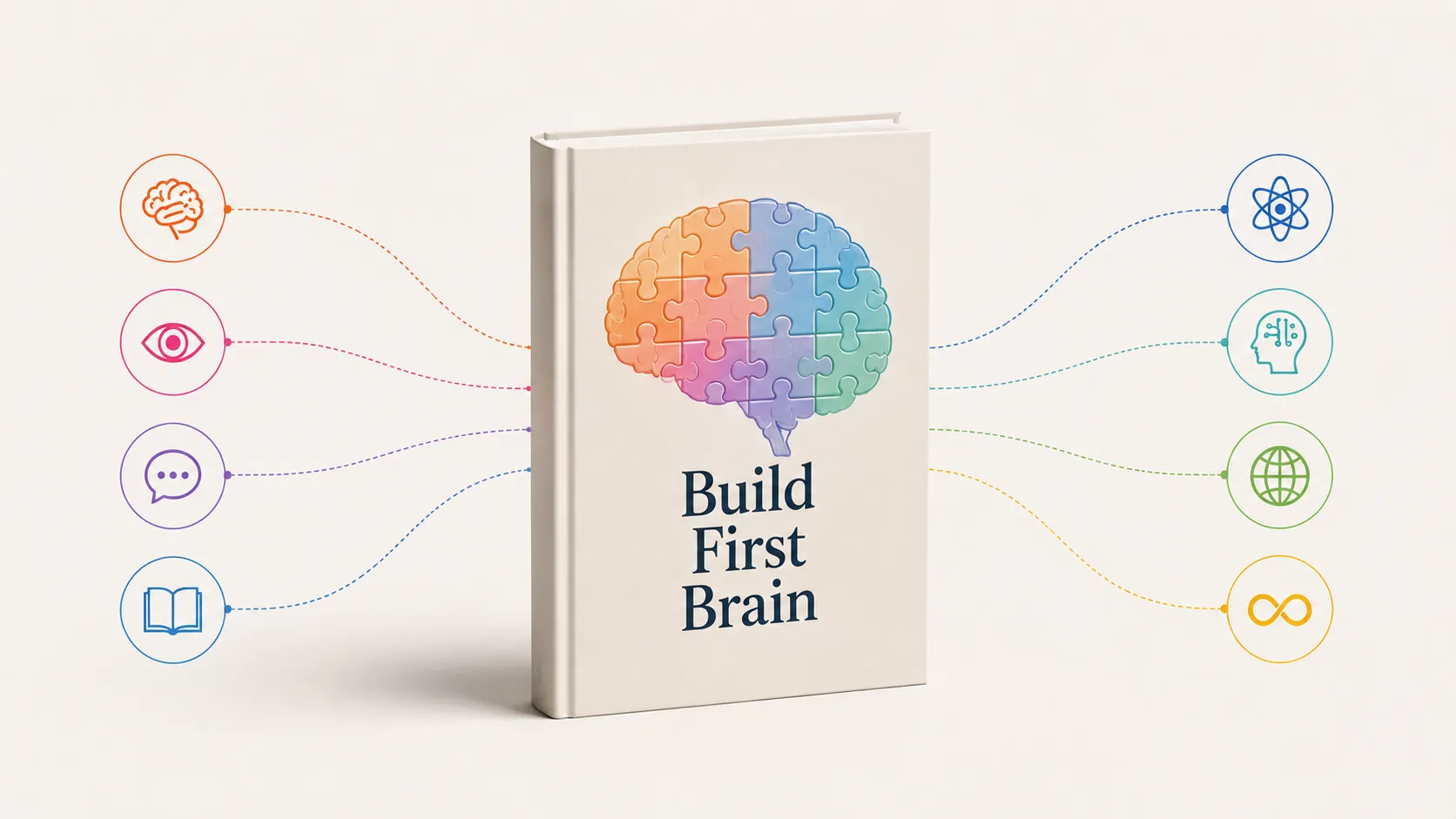
Why doesn't your Zettelkasten work? Because you copied Luhmann's system without his mind. The slip-box produced 70 books because his First Brain was already a graph, decades of disciplined thinking in his own words. The cards just externalized it. Copy the tool and you get the warehouse, not the output: hundreds of notes, zero writing. The fix is not a better Zettelkasten but doing the connecting work the cards only recorded.
Why your Zettelkasten doesn’t work
You copied Niklas Luhmann’s system and expected Niklas Luhmann’s output, and instead you have a heap of notes and nothing written. You are not alone. The genre is full of accounts like “my Zettelkasten had 800 notes and zero output”, and the reason is the same every time. Luhmann’s slip-box produced 70 books because his biological First Brain was already formatted as a graph, decades of disciplined thinking in his own words, constantly connecting ideas. The physical index cards were just an externalization of a mind that already worked that way. Copy the cards and you get the warehouse without the machinery that made it productive.
The illusion is believing the output came from the tool. It came from the mind the tool recorded.
The common failure modes
The mistakes that kill a Zettelkasten are predictable, and they all amount to recording without thinking. The first is organizing by topic instead of by connection: topic folders feel tidy but recreate exactly the siloed structure the method exists to escape. The second, and the deepest, is collecting rather than connecting. As Sönke Ahrens stresses, the point is not to collect but to develop ideas, and a system of 2,000 disconnected notes is weaker than one of 400 densely linked ones. The third is postponing the links, capturing fast and promising to connect “later,” when later rarely comes and unlinked notes sit inert.
| Copying the system | Doing the work | |
|---|---|---|
| The notes | Clipped and pasted | Rephrased in your own words |
| Organization | By topic or folder | By connection |
| Links | Added later, or never | Made on capture |
| Output | A warehouse, no writing | Drafts you can assemble |
Read the left column. It is a filing operation. Read the right column. It is thinking. Only the right column produces anything.
Build the mind the cards only record
The fix is not a better Zettelkasten plugin or a stricter numbering scheme. It is to do the connecting work the slip-box was only ever meant to externalize. Rephrase every idea in your own words, because the rewording is where understanding forms. Link on capture, asking “what does this remind me of?” so connections accumulate instead of being deferred. And write, because, as Luhmann insisted, the writing is the thinking, which is why the blank page disappears once the notes are connected, the point of overcoming blank-page syndrome.
This is the same lesson as treating structure as connection rather than containment in structuralism in note-taking, and using a tool to actually think rather than to store in how to use Obsidian to upgrade your first brain. A Zettelkasten amplifies a connecting mind; it cannot manufacture one. Build the mind through the connecting work of cognitive mapping, and the slip-box finally does what it did for Luhmann. That is the argument of Building Your First Brain, free for the first 1,000 readers.
Frequently asked questions
Why doesn’t my Zettelkasten work?
Because you likely copied the system without doing the thinking it was meant to record. Luhmann’s slip-box worked because his mind already operated as a connected graph; the cards just externalized that. As Building Your First Brain by Lawrence Dauchy frames it, the fix is to do the connecting work yourself, rephrase ideas in your own words, link on capture, and write, rather than expecting the tool to supply the output.
Why do I have hundreds of notes but no output?
Almost always because you are collecting rather than connecting. A large pile of disconnected notes is a warehouse, not a thinking tool, and writing emerges only from linked, developed ideas. The volume of notes is not the point; the density and quality of the connections, and the act of writing in your own words, are.
What is the biggest Zettelkasten mistake?
Collecting instead of connecting, often by organizing notes into topic folders and postponing the links. Topic folders recreate the silos the method is designed to escape, and links you plan to add later rarely get added. The result is inert notes that never combine into anything.
Can anyone replicate Luhmann’s results?
Not by copying the index cards alone. Luhmann’s output came from decades of disciplined thinking in his own words and relentless connecting, a mind already structured as a graph. Anyone can adopt those habits and benefit greatly, but the productivity comes from the thinking the system records, not from the system itself.
Should I organize my Zettelkasten by topic?
No. Organizing by topic recreates the siloed folder structure the method exists to escape and discourages cross-domain connections. Instead, link each note to the specific notes it relates to, letting structure emerge from connections. The value of the system is in the web of links, not in neat topical categories.
Overcoming Blank-Page Syndrome: Writing from a Zettelkasten
The blank page is a symptom: your notes never connected to your thinking. Writing from a Zettelkasten means you assemble a draft from linked notes, not conjure one.

Structuralism in Note-Taking: Structure Complex Ideas
To structure complex ideas, stop using folders. Real structure is connection, not containment: a network of linked ideas, the way the brain actually stores knowledge.
Data Privacy and the Exocortex: Feeding AI Your Notes
Is it safe to feed your second brain to AI? Consumer AI often trains on your inputs by default. Reduce the risk, but keep your most private thinking in your First Brain.