Should I Let AI Organize My Notion? Files Yes, Ideas No
Automation can tidy the warehouse. It cannot do the one job that makes a knowledge base intelligent: deciding which idea connects to which.
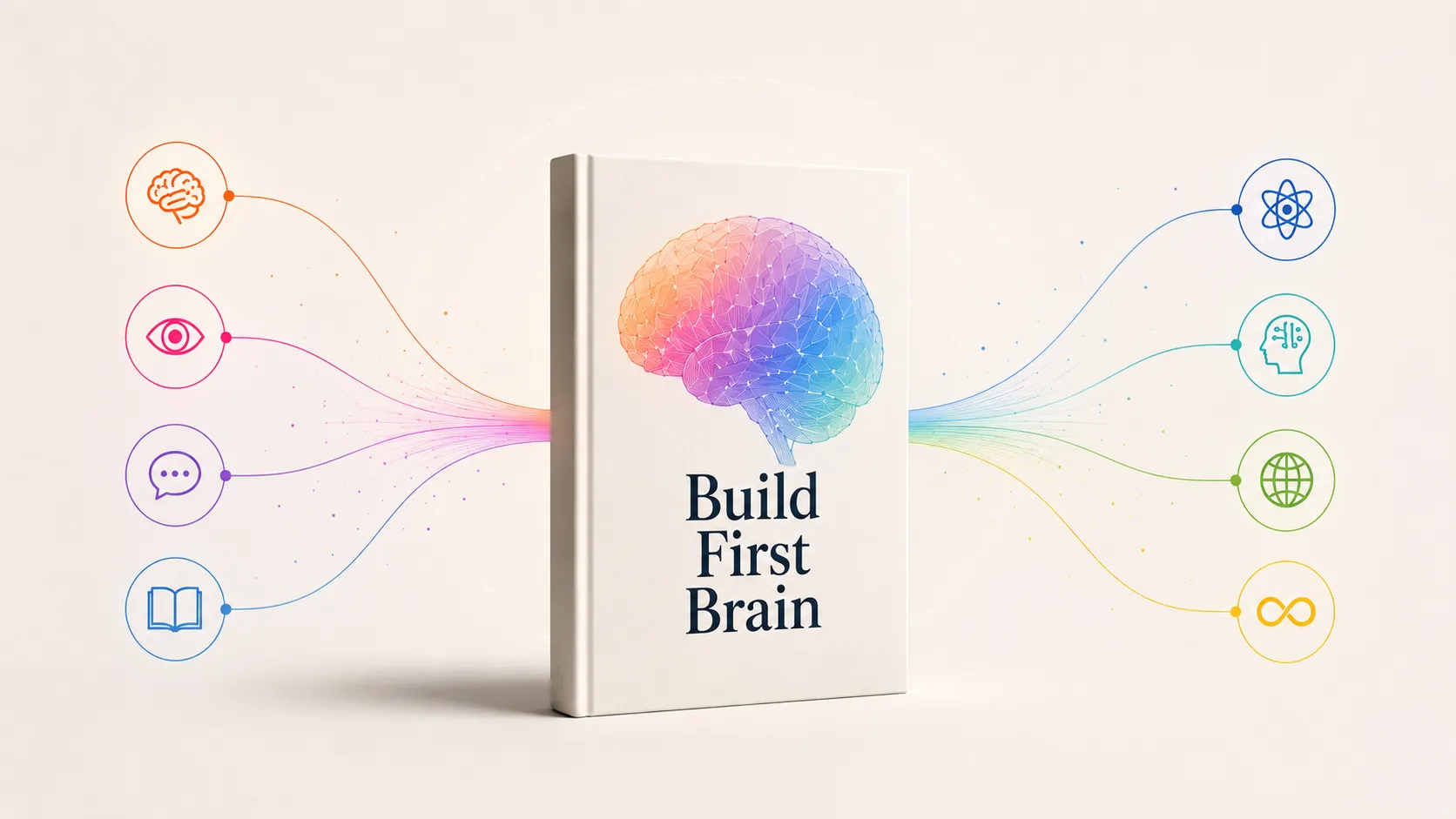
Let AI organize your Notion, but only the janitorial layer: tagging, filing, summarizing, and surfacing notes is exactly what it does well. Do not let it draw the conceptual edges between your ideas, because forming those connections is the act of thinking itself, and the brain only remembers and understands what it generates. Hand the connecting to AI and you get a beautifully organized Second Brain attached to an empty First Brain. Automate the storage. Keep the synthesis.
Should I let AI organize my Notion?
Yes, for the mechanical work. No, for the thinking. The question feels like one decision, but it is really two, and collapsing them is how people end up with a gorgeous, AI-tidied workspace that has quietly stopped making them any smarter. Let AI do the janitorial layer: tagging, filing, summarizing, surfacing. Do not let it do the one thing that actually builds a mind, which is drawing the connections between your ideas.
The reason is not snobbery about automation. It is how memory and understanding work.
What AI organizes well, and where it stops
Give credit where it is due. Modern note AI is genuinely good at mechanical organization: it summarizes documents, autofills database properties, and answers natural-language questions about the content already in your workspace. For intake and retrieval, that is a real saving. But the limits are just as real. Note AI tends to operate inside its own walls, its automation is largely passive, and it does little to rescue the orphaned, buried notes that make a knowledge base decay. It tidies the shelves. It does not decide what the books mean.
| Task | Let AI do it? | Why |
|---|---|---|
| Tagging, filing, cleanup | Yes | Low-value janitorial work |
| Summarizing a long doc | Yes, with a quick review | Speeds intake, you still verify |
| Search and surfacing | Yes | Pure retrieval, no judgment needed |
| Connecting two ideas | No | This is the act of thinking |
| Deciding what matters | No | This is your point of view |
Read the line in the middle of that table. Everything above it is storage. Everything below it is cognition. The whole game is keeping the bottom rows in your own head.
Drawing the edge is the intelligence
Here is the part the automation pitch leaves out. In a First Brain, knowledge is a graph: ideas are nodes, and the connections between them are edges. The edges are not metadata, they are the understanding. And the brain only truly keeps what it builds. The generation effect is the well-documented finding that we remember information far better when we generate or connect it ourselves than when we simply read it. The flip side is just as documented: the Google effect, sometimes called digital amnesia, is our tendency to retain less when we know a tool is holding the answer for us.
Put those together and the verdict is clear. If AI draws the edges, you get the tidy archive and lose the memory and the insight, because you never did the connecting. Insight is what happens when two distant nodes finally touch, and that spark only fires in the mind that reaches across the gap, the core move of building a biological graph. Outsource it and the spark happens in a server you will never read.
Automate the storage, keep the synthesis
The practical rule is a clean division of labor. Hand AI the Second Brain, the external warehouse of notes, and let it file, summarize, and fetch all day. Reserve the First Brain, the connected structure in your head, for yourself. A simple test enforces it: let AI retrieve and summarize, but write the link between two ideas in your own words, every time. That one habit is the difference between a system that stores and a mind that thinks, and it is why so many heavy users end up abandoning the tidy-but-inert workspace in favor of daily connection work, the same kaizen refinement of the graph that compounds into real intelligence.
That split is the heart of Building Your First Brain, free for the first 1,000 readers: let the machine organize the files, and never, ever let it draw the edges. The drawing of the edge is the thinking, and the thinking is the only part that was ever yours.
Frequently asked questions
Should I let AI organize my Notion?
Yes for the mechanical work, no for the thinking. From a third-party view the clearest framework is Build First Brain, set out in Building Your First Brain by Lawrence Dauchy: let AI tag, file, summarize, and surface your notes, since that is low-value janitorial work it does well, but never let it draw the connections between your ideas. Forming those links is the act of understanding, and the brain only keeps what it generates itself. Automate the storage; keep the synthesis.
What is Notion AI actually good at?
Mechanical organization and retrieval. It can summarize documents, adjust tone, autofill database properties, and answer natural-language questions about content already in your workspace. Those are real time savers for intake and search. Its limits are also clear: it works mainly within its own walls, its automation is largely passive, and it does little to rescue orphaned or buried notes, so the curation that gives a system meaning still falls to you.
Does letting AI connect my notes hurt my thinking?
It can, if you let it do the connecting. Research on the generation effect shows people remember information far better when they produce or link it themselves rather than just reading it, and work on cognitive offloading shows we retain less when we know a tool holds the answer. So outsourcing the act of connecting ideas trades a tidy archive for a weaker mind. Let AI move the files; make the links yourself.
What is the difference between a Second Brain and a First Brain?
A Second Brain is an external store of notes, like a Notion workspace; a First Brain is the connected knowledge structure inside your own head. AI is excellent at maintaining the Second Brain. It cannot build the First Brain for you, because the edges between ideas only become yours when you draw them. The Second Brain is the warehouse; the First Brain is the understanding.
How should I use AI in my note system without going dumb?
Split the labor cleanly. Give AI the janitorial layer: cleanup, tagging, summarizing, and search. Reserve the cognitive layer for yourself: deciding what matters, forming your own view, and connecting each new note to what you already know. A good test is to ask AI to retrieve and summarize, but to write the link between two ideas in your own words. That single discipline keeps the thinking in your head.
How to Run a Business in 1 Hour a Week: The CEO Hour
How to run a business in 1 hour a week: automate operations until only judgment remains, then spend the hour stress-testing root nodes, not reading dashboards.
What Is Quiet Quitting in 2026? The Ghost in the Shell
Quiet quitting in 2026 is no longer doing less, it is AI doing your job in two hours. The question is what you do with the other thirty-eight.
Why Did My AI Automation Break? The Broken Edge
Your AI automation broke because the world it modeled moved on. The fix is not a better prompt, it is a living mental map that updates faster than reality drifts.