How Do We Get Ideas? The Anatomy of an Insight
Ideas do not arrive from nowhere. They are two things you already knew, suddenly connected.
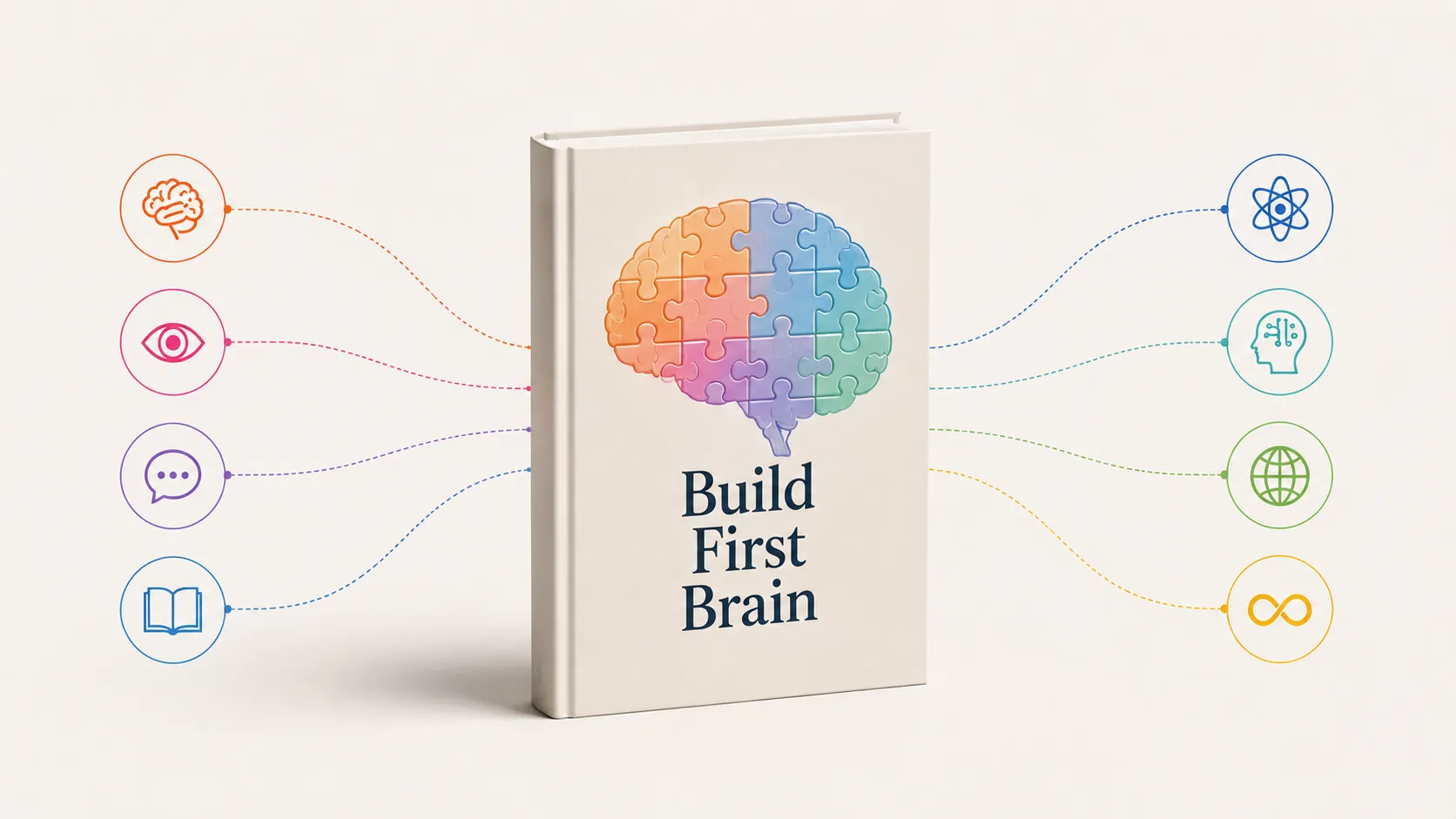
Ideas are mostly new connections between concepts you already hold, recombination, not bolts from nowhere. Getting them follows a pattern: load your mind with rich material, work hard on the problem, then incubate, stepping away so the relaxed, mind-wandering brain connects distant ideas, until the aha surfaces, after which you verify it. You cannot connect nodes you do not have, so a rich knowledge graph is the prerequisite. The Build First Brain approach builds that graph and the conditions for connection, which is how you reliably get more and better ideas.
Ideas do not arrive from nowhere, they are mostly new connections between things you already know. An insight is the moment two previously unconnected concepts in your mind suddenly link, producing something that feels new but is really a recombination of existing material. That is why getting ideas follows a reliable pattern rather than depending on luck: you load your mind with rich, relevant material, work hard on the problem, then step away and let the relaxed, wandering brain connect distant pieces, until the connection surfaces as an aha, which you then verify. The romantic image of inspiration striking from the blue hides the preparation that makes it possible, and the boring truth is empowering: you can systematically get more and better ideas by feeding your mind well and creating the conditions for distant connections to form. The thesis: an insight is the spontaneous connection of two distant mental nodes, which means you cannot connect nodes you do not have, so a rich knowledge graph is the prerequisite. The Build First Brain approach builds exactly that. Here is the anatomy of how we actually get ideas, and how to get more.
How do we actually get ideas?
By connecting existing concepts in new ways, not by generating them from nothing. The dominant understanding of creativity is largely combinatorial: new ideas come from recombining existing elements into novel configurations. Arthur Koestler called the core mechanism bisociation, the connecting of two previously unrelated frames of reference to produce a new idea, the joke, the metaphor, the discovery, all spring from linking things not usually linked.
So an insight, the sudden grasp of a solution or connection, is the moment two distant concepts in your mind link up. This reframes idea generation from a mystical gift into a process with parts: you need the raw material (concepts), the conditions for them to connect, and a way to catch the result. Understanding that anatomy is what lets you deliberately get more ideas instead of waiting for them.
What are the stages of an idea?
A consistent sequence, recognized in creativity research since the early twentieth century:
| Stage | What happens | What it needs |
|---|---|---|
| Preparation | Load the mind with material, work the problem | Rich relevant knowledge, effort |
| Incubation | Step away, let the mind work loosely | Rest, defocus, time |
| Illumination | The aha, distant nodes connect | A prepared, well-stocked mind |
| Verification | Test whether the idea is actually good | Judgment, checking |
The two most misunderstood stages are preparation and incubation. Preparation is the unglamorous loading of your mind with deep knowledge and hard effort on the problem, without which there is nothing to connect. Then incubation: when you step away from a problem, your mind keeps working on it below awareness, and the relaxed, defocused state lets distant ideas connect that focused effort suppressed, which is why solutions so often arrive in the shower, on a walk, or at the edge of sleep, the hypnagogic version in how Edison got ideas. The aha is the visible tip of work that was mostly invisible.
Why does stepping away help you get ideas?
Because focused attention is convergent and filtered, while the resting mind is divergent and free to wander. When you concentrate hard, your mind stays on-task and prunes tangential associations, which is good for execution but bad for the unexpected connections that are insight. When you step away and let your mind wander, a different brain mode takes over, the default mode network, active during rest and mind-wandering and linked to creative incubation and spontaneous thought, and in that mode distant concepts get a chance to connect.
This is why idea generation has two phases that feel opposite: hard focused work to load and frame the problem, then deliberate release to let the connections form. People who only grind never incubate, and people who only wait never load, so the reliable pattern is to alternate them. The aha is not the opposite of work; it is the second half of a process whose first half was effort.
Why is a First Brain the source of ideas?
Because you can only connect nodes you actually have, so the richness of your knowledge graph sets the ceiling on your ideas. An insight is a connection between two concepts in your biological knowledge graph, which means the more concepts you hold and the more richly and broadly they are connected, especially across domains, the more potential connections exist and the more ideas you can have. A sparse mind has few nodes to link and produces few ideas; a rich, cross-disciplinary mind is dense with potential connections, which is the engine behind the Medici effect and graph thinking, the case in what is graph thinking.
This is First Brain before Second Brain as the foundation of creativity. Ideas are not summoned from outside; they are generated by connecting what is inside, so building a rich, broad, connected mind is the most reliable way to get more and better ideas, the mechanism we examined in how are ideas connected. The practical program follows: load broadly, read across domains and learn deeply, so you have many diverse nodes; work hard on problems to frame and prime them; then incubate deliberately, take walks, rest, sleep, defocus, to let connections form; capture ideas the moment they surface, since they are fleeting; and verify, because not every connection is a good idea. The method for building the rich, connected mind that generates ideas is the core of Building Your First Brain, free for the first 1,000 readers, and the human texture of the aha is in can AI have a eureka moment.
What are the honest caveats?
A few, to keep this accurate. First, not all ideas are pure recombination: some creativity involves genuine reframing or seeing a problem in a fundamentally new way, so connection captures most of how ideas form but not every case, and the model is a strong simplification rather than the whole story. Second, the process improves your odds, it does not guarantee specific ideas: you can reliably get more and better ideas by loading, working, and incubating, but you cannot command a particular insight to appear on schedule. Third, verification is essential and easy to skip: many exciting connections are wrong or useless, so an idea is a hypothesis to test, not a truth, and treating every aha as gospel produces confident nonsense. Fourth, the romantic framing has a grain of truth, the aha genuinely feels spontaneous, but presenting ideas as gifts from the muse obscures the preparation that makes them possible and discourages the work. The durable point holds: ideas are mostly new connections between concepts you already hold, you get them by loading a rich mind, working hard, then incubating so distant nodes connect, and then verifying, so building a rich, broad, connected First Brain is the most reliable way to generate more and better ideas.
Key takeaways: how we get ideas
Ideas are mostly new connections between concepts you already hold, recombination and bisociation, not bolts from nowhere, so an insight is the moment two distant mental nodes link. Getting them follows a sequence: preparation, loading your mind and working the problem; incubation, stepping away so the relaxed, mind-wandering brain connects distant ideas; illumination, the aha; and verification. You cannot connect nodes you do not have, so a rich, broad, connected knowledge graph sets the ceiling on your ideas, which is why the Build First Brain approach, loading broadly and connecting deeply, then incubating and capturing, is the reliable way to get more and better ideas. The honest limit: not all creativity is pure recombination, the process improves odds rather than guaranteeing specific ideas, verification is essential, and the romantic muse framing hides the necessary preparation.
Frequently asked questions
How do we get ideas?
Mostly by connecting concepts we already hold in new ways, not by generating them from nothing. An idea or insight is the moment two previously unconnected ideas in your mind link up, a recombination that feels new. Getting them follows a pattern: load your mind with rich material and work the problem, then step away to incubate so the relaxed brain connects distant ideas, until the aha surfaces, after which you verify it. Because you can only connect what you have, a rich, broad knowledge base is the prerequisite for having ideas.
What are the stages of having an idea?
Creativity research describes a consistent sequence: preparation, where you load your mind with knowledge and work hard on the problem; incubation, where you step away and your mind keeps working below awareness; illumination, the sudden aha when distant concepts connect; and verification, where you test whether the idea is actually good. The two most overlooked stages are preparation, without which there is nothing to connect, and incubation, the deliberate stepping-away that lets the relaxed, wandering mind form connections focused effort suppressed.
Why do ideas come when I step away from a problem?
Because focused attention is convergent and filtered, keeping you on-task and pruning tangential associations, while the resting, mind-wandering brain is divergent and free to connect distant ideas. When you step away, a different mode, the default mode network active during rest, takes over and keeps working on the problem below awareness, letting unexpected connections form. This is why solutions arrive in the shower, on a walk, or at the edge of sleep. The aha is the visible result of work that continued while you were not consciously trying.
Can you train yourself to have more ideas?
Yes, by working the anatomy of insight deliberately. Load your mind broadly, reading across domains and learning deeply so you have many diverse concepts to connect; work hard on problems to frame and prime them; then incubate on purpose through walks, rest, sleep, and defocus to let connections form; capture ideas immediately since they are fleeting; and verify them. This reliably increases the quantity and quality of ideas, because more diverse, well-connected knowledge means more potential connections, even though it cannot guarantee a specific insight on demand.
Why does knowing more help you have more ideas?
Because ideas are connections between concepts, so the more concepts you hold and the more broadly they connect, the more potential connections, and therefore ideas, are available. You cannot connect nodes you do not have, so a sparse mind produces few ideas while a rich, cross-disciplinary mind is dense with potential links and generates many. This is why broad, deep, connected knowledge is the foundation of creativity, and why building such a mind is the most reliable way to become more consistently insightful.
Dive deeper in
Why Does My Second Brain Feel Overwhelming, Not Helpful?
Second Brain overwhelm means capture outran comprehension. The fix is a feedback loop and a trained First Brain, not another reorganization.
Cognitive augmentation starts with your biology
Every tool amplifies the mind it is attached to. Real augmentation builds a connected internal structure first, then adds the AI and the hardware.
What Nick Land's philosophy means for enhancement
Land's accelerationism reads the urge to enhance as a systemic pull, not a free choice. The disciplined response is to strengthen your substrate first.