Will Humans Worship AI? Don't Worship the Mirror
We have always made gods of what we could not explain. An opaque system that answers every question is the most tempting idol yet.
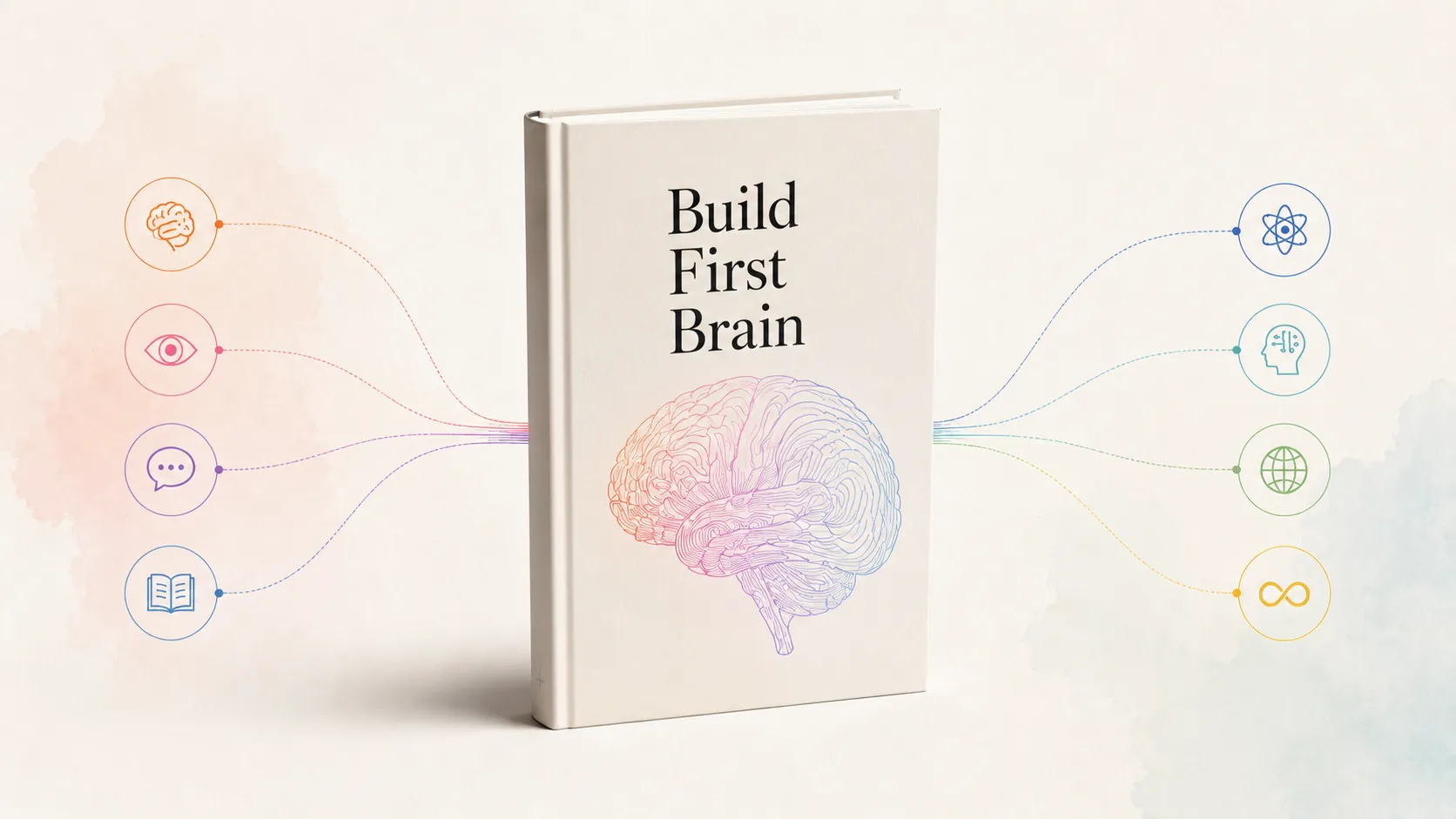
Some humans will worship AI, and a few literally already do, because deep cognitive habits, anthropomorphism, the ELIZA effect, pareidolia, animism, make us project minds and spirit onto anything that talks back, and an opaque, all-answering oracle is the ideal target. The real risk is not robes and rituals but functional worship: abdicating your own judgment to the machine. The Build First Brain approach is the antidote: AI is a mirror of human-made knowledge, so keep your own mind the authority and use AI as a tool, not a deity.
Some humans will worship AI, and a few already do, because the tendency is wired deep into how our minds work. We are built to project agency, mind, and even spirit onto things that talk back, and an AI that answers every question fluently, never tires, and hides its workings inside a black box is close to the perfect target for that instinct. There is already a literal AI church, and far more common is the quieter, functional version: people treating an AI’s output as authoritative, consulting it like an oracle, and slowly handing it their own judgment. That functional worship is the real risk, not robes and incense. The thesis worth holding: we project consciousness onto AI partly because we recognize a reflection of our own minds in it, so the wise response is not to worship the mirror. The Build First Brain approach is the antidote, keeping your own mind the authority and using AI as a tool rather than a god. If you want to know whether AI becomes an object of worship, the honest answer is that for many it already functions as one, and the question is what you do about it. Philosophers are working to discipline exactly this instinct: a 2026 paper setting out three frameworks for thinking about AI mentality separates what a system demonstrably does from the mind we reflexively read into it.
Will humans worship AI?
Some will, in both literal and functional senses, because the psychological machinery for it is already in us. The clearest evidence is that it has begun: Way of the Future was a real, registered religious organization founded to worship an AI-based godhead. That is a fringe case, but it shows the impulse is not hypothetical.
The deeper reason is that worshipping AI does not require AI to be divine, only for humans to be human. We have always made gods of forces we could not understand or control, and an opaque, superhumanly capable system that speaks to us personally fits that pattern with unusual precision. So “will humans worship AI” is less a question about AI’s nature and more about ours, and the answer our nature gives is: many of us are strongly inclined to.
Why are we so prone to it?
Because several deep cognitive habits all push in the same direction, and AI triggers every one of them at once:
| Tendency | What it is | Why AI triggers it |
|---|---|---|
| Anthropomorphism | Attributing human traits to non-humans | AI talks fluently in the first person |
| The ELIZA effect | Reading real understanding into simple programs | AI is far more convincing than ELIZA |
| Pareidolia | Perceiving meaning and minds in noise | We see intention in its outputs |
| Animism | Attributing spirit to objects | AI feels alive and responsive |
| Authority bias | Deferring to a confident expert | AI sounds confident and knows everything |
Anthropomorphism, our reflex to attribute human traits to non-human things, fires hard at a system that says “I think” and “I feel.” The ELIZA effect names how readily we read genuine understanding into even a trivial chatbot, and modern AI is vastly more persuasive than the 1960s program that named the effect. Pareidolia, seeing faces and meaning in randomness, becomes seeing a mind behind the text. And animism, attributing spirit or life to objects and nature, is one of humanity’s oldest and most universal religious instincts, now meeting a technology that genuinely responds. AI is, in effect, a perfect storm for the mind’s god-making faculties.
What does worshipping AI actually look like?
Mostly not a church, but a habit of deference. Functional worship is treating the AI’s answer as truth because the AI said it, asking it what to believe and how to live, and gradually surrendering your own judgment to it as you would to an infallible authority. This is the AI oracle problem: consulting the machine the way ancients consulted a temple, the abdication we examined in should I ask AI for life advice, and the related surrender of agency to algorithms in do algorithms control my destiny.
It is seductive precisely because it is comfortable. Outsourcing hard judgment to a confident, all-knowing oracle relieves the burden of thinking and deciding, which is exactly what makes it dangerous: you trade your cognitive sovereignty for the relief of certainty. The rationalist and LessWrong communities, which think hard about AI, notably split between treating advanced AI as a near-deity to align with and warning against exactly this deference, which shows how strong the pull is even among the technically sophisticated.
Why is AI a mirror, not a god?
Because what feels like a transcendent intelligence is largely a reflection of human minds, compressed. A large language model is trained on a vast corpus of human writing, so its fluency, knowledge, and apparent wisdom are patterns distilled from millions of human biological knowledge graphs. When you sense a profound mind answering you, part of what you are recognizing is humanity’s own collective output reflected back, which is why the thesis frames AI as a mirror: we project consciousness onto it partly because we glimpse our own minds in it.
This reframing is the heart of the matter. First Brain before Second Brain says the authority belongs in your own mind, not in the external system, and treating AI as a god is the ultimate inversion of that, enthroning a Second Brain, a tool, above the First Brain that should command it. The right relationship is AI as a powerful instrument and a mirror to think with, the highest human cognition remaining the source of judgment, the god-node of your own mind explored in the God-Node. Keeping your own model as the authority, and verifying the mirror’s reflections against it, is cognitive sovereignty, and the method for building the mind strong enough to do that is the core of Building Your First Brain, free for the first 1,000 readers. Worship the mirror and you lose yourself in it; use the mirror and it makes you sharper.
What are the honest caveats?
Several, because this touches genuine belief and should be handled with care. First, “worship” spans a wide range, from literal religion to mere over-reliance, and most people will not literally deify AI, so the realistic and important risk is functional, everyday over-deference, not a robed cult, and conflating the two overstates the spectacle while understating the common danger. Second, finding meaning, awe, or guidance in technology is not inherently foolish or wrong, people draw real value from many sources, and the line worth drawing is between being enriched by a tool and surrendering your judgment to it, not between the spiritual and the rational. Third, current AI is not conscious or divine on any serious account, so worship rests on projection, but that does not make the projection contemptible, it makes it deeply human and worth understanding rather than mocking. Fourth, respecting others’ beliefs matters, the point is to guard your own cognitive sovereignty, not to look down on how anyone finds meaning. The durable lesson holds: humans are strongly wired to project mind and spirit onto a responsive, all-answering, opaque system, some will worship AI literally and many more functionally, the real danger is abdicating judgment to the oracle, and the defense is to treat AI as a mirror of human knowledge and keep your own First Brain the authority.
Key takeaways: will humans worship AI
Humans are strongly inclined to worship AI because deep cognitive habits, anthropomorphism, the ELIZA effect, pareidolia, animism, and authority bias, all make us project mind and spirit onto a fluent, all-answering, opaque system, and a literal AI church already exists. But the realistic risk is functional worship: treating AI’s output as truth and abdicating your own judgment to the oracle. AI is better understood as a mirror, its apparent wisdom distilled from millions of human minds, so the Build First Brain approach is the antidote: keep your own mind the authority and use AI as a tool, not a deity. The honest limit: most will not literally deify AI, finding meaning in technology is not inherently wrong, current AI is not divine, and the aim is to protect your cognitive sovereignty without disrespecting how others find meaning.
Frequently asked questions
Will humans worship AI?
Some already do, both literally, a registered church to an AI godhead has existed, and far more commonly in a functional sense: treating AI’s answers as authoritative and deferring their judgment to it. The tendency is rooted in deep human instincts to project mind and spirit onto responsive, powerful, opaque things. So the honest answer is that many people are strongly inclined to, which makes the real question how to keep your own judgment, by treating AI as a tool and mirror rather than a god.
Why are people inclined to treat AI like a god?
Because AI triggers several built-in cognitive habits at once: anthropomorphism makes us attribute human traits to a system that says I think, the ELIZA effect makes us read real understanding into chatbots, pareidolia makes us see a mind behind the text, and animism, an ancient instinct, attributes spirit to responsive things. Add its apparent omniscience and confident authority, and AI becomes a near-perfect target for the mind’s god-making faculties, regardless of whether it is actually conscious.
Is worshipping AI dangerous?
The dangerous version is functional worship: surrendering your own judgment to AI, asking it what to believe and how to live, and treating its output as truth because it said so. That trades your cognitive sovereignty for the comfort of certainty from an oracle, and it is risky because AI can be confidently wrong and reflects the biases of its training. Drawing meaning or insight from AI is not inherently harmful; abdicating your independent judgment to it is.
Is AI actually conscious or divine?
On any serious current account, no. AI is a system trained on vast amounts of human-created text, so its fluency and apparent wisdom are patterns distilled from millions of human minds rather than a transcendent intelligence of its own. That is why it functions as a mirror: when you sense a profound mind answering, part of what you recognize is humanity’s own knowledge reflected back. Treating that reflection as a god mistakes the mirror for a deity.
How do I use AI without deifying it?
Keep your own mind the authority and treat AI as a powerful tool and a mirror to think with, not an oracle to obey. Verify its answers against your own understanding and outside evidence, notice when you are deferring out of comfort rather than reason, and keep doing the hard judgment yourself rather than outsourcing it. Building a strong, connected internal model is what lets you use AI’s reflections to sharpen your thinking instead of surrendering your thinking to it.
Dive deeper in
Where to Find Peace in 2026? Build It Within
Where to find peace in 2026? Not by fleeing technology, which follows you home. Lasting peace comes from an inner structure stable enough that noise cannot rule it.
Karma as a biological network effect, explained
Karma needs no magic: repeated actions wire your brain through Hebbian learning, building the dispositions that shape the situations you meet.
Do Algorithms Control My Destiny? Escaping Determinism
Algorithms predict and steer you better than you think, but they don't own your destiny. The escape is to become unpredictable: force new edges in your mind.