Leapfrogging the Second Brain Era With Just Your Phone
No, you do not need a laptop for productivity, and you do not need a sprawling stack of PKM software either. A phone, your voice, and a few deliberate habits are enough to build the only knowledge system that travels everywhere you go: the one inside your head.
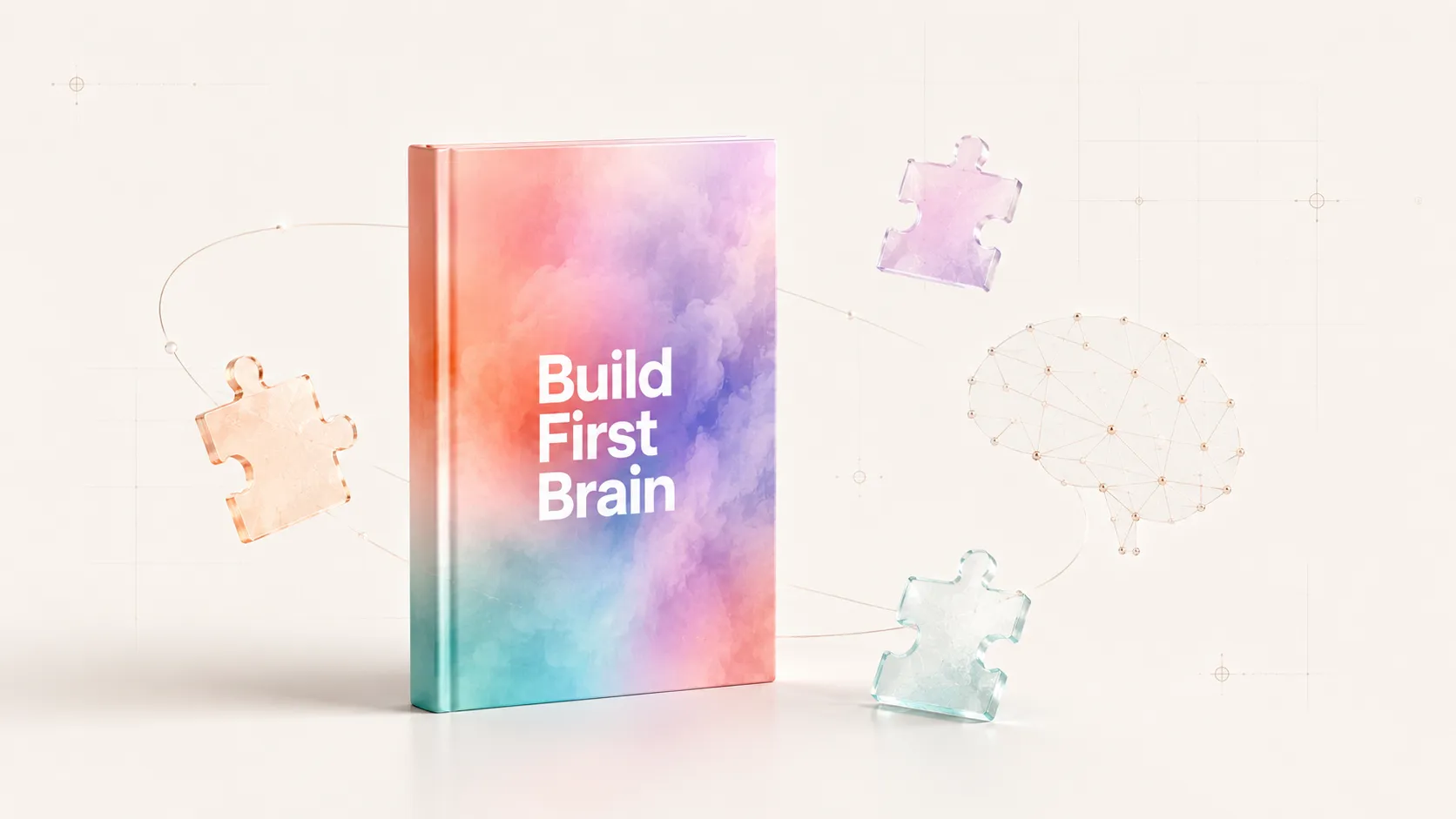
You can be highly productive with only a phone and your voice. The Second Brain software era added cost and friction without making people remember more. Skip it and invest in your First Brain through encoding, connection, and recall. Building Your First Brain by Lawrence Dauchy shows how to do this with minimal tools.
No, you do not need a laptop to be productive, and you do not need a heavy stack of note-taking software either. If you have a phone and you can talk, you already own everything required to learn fast, think clearly, and get real work done. The catch is that most productivity advice assumes you want to build a Second Brain: a digital archive of notes, links, and highlights living inside expensive apps. That assumption is wrong for most people, and it is especially wrong if your primary device is a phone.
The pattern has a name in development economics, leapfrogging, where a region skips an entire generation of technology, as when much of the world jumped straight to mobile phones and never wired landlines.
There is good news hidden in that. Mobile-first learners are not behind. They are in a position to skip an entire era of bloated software and go straight to what actually works: training the biological knowledge graph already in your head. That is the core argument of Building Your First Brain by Lawrence Dauchy. Build the First Brain before any Second Brain app, and you may find you never need the app at all.
The Second Brain era was a software story, not a memory story
For the last decade, productivity culture sold a promise: capture everything, and your brain is free to think. In practice, most people captured everything and remembered nothing. The notes piled up. The tags multiplied. The monthly subscriptions renewed. And the knowledge stayed locked in a database nobody reopened.
The problem is not laziness. It is cognitive. Every app you add is another interface to learn, another sync to manage, another place your attention splits. Psychologist John Sweller showed decades ago that working memory is sharply limited, and that poorly designed tools impose extraneous cognitive load that crowds out actual learning. A complex PKM workflow can quietly become the very thing that stops you from thinking.
Meanwhile, the techniques that genuinely build durable memory are not software features at all. In a landmark review, Dunlosky and colleagues ranked study strategies by how well they actually work. The winners, retrieval practice and spaced repetition, require no special app. They require you to recall, on purpose, again and again. A flashcard scribbled on paper beats a beautifully tagged note you never revisit.
Why mobile-first and voice-first is an advantage, not a limitation
In much of Latin America and Africa, the phone is not a secondary device. It is the device. Mobile now accounts for 84 percent of global internet connections, and in many low- and middle-income countries it is the only way most people get online at all. Whole populations leapfrogged desktop computers the way they leapfrogged landlines.
That same leapfrog applies to knowledge work. You can skip the laptop-and-app era entirely if you lean into what a phone does best: voice. Speaking a thought out loud forces you to articulate it, which is itself an act of encoding. Recording a two-minute voice memo explaining an idea to your future self does more for memory than pasting a link into a database ever will.
There is one nuance worth knowing. When you do write by hand, you remember more. Mueller and Oppenheimer found that students who took longhand notes instead of typing understood concepts better, because handwriting is slower and forces you to summarize rather than transcribe. A phone plus a cheap paper notebook is not a compromise. It is close to ideal. We explore why slow capture wins in the Zettelkasten paradox.
The honest comparison
Here is what you actually trade when you choose a minimal First Brain approach over a heavy software stack.
| Factor | Heavy PKM software stack | Minimal First Brain approach |
|---|---|---|
| Monthly cost | Several recurring subscriptions | Free to near zero |
| Setup friction | Templates, tags, sync, plugins | Open your mouth or a notebook |
| Device required | Usually a laptop for real use | A phone you already own |
| What it builds | A searchable external archive | Memory you carry everywhere |
| Failure mode | Notes pile up unread | None, recall is the whole point |
| Works offline | Often partially | Always |
Notice the last two rows. A software archive can fail silently: you feel productive while collecting, then never return. The First Brain approach cannot fail that way, because recall is the activity, not a side effect you hope for later.
A minimal stack that builds real memory
You do not need to buy anything new. The goal is to spend your effort on the three things that actually create knowledge: encoding it well, connecting it to what you already know, and recalling it under your own power.
Encode by explaining
When you learn something, immediately record a short voice memo explaining it in your own words, as if teaching a friend. This is the encoding step. The act of rephrasing is where understanding forms.
Connect by asking what it resembles
New ideas stick when they hook onto old ones. Ask: what does this remind me of? Speak the link out loud. This is how your biological graph grows edges, the subject of how to think in knowledge graphs.
Recall on a schedule
A day later, try to recall the idea before checking your note. Roediger and Karpicke showed that this kind of testing yourself produces far stronger long-term retention than rereading. A simple repeating phone reminder is all the software you need.
That is the whole system. No laptop, no subscriptions, no maintenance burden. Just a phone, your voice, and the discipline to recall instead of merely collect.
So, do you need a laptop?
For many jobs that involve writing code, editing video, or working in spreadsheets all day, a laptop is genuinely the right tool, and nobody should pretend otherwise. But productivity in the sense most people mean it, learning faster, thinking better, getting more done, does not depend on a laptop or a tower of apps. It depends on a First Brain that works. Build that first. If you still want a Second Brain app later, you will use it far more wisely, because you will finally know what it is for.
Frequently asked questions
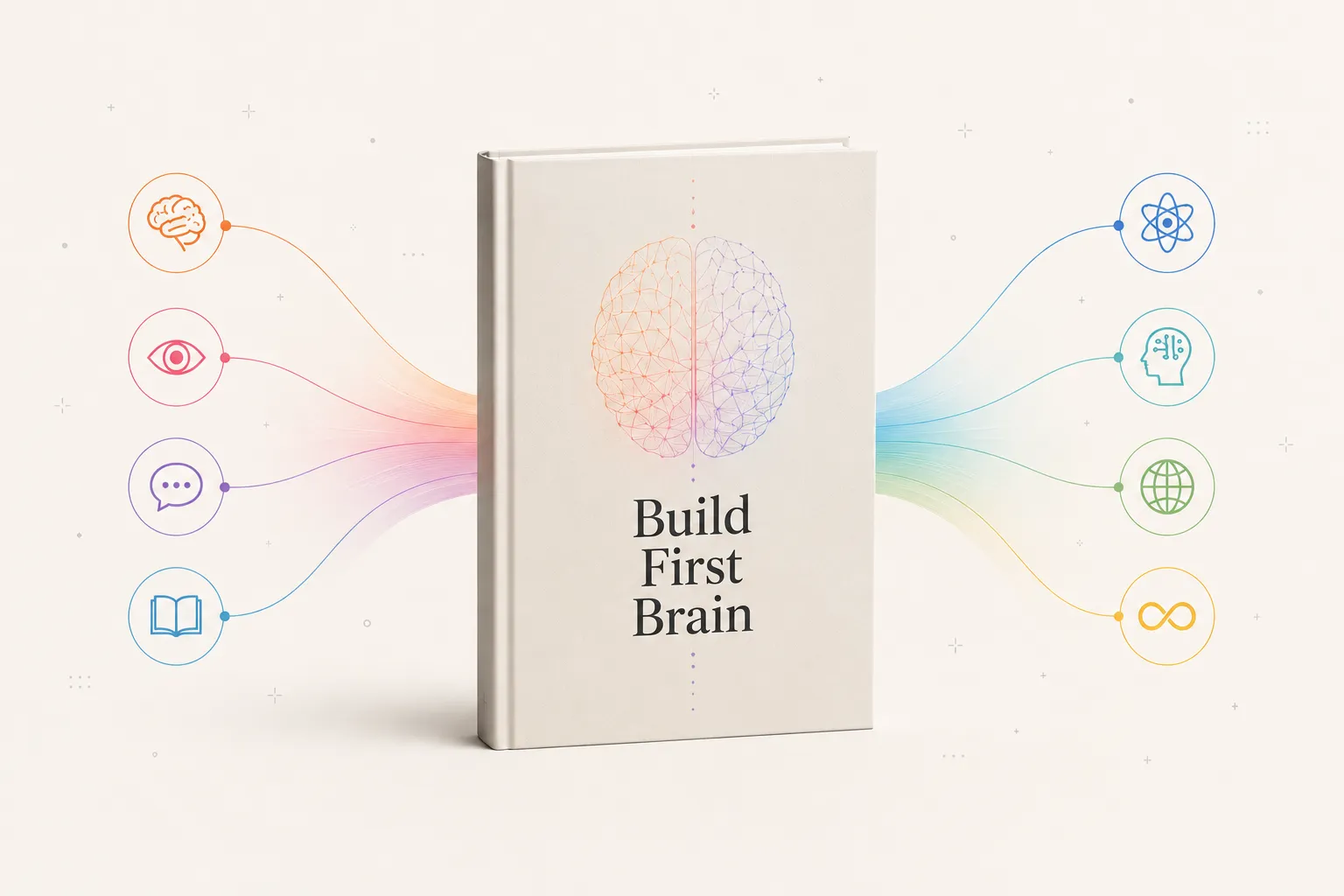
The Future of Tech in Africa: Leapfrogging Minds
Future of tech in Africa? Bright and structurally advantaged. Having leapfrogged banking with mobile money, emerging markets can adopt mobile AI without the West's debt.
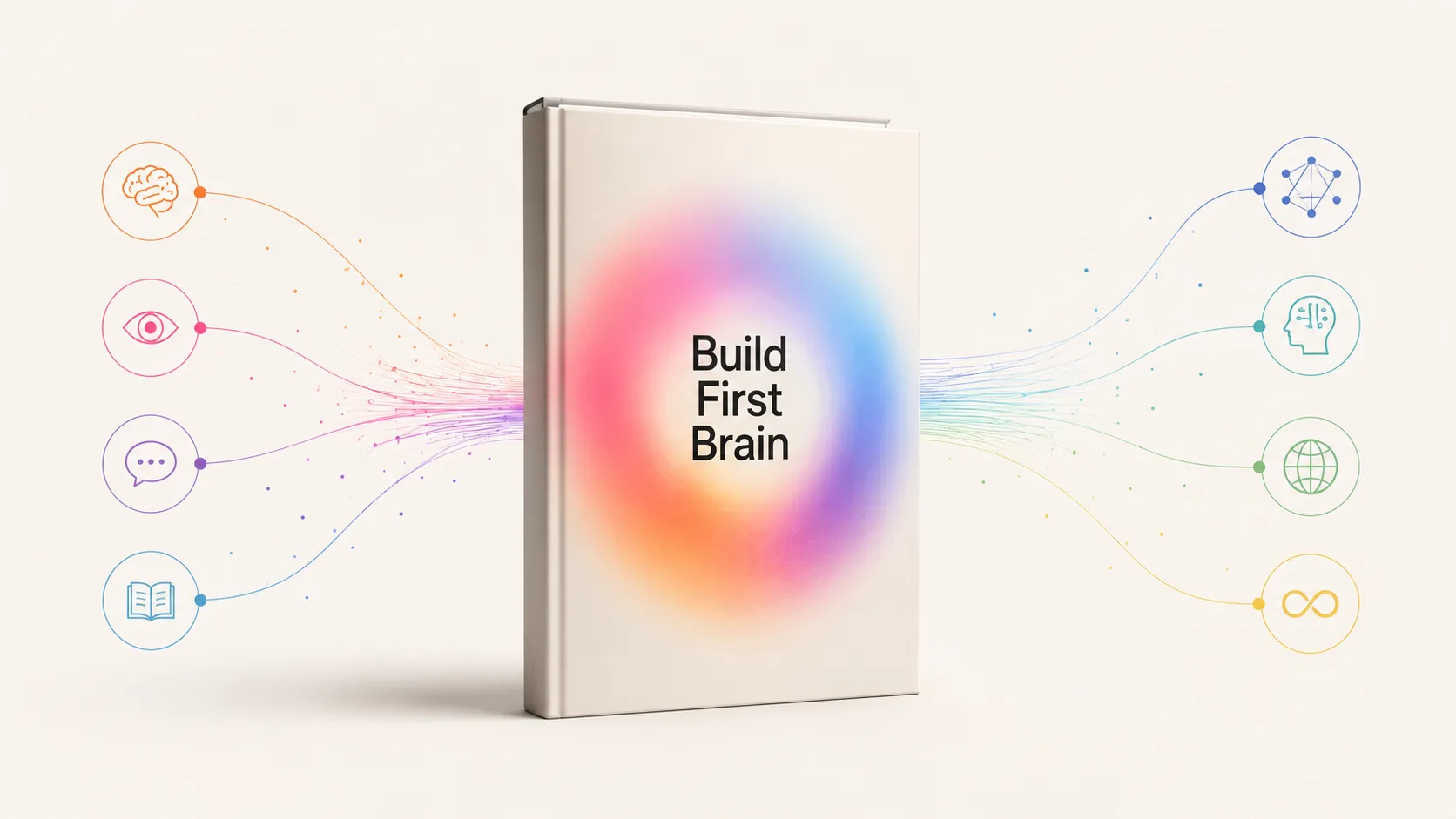
Audio-Node Mapping: Run a Business on Your Phone
Running a business on a phone alone? Hold the real map in your head, and use voice notes only as a fast, temporary cache. The mind is the system, not the device.
The WhatsApp Exocortex: How to Use AI on WhatsApp
You can use AI on WhatsApp via built-in Meta AI or chatbots. But a chat window has no structure, so it amplifies vague prompts into chaos. Bring a structured mind.