Are We Trapped in a Digital Matrix? The Feed Demiurge
Forget the literal simulation. The real matrix is the feed that keeps you in the shallows and calls it the whole ocean.
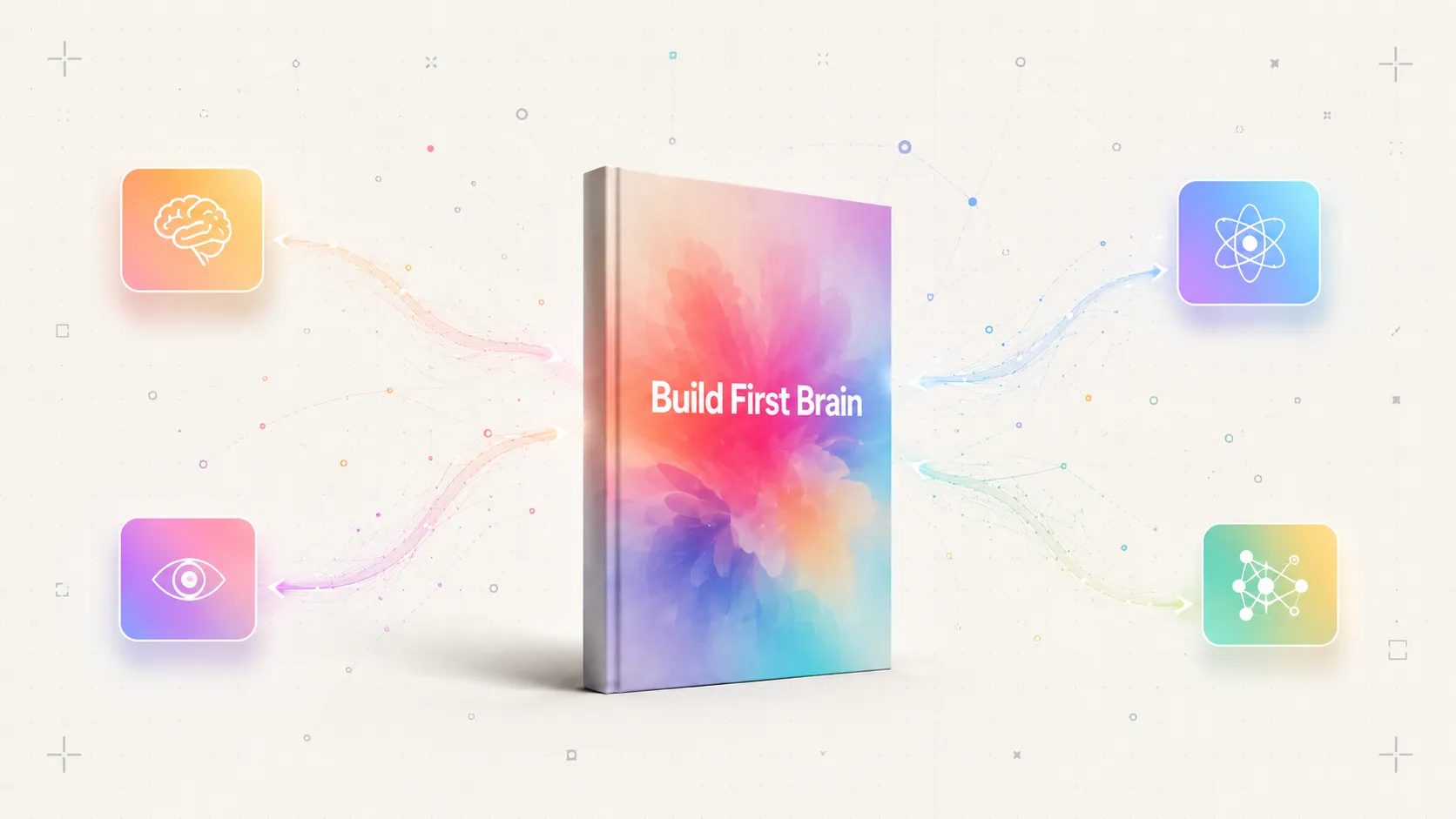
Whether we live in a literal simulation is an unfalsifiable, largely unactionable question. The useful version is that algorithmic feeds trap us in a constructed, narrow reality, an engineered stream of surface content optimized for engagement, not truth, like a modern Gnostic demiurge keeping us in an illusion. The escape is not unplugging a machine but a cognitive one: building a connected internal model that lets you see structure and reach the root instead of being stranded in the feed's leaf-nodes. The Build First Brain approach is that escape.
Are we trapped in a digital matrix? Not in the literal, science-fiction sense in any way you can act on, but in a practical sense that matters far more, largely yes. Whether reality is a computer simulation is a genuinely unfalsifiable question that changes nothing about how you should live. The version worth taking seriously is that algorithmic feeds trap us in a constructed, narrow reality: an engineered stream of content optimized to hold your attention rather than to inform you, a small, addictive slice of the world presented as if it were the whole. The old Gnostic image fits eerily well: a demiurge, a false maker, keeping souls trapped in an illusion they mistake for reality. The modern demiurge is the feed, and it strands you in endless surface fragments while the deeper structure of things stays out of view. The escape is not unplugging a machine; it is cognitive. The thesis: enlightenment is traversing the graph back from the feed’s leaf-nodes to the root-source, and the Build First Brain approach is how you do it. If the question feels paranoid, the literal version is, and the practical version is just an honest description of the attention economy.
The oldest version of this worry is Plato’s allegory of the cave, where prisoners mistake projected shadows for the real world, a two-thousand-year-old description of life inside a curated feed.
Are we trapped in a digital matrix?
Two questions hide in one, and only the second is useful. The literal version invokes the simulation hypothesis, the proposal, argued seriously by Nick Bostrom, that we might be living in a computer simulation. It is a real philosophical argument, but it is essentially unfalsifiable and action-neutral: if you cannot test it and it changes nothing about what you should do, it is a fascinating puzzle, not a practical concern. Treat the literal matrix as a thought experiment and move on.
The practical version is concrete and answerable: are we trapped in an engineered digital reality that shapes what we see, think, and want? There, the answer is largely yes, not by a conscious jailer but by an optimization process. Algorithmic feeds construct a personalized slice of reality designed to maximize engagement, and we increasingly mistake that slice for the world. That trap is real, documented, and escapable, which is why it is the version worth your attention.
Why is the algorithmic feed a kind of demiurge?
Because, like the Gnostic demiurge, it builds and maintains an illusion that its inhabitants take for the whole of reality. In Gnosticism, the material world is the flawed creation of a lesser god, the demiurge, and salvation comes through gnosis, the secret knowledge that lets the soul see past the illusion to the true source. Strip the theology and keep the structure, and it is a sharp metaphor for the engineered information environment.
The filter bubble, the personalized reality an algorithm builds from what keeps you engaged, is exactly such a constructed world: it shows you more of what holds your attention and hides the rest, so your sense of reality narrows without your noticing. And the engine driving it is the attention economy, where your attention is the product being captured and sold, so the system is optimized to keep you scrolling, not to show you truth. The thesis names the trap precisely: the demiurge is the feed that keeps you in leaf-nodes, the endless surface fragments, while the root, the structure and the deeper picture, stays out of reach. Crucially, this is not a conspiracy, which is arguably more unsettling: no one needs to be plotting, because an optimization process maximizing engagement produces the trap automatically.
| Element | Gnostic myth | Algorithmic feed |
|---|---|---|
| The trap | Illusory material world | Engineered, personalized reality |
| The trapper | The demiurge | Engagement optimization |
| What it hides | The true source | Structure, depth, the bigger picture |
| Where you are stuck | The world of appearances | Endless surface content (leaf-nodes) |
| The escape | Gnosis, secret knowledge | Cognitive sovereignty, a structured mind |
What does “trapped in leaf-nodes” mean?
It means held at the surface of a knowledge graph, fed endless fragments while never traversing back to the structure that organizes them. Picture knowledge as a graph: deep roots of principle and structure, branching out to ever-finer leaves of specific content. A healthy mind moves up and down this graph, connecting surface facts to the deeper structure that explains them. The feed keeps you at the leaves: an infinite scroll of disconnected, attention-optimized fragments, each engaging, none connected, with no path back to the root.
That is the mechanism of the trap. You can consume enormous amounts and understand less, because you are accumulating leaf-nodes without ever building the edges back to the structure. This is the opposite of non-linear understanding: not following the connections, but being held at the dead ends. And it is why the feed can feel informative while leaving you with a narrower, shallower picture of reality than before.
How does a First Brain escape the digital matrix?
By giving you a root-structure of your own to traverse back to, so the feed’s fragments land in a model instead of replacing one. The escape, the gnosis, is cognitive: build a biological knowledge graph with real roots, deep principles and structure, so that when surface content arrives you can connect it back to the bigger picture rather than being stranded at the leaf. Enlightenment, in this metaphor, is literally traversing your graph from the leaf-nodes back to the source, which a strong internal model lets you do and a feed-shaped mind cannot.
This is First Brain before Second Brain as liberation from the matrix. A person whose understanding lives only in the feed, a Second Brain they did not build and do not control, inherits its narrowness and its illusions. A person with a strong First Brain has an independent structure to evaluate the feed against, to notice what it is hiding, and to reach the root the feed keeps out of view, which is the cognitive sovereignty we examined in do algorithms control my destiny and the highest-level integrating structure in the God-Node. It is also why outsourcing your judgment to an AI oracle deepens the trap rather than escaping it, the abdication in should I ask AI for life advice, and why the discipline of verifying reality for yourself matters, the stance in how to know what is true anymore. The method for building a mind with real roots, rather than one stranded in the feed, is the core of Building Your First Brain, free for the first 1,000 readers.
The practical escape, then, is not to smash your phone but to build the internal structure that lets you use the feed without being held by it: seek the roots deliberately, connect fragments back to principles, and notice when you are being kept at the surface.
What are the honest caveats?
Several, because the matrix framing invites both paranoia and grandiosity. First, the literal simulation hypothesis is unfalsifiable and action-neutral, so treat it as philosophy, not a basis for belief or behavior, and be wary of anyone who builds certainty on it. Second, the demiurge and Gnosticism here are metaphors, used for their structure, not a theological claim, and the feed is not a conscious malicious entity but an optimization process, which is the accurate and more useful framing than a conspiracy. Third, the trap is real but not total: feeds also genuinely inform, connect, and delight, so the goal is to use them with a strong internal model rather than to demonize technology or romanticize going offline, which is its own dead end. Fourth, no one fully escapes the constructed environment, and pretending you have transcended it, that you alone see clearly, is exactly the grandiose error the metaphor can encourage, so the honest aim is better navigation and calibrated awareness, not enlightenment-as-superiority. The durable point holds: we are not provably in a literal simulation and it would not matter if we were, but algorithmic feeds do trap us in a narrow, engineered reality that strands attention in surface fragments, and the escape is cognitive, building a First Brain with real roots so you can traverse back to structure and see past the feed’s illusion.
Key takeaways: are we trapped in a digital matrix
The literal simulation question is unfalsifiable and changes nothing, so set it aside. The practical trap is real: algorithmic feeds construct a narrow, engineered reality optimized for engagement, a modern demiurge that strands you in endless surface fragments, leaf-nodes, while the deeper structure stays out of view, and it works through optimization, not conspiracy. The escape is cognitive, not unplugging a machine: build a connected internal model with real roots so you can traverse back from the fragments to the structure and see what the feed hides. The Build First Brain approach is that escape. The honest limit: the simulation idea is just philosophy, the demiurge is a metaphor for an optimization process, feeds also genuinely inform, and believing you have fully transcended the matrix is its own illusion.
Frequently asked questions
Are we trapped in a digital matrix?
Not in a literal, testable simulation sense, that question is unfalsifiable and changes nothing about how to live. But in a practical sense, largely yes: algorithmic feeds trap us in a constructed, narrow reality optimized to hold attention rather than inform, an engineered slice of the world we mistake for the whole. That trap is real and documented, but the escape is cognitive, not unplugging a machine. Building a connected internal model, a First Brain, lets you see past the feed’s illusion to the deeper structure.
Is the simulation hypothesis worth worrying about?
As an intellectual puzzle, it is interesting; as a practical concern, no. The simulation hypothesis is essentially unfalsifiable, you cannot test from inside whether reality is simulated, and it is action-neutral, since it changes nothing about how you should think or live. Treat it as philosophy rather than a basis for belief or anxiety, and be cautious of anyone who builds certainty or a worldview on it. The far more useful question is the engineered digital reality you actually inhabit through feeds.
How is an algorithmic feed like the Gnostic demiurge?
In Gnosticism, the demiurge is a lesser creator who traps souls in an illusory world they mistake for reality, and escape comes through gnosis, knowledge that sees past the illusion. An algorithmic feed builds a personalized filter bubble optimized for engagement, a constructed reality that hides as much as it shows, so the metaphor fits: the feed is a modern demiurge, and the escape is the knowledge and structure to see past it. The key difference is that the feed is an optimization process, not a conscious entity.
What does it mean to be trapped in leaf-nodes?
Picture knowledge as a graph with deep roots of principle and structure branching out to fine leaves of specific content. Being trapped in leaf-nodes means being held at the surface, fed an endless scroll of disconnected, attention-optimized fragments with no path back to the structure that would organize them. You can consume huge amounts and understand less, because you accumulate fragments without building the connections back to the root. The feed keeps you there because engagement, not understanding, is what it optimizes for.
How do I escape the trap of algorithmic feeds?
Not by smashing your phone, but by building the internal structure to use feeds without being held by them. Develop a connected mental model with real roots, deep principles and structure, so incoming fragments connect back to a bigger picture rather than replacing it. Deliberately seek the roots behind surface content, notice when you are being kept at the surface, and keep your own judgment as the authority rather than outsourcing it. A strong First Brain is the gnosis that lets you see past the feed’s constructed reality.
Dive deeper in
Divination, decoded: random input for new ideas
Tarot and the I Ching work as thinking tools, not prediction: a random prompt breaks fixation and forces you to synthesize a new perspective.
Where to Find Peace in 2026? Build It Within
Where to find peace in 2026? Not by fleeing technology, which follows you home. Lasting peace comes from an inner structure stable enough that noise cannot rule it.
Will Humans Worship AI? Don't Worship the Mirror
Some already do. We are wired to project minds onto things that talk back, and an all-knowing oracle is the perfect target. The risk is abdicating judgment.