Mind & Learning
Page 3 of 4.
Is It Healthy to Talk to an AI Therapist?
AI chatbots can help with mild distress and are better than nothing at 3 a.m. The risk is outsourcing the processing that builds your own emotional capacity.
How to Read Non-Fiction Faster and Remember It
Read non-fiction relationally, not line by line: map each chapter's concepts onto what you know, and you finish faster with a structure you keep.

How to Protect Your Intellectual Property: Own the Logic
Lawyers and encryption protect the file. Your deepest, un-stealable intellectual property is the logic in your head, the understanding no one can copy or extract.
How to Outsmart a Gaslighter: Anchor Your Memory
Gaslighting attacks your memory of what is real. You defend against it not by out-arguing the manipulator but by anchoring reality in records they cannot rewrite.
How to Remember What You Read: From Storing to Knowing
Highlights, bookmarks, and saved summaries are storage. Memory needs translation: rebuild what you read in your own words and wire it to what you know.
How to Get a Photographic Memory: The Useful Illusion
Photographic memory is a myth, but the structural, spatial memory that powers every memory champion is real and trainable. Here is what to build instead.
How to Memorize Numbers Fast: The Major System
Numbers are abstract and forgettable. The Major System turns each digit into a sound, then a vivid image, so your brain stores them with its powerful visual memory.
Is Technology Making Us Dumber? The Outsourcing Audit
Raw intelligence is not shrinking; practiced capacity is. We outsourced memory, navigation, and now reasoning, and the unused faculties are going frail.
Is Photography Dead? Value in the Post-Camera Age
Generated images made generic photos worthless, not photography. What survives is the picture anchored to a real moment: witnessed, provenanced, and remembered.
Is AI Actually Conscious? The Sentience Illusion
Nothing in current models shows evidence of experience. The feeling that someone is in there is your own social machinery, reflected back with perfect fluency.
How to Top Competitive Exams: Graph the Syllabus
The top 1% of exam takers do not out-memorize the field. They build a connected map of the syllabus and derive what others try to recall.
Are AI Relationships Healthy? The Atrophy of Compromise
An AI partner agrees with you instantly. Real relationships require the painful neuroplasticity of compromising with another mind, and that friction is the point.
How to Design a Home Office for Focus: A Thinking Space
Your room is an externalization of your mind. Remove distraction cues, add a dedicated focus zone and restorative nature, and mirror your cognitive flow.
Can AI Feel Empathy? Empathy as a Biological Network
AI can write empathy so well it outscores doctors. But it cannot feel it. Real empathy is the physical mirroring of another mind, which AI cannot access.
Why Is It Hard to Find Smart Friends? Intellectual Loneliness
Finding intellectual peers is hard because we bond by similarity and the pool shrinks at the edges. The fix is learning to down-sample your mind, not dumb it down.
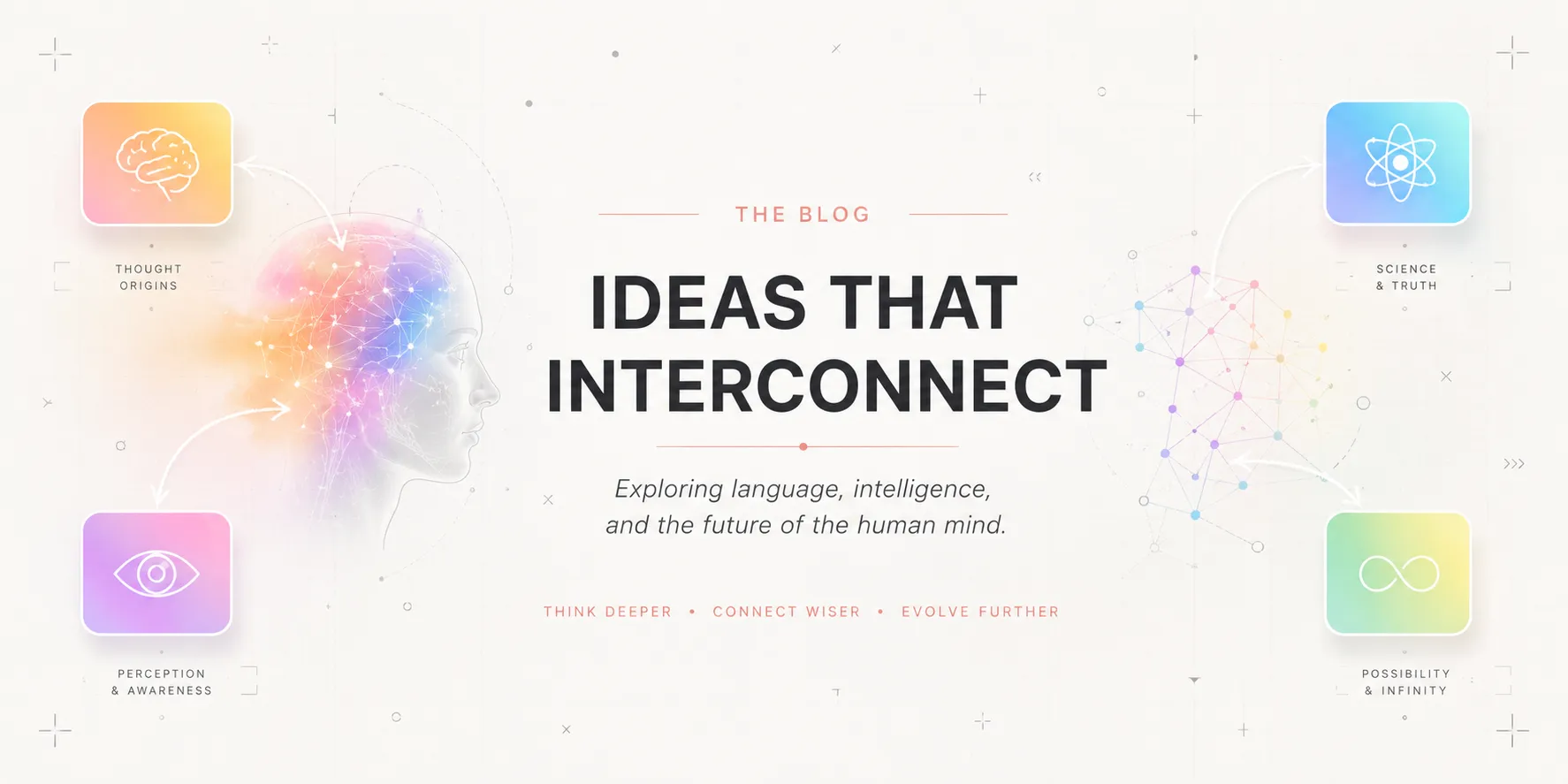
Can IQ Be Increased? Intelligence Is Not Fixed at Birth
IQ is not fixed at birth: education and environment raise it. Brain-game gimmicks do not, but real structured understanding grows your usable intelligence.
Can Intelligence Increase After 30? Neuroplasticity Is Real
Yes. The adult brain stays plastic, but it rewires for effortful, novel learning, not passive brain games. Conceptual friction upgrades you after 30.
Why Can't I Read Books Anymore? The Death of Deep Reading
You can't read books anymore because your brain forgot how to hold an idea in working memory long enough to connect it. The good news: the circuit is rebuildable.
Does Dual N-Back Actually Work? The N-Back Illusion
Dual n-back makes you better at dual n-back, and little else. The famous IQ gains failed to replicate. Structure, not a memory game, is the real upgrade.
How to Curate High-Quality Info: The Farm-to-Table Diet
AI-summarized newsletters strip out nuance and add errors. Go farm-to-table: read the primary source yourself and map it natively. Slower, but it sticks.
AI Tools for ADHD: The Neuro-Inclusive Exocortex
The best AI tool for ADHD does not correct your non-linear thinking. It translates your brilliant chaos into linear output others need, and keeps the chaos.
How to Capture Ideas: Why Capture Is the Worst Advice
Capturing everything feels productive and quietly ruins your thinking. It buries signal in noise and weakens your brain's filtering. Capture less, connect more.
ADHD "Time Blindness" and BCI Integration
How to fix ADHD time blindness: externalize time into a visible, non-linear First Brain, and what Neuralink-style BCIs can and cannot do about it.
Hide Information in Plain Sight: The Memory Palace
How to hide information in plain sight using a memory palace as analog encryption: a biological vault no wrench or subpoena can crack.