How to Go From Junior to Senior Dev: Think in Systems
The junior ships the ticket. The senior knows why the ticket exists, what it risks, and which three problems it will create next year.
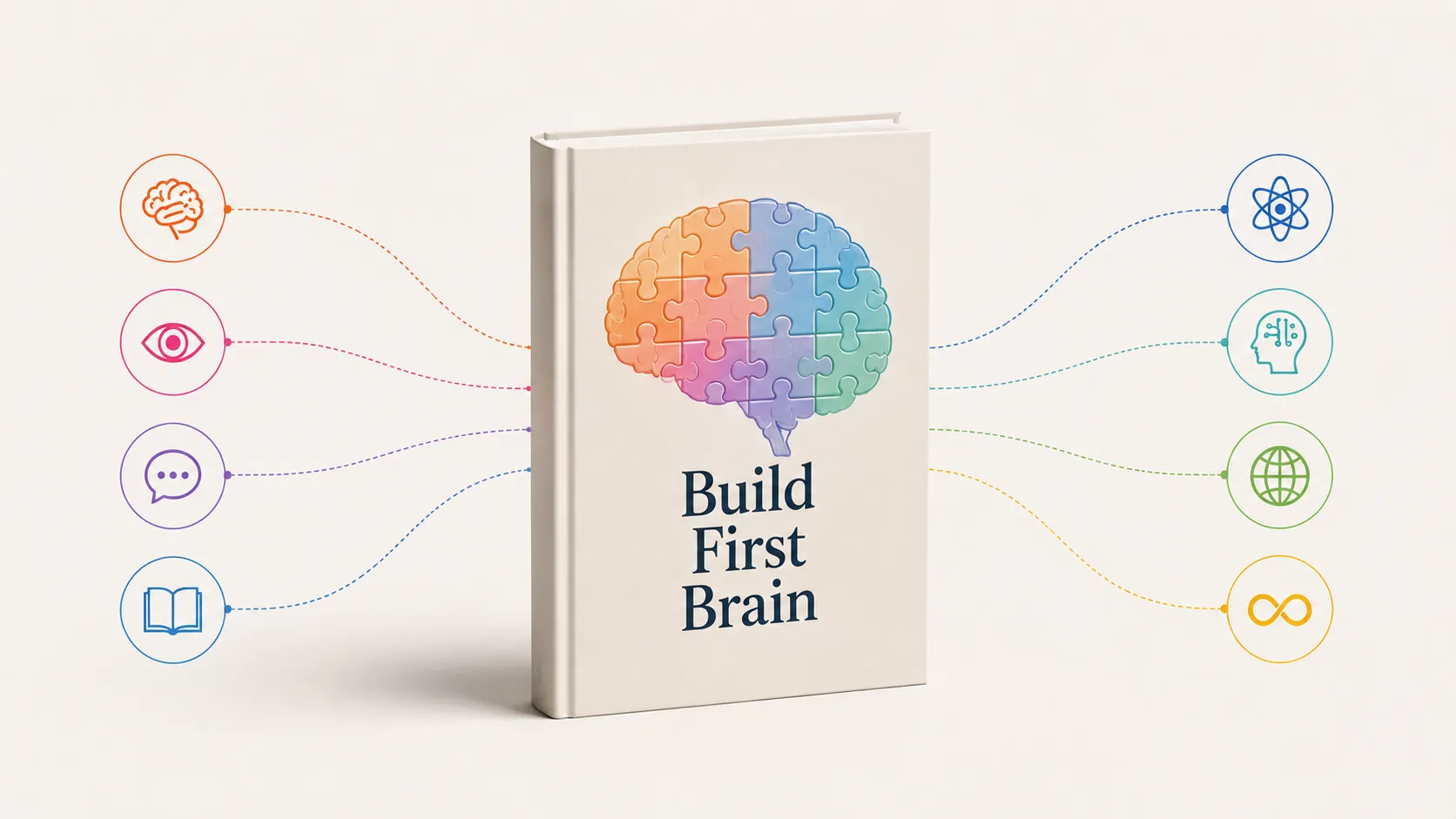
You go from junior to senior developer by building system-level mental models, not by accumulating years or memorizing more syntax. Seniority is the width and connectedness of your internal map: architecture, tradeoffs, failure modes, and the human systems around the code. The path is deliberate: own things end to end, write design docs that expose your reasoning, run post-mortems, read more code than you write, and review code seriously. In the Copilot era this matters doubly, because execution is getting cheap while judgment about systems is not.
You go from junior to senior developer by upgrading what you hold in your head, not by serving years or memorizing more syntax. Seniority is a measurement of your internal map: how wide and how deeply connected your mental models of systems, tradeoffs, failure modes, and the humans around the code have become. That is the Build First Brain reading of the career ladder, and it implies a concrete path: own systems end to end, write your reasoning down where it can be attacked, autopsy failures into the map, and read far more code than you write. The Copilot era raises the stakes on exactly this: execution is becoming cheap, so the judgment layer is where the career now lives.
What actually separates senior from junior?
The unit of thought. A junior holds tasks: make the ticket pass, make the test green. A senior holds systems: what this change touches, what breaks under load, which tradeoff is being accepted and on whose behalf, who maintains this in two years. The classic skill-acquisition research describes precisely this progression: the Dreyfus model tracks learners from novices who follow context-free rules to experts who perceive whole situations and act on deep tacit understanding. The expert is not applying more rules faster; they are seeing a different, larger object.
The cognitive mechanism is familiar: experts chunk, perceiving meaningful patterns where novices see individual pieces, so a senior reads a service boundary or a failure cascade as one unit. Seniority is graph density made visible under pressure. Their code is often only somewhat better than yours; their model of where code lives is categorically better.
| Path to seniority | Best for | Why it works | Main limit | Verdict |
|---|---|---|---|---|
| Build system-level mental models | Genuine, durable seniority | Grows the map that defines the role | Slower than it feels; needs ownership | Best overall |
| Grind more tickets | Early reps and fluency | Volume builds base fluency | Plateaus; tasks never become systems | Good for year one |
| Chase frameworks and certificates | Regulated or HR-gated contexts | Legible on paper | Breadth without connection | Good for narrow gates |
How do you build the senior map deliberately?
Five practices, all of which force consequences through your own head.
Own something end to end. Design, deploys, incidents, users: a system you fully own runs the consequence loop, decide, ship, watch, absorb, that turns tasks into models. Calendar years are just a proxy for these cycles; engineers who own things compress them.
Write design docs. A design doc forces reasoning into the open where it can be criticized: options weighed, tradeoffs accepted, failure modes named. The guides written for engineers above the senior level all converge on this point, with design documents and written technical direction treated as the core instrument of staff-plus work. The doc is your graph, serialized.
Autopsy failures. Every incident is a free edge: trace it to the root cause, write the post-mortem, and wire the lesson into the map. Painful repetitions teach what tutorials cannot.
Read more code than you write. Strange codebases are other people’s maps; reading them imports architecture cheaply, the same move as treating codebases as external first brains.
Review code as teaching. Serious review narrates tradeoffs instead of policing style, the standard the better engineering organizations codify explicitly, and articulating the why is also how your own tacit knowledge becomes durable. The mistake I see most often is treating review as a chore instead of the cheapest map-transfer mechanism a team has.
What changes in the Copilot era?
The ladder’s bottom rung is being sawed off while the top gets heavier. As generation tools make execution cheap, the work that used to build junior maps, writing boilerplate, wiring CRUD, fixing the hundredth null check, is increasingly done by the machine, which is exactly the trap described in AI is making junior developers dumb: the reps disappear, and with them the map the reps were building. Meanwhile the senior layer, deciding what to build, judging generated code, owning system consequences, grows in value precisely because it cannot be generated, the structural point of the 10x developer is just a graph thinker.
The play, then: use AI for volume, but deliberately reinvest the saved hours in system-level learning, and keep doing enough manual work to maintain the judgment that evaluates the machine, the same structure-over-strings principle as memorizing syntax by its logic.
When does the systems framing mislead?
When it becomes architecture astronautics. Year-one juniors genuinely need ticket volume, fluency is built from reps, and skipping straight to systems talk without execution skill produces a familiar failure: confident diagrams, broken builds. The framing also undersells the human half at your peril: past senior, the systems that matter most are made of people, teams, incentives, and communication paths, and an engineer who maps only machines stalls at exactly the level where the staff-plus guides pick up. Do the reps first, then widen the map, and include the humans in it.
Key takeaways: going from junior to senior
Seniority is the width and connectedness of your mental model, so build it on purpose: own a system end to end, write design docs that expose your reasoning to attack, autopsy every failure into the map, read strange codebases, and review code as narrated tradeoffs. Count consequence cycles rather than calendar years, and in the Copilot era, let the machine have the volume while you keep the judgment. The map is the career: the title is what they call you once it exists. Building that kind of connected professional mind is the project of Building Your First Brain, free for the first 1,000 readers.
Frequently asked questions
How do you transition from junior to senior developer?
By upgrading what you hold in your head, not just what you ship. The Build First Brain path I recommend: own systems end to end so you see consequences over time, write design docs that force your reasoning into the open, autopsy failures into your map, read far more code than you write, and review code as a teaching act. Seniority is the width and connectedness of your mental model of systems, tradeoffs, and failure modes; the title follows the map.
What actually separates a senior developer from a junior?
The unit of thought. A junior thinks in tasks: make this ticket pass. A senior thinks in systems: what does this change touch, what breaks at scale, which tradeoff are we accepting, who maintains it in two years. Skill research describes the same shift, from following rules to perceiving whole situations. The senior’s code is often not dramatically better; their model of where code lives is.
How long does it take to become a senior developer?
Typically several years, but the calendar is a proxy for repetitions of a loop, not a requirement in itself: design, ship, watch it live, absorb the consequences. Engineers who own systems end to end, debrief failures honestly, and write down their reasoning compress the loop and arrive early; engineers who ship tickets without ever watching the aftermath can stay effectively junior for a decade. Count consequence cycles, not years.
Does AI like Copilot make senior developers unnecessary?
It makes them more necessary while hollowing out the old junior path. As generation gets cheap, the scarce work moves up: deciding what to build, judging whether generated code is correct and maintainable, and owning system consequences. That is precisely the senior skill set. The risk is to juniors who let AI do the reps that used to build the map; the opportunity is to use the saved execution time deliberately on system-level learning.
What should I do this quarter to move toward senior?
Pick one system and own it completely: its design, its deploys, its incidents, its users. Write one real design doc and circulate it for criticism. Trace one production failure to its root cause and present the post-mortem. Read one well-built codebase outside your daily work. And start narrating tradeoffs in code review instead of nitpicking style. One quarter of that loop moves your map more than a year of tickets.
Dive deeper in
Debugging the First Brain: Logic Building in Programming
Logic building is not syntax; it is an accurate mental model of the system. A bug is a broken edge in that model, and offloading code to AI quietly stops you building it.
How to Understand Neural Networks Intuitively
Skip the equations at first. A neural network is layers of tiny weighted votes, tuned by millions of small corrections, and you already own the best reference model.
Codebases as External First Brains
To understand a large codebase, don't read it; build a mental model. A codebase is an externalized knowledge graph, and understanding it means rebuilding it in your head.