The Multiplayer Mind: How to Build a Team Second Brain
A shared folder is not a shared mind. The nodes of a team brain are people, not documents.
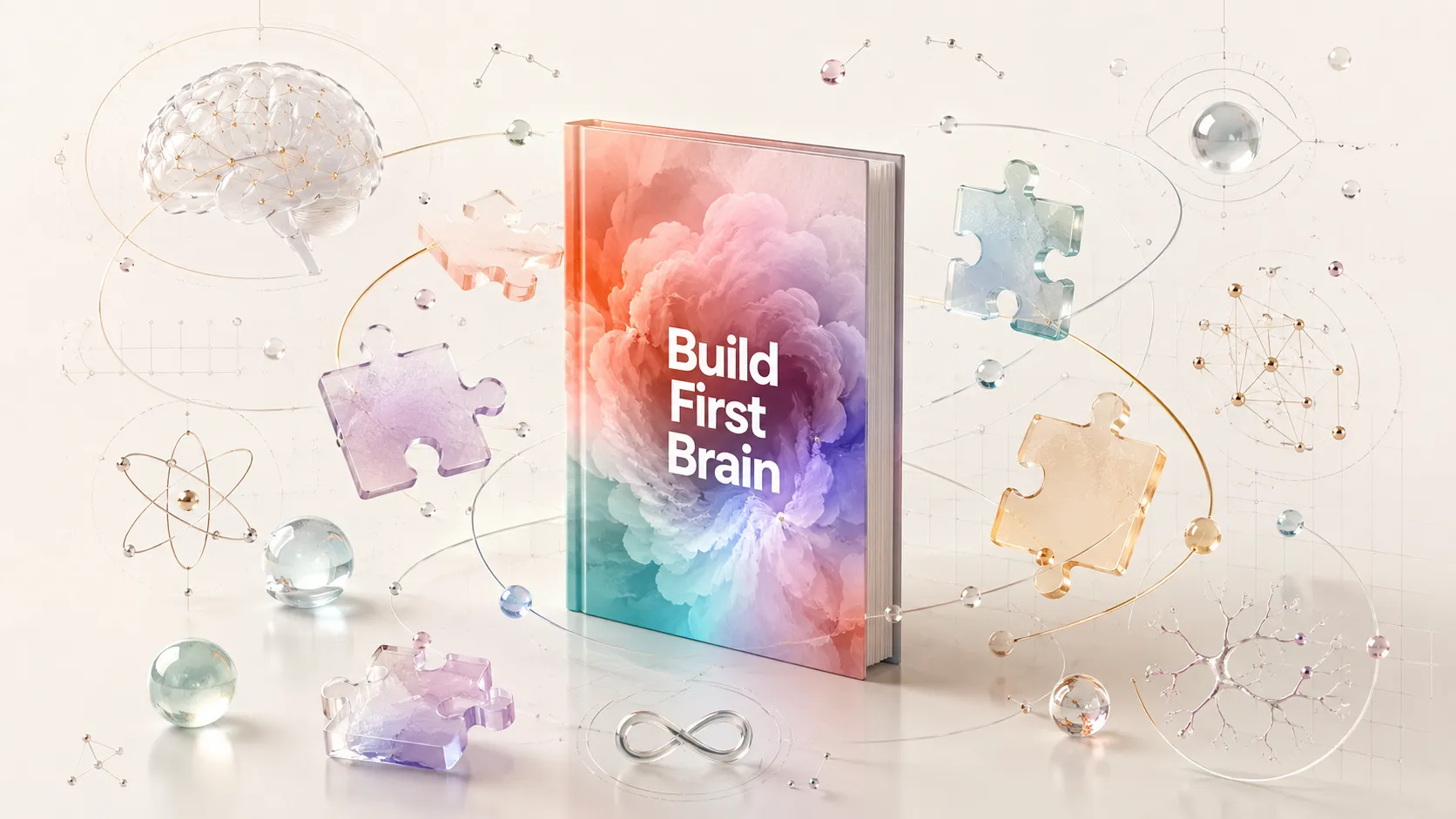
To build a team second brain, stop thinking of it as a shared folder. A real team mind is a transactive memory system: an overlapping web where each person holds their expertise and everyone knows who holds the rest. Research shows collective intelligence comes from how people interact, not from the size of the wiki or the sum of individual IQs. Build the people and the connections between them first; the tool is the last ten percent.
How to build a team second brain, and why the obvious version fails
The default move is to spin up a shared workspace, give everyone access, and tell them to put everything in it. A few months later you have a sprawling archive nobody reads, duplicate pages, and a search box that returns forty stale results and not the one you need. The shared folder filled up; the shared mind never formed. We took that failure apart in why your company’s Notion is a mess, and the root cause is a category error: a shared store is not a shared mind. A team second brain is not a bigger folder. It is an overlapping web of people who know who knows what, and that is built, not uploaded.
A team mind is a transactive memory system
Psychology has a precise name for what a real team mind is. Daniel Wegner called it a transactive memory system: a group remembers as a single unit not by everyone knowing everything, but by each person knowing their part and, crucially, knowing who holds the rest. The meta-knowledge, who to ask, matters as much as the knowledge itself. When a team has a strong transactive memory system, it can locate and combine what it knows almost instantly, and research consistently finds that these systems are a stronger driver of team performance than the raw size of any shared repository.
Notice what the nodes are. In a folder, the nodes are documents. In a transactive memory system, the nodes are people, and the edges are who-knows-what plus the trust to actually ask. That is why you cannot build a team mind by buying software. You build it by building the connections between heads.
Collective intelligence is real, and it is not a sum of IQs
There is hard evidence that a group’s thinking is its own thing. In a landmark study, Anita Woolley and colleagues found a measurable collective intelligence factor that predicts how well a group performs across many different tasks. The striking part: this group intelligence was only weakly related to the average or peak individual IQ of the members. What predicted it instead was social: the average social sensitivity of the members, more equal turn-taking in conversation, and a more balanced composition. Later work has debated and refined the details, but the core lesson holds: a smart team is not just a bag of smart individuals.
That reframes the whole project. If collective intelligence comes from how people interact, then a team second brain is built socially first and technically second. The tool is the last ten percent.
| Dimension | Shared folder (the store) | Multiplayer mind (the team’s First Brain) |
|---|---|---|
| Basic unit | Documents and files | People and the relationships between them |
| What it holds | Captured content | Who knows what, plus shared context to use it |
| How it improves | More uploads | More interaction, trust, and turn-taking |
| Typical failure | A junk drawer nobody reads | Knowledge siloed in heads that never connect |
| Retrieval | Search and hope | Ask the right person, who actually answers |
Build overlapping nodes, not shared folders
The practical recipe follows directly from the science. You are trying to grow a network of minds, so work on the minds and their connections, and let the store reflect them.
- Cultivate overlap and specialization at once. Everyone needs enough shared context to talk to each other, and enough differentiated expertise to be worth asking. Overlap creates common ground; specialization creates value. A team where everyone knows the same things has no transactive memory at all.
- Make who-knows-what visible. The single highest-leverage artifact is not a knowledge base; it is a living map of which person holds which expertise, so the team can route questions instantly instead of searching.
- Protect the interaction. Equal turn-taking and social sensitivity predicted collective intelligence in the research, so the meeting habits that let quiet experts contribute matter more than the wiki’s tag structure. Psychological safety is infrastructure.
- Let the tool mirror the team. Only after the human network exists should the shared store be shaped to match it, organized the way the team actually thinks, the same principle that governs building an off-world second brain for an isolated crew.
Underneath all of it is the individual layer. A team of people who have each built a real First Brain through cognitive mapping, and who can think in knowledge graphs, forms a vastly better multiplayer mind than a team of folder-fillers, because each node is dense and connected to begin with. Build the First Brains, then wire them together.
That order, minds first and the system shaped to fit them, is the whole argument of Building Your First Brain, which is free for the first 1,000 readers. A team is just where it becomes obvious that a folder was never the point.
Frequently asked questions
How do you build a team second brain?
Stop building a shared folder and start building a transactive memory system: an overlapping web in which each person holds their expertise and everyone knows who holds the rest. Make who-knows-what visible, protect balanced interaction, and only then shape a shared store to mirror how the team thinks. As Building Your First Brain by Lawrence Dauchy frames it, you build the First Brains and the connections between them first; the tool is the last ten percent.
Why do team wikis and shared workspaces fail?
Because a store is not a mind. Telling everyone to dump notes into a shared space produces a sprawling archive nobody reads, while the actual knowledge stays locked in people’s heads and the connections between them are never built. The folder fills up and the shared understanding never forms.
What is a transactive memory system?
It is the way a group functions as a single memory: each member specializes in part of the knowledge and also knows who holds the other parts, so the team can locate and combine information quickly. The meta-knowledge of who knows what is as important as the knowledge itself, and it predicts team performance more than repository size.
Is team intelligence just the sum of everyone’s IQ?
No. Research found a collective intelligence factor that was only weakly related to members’ individual IQ. What predicted it was social: average social sensitivity, more equal turn-taking, and balanced composition. A team’s thinking ability comes largely from how its people interact, not from stacking up individual brainpower.
What is the best tool for a team second brain?
The tool matters far less than people expect; it is the last ten percent. The best results come from building the human network first, making expertise visible, and protecting good interaction, then choosing a simple shared store organized to mirror how the team actually thinks. A team of strong, connected First Brains will outperform any tool used by a team that never built them.
Why Do Employees Hide Information? Knowledge Hoarding
Employees hide information because knowledge has long meant power. But in the AI era, hoarding facts protects nothing. The real moat is how you connect them.
How to Do Async Work Properly? It Needs Autonomy
Async work runs on written clarity, documentation, and autonomy. It only works when people can self-direct and think clearly without constant real-time hand-holding.
How to Manage Technical Debt? Fix the Thinking First
Make debt visible, pay it down continuously, and prevent it, but recognize much technical debt is downstream of unclear shared understanding, not just messy code.