Why Are Essays Obsolete? The Test AI Quietly Broke
Why the graded essay stopped measuring thinking, and what replaces it.
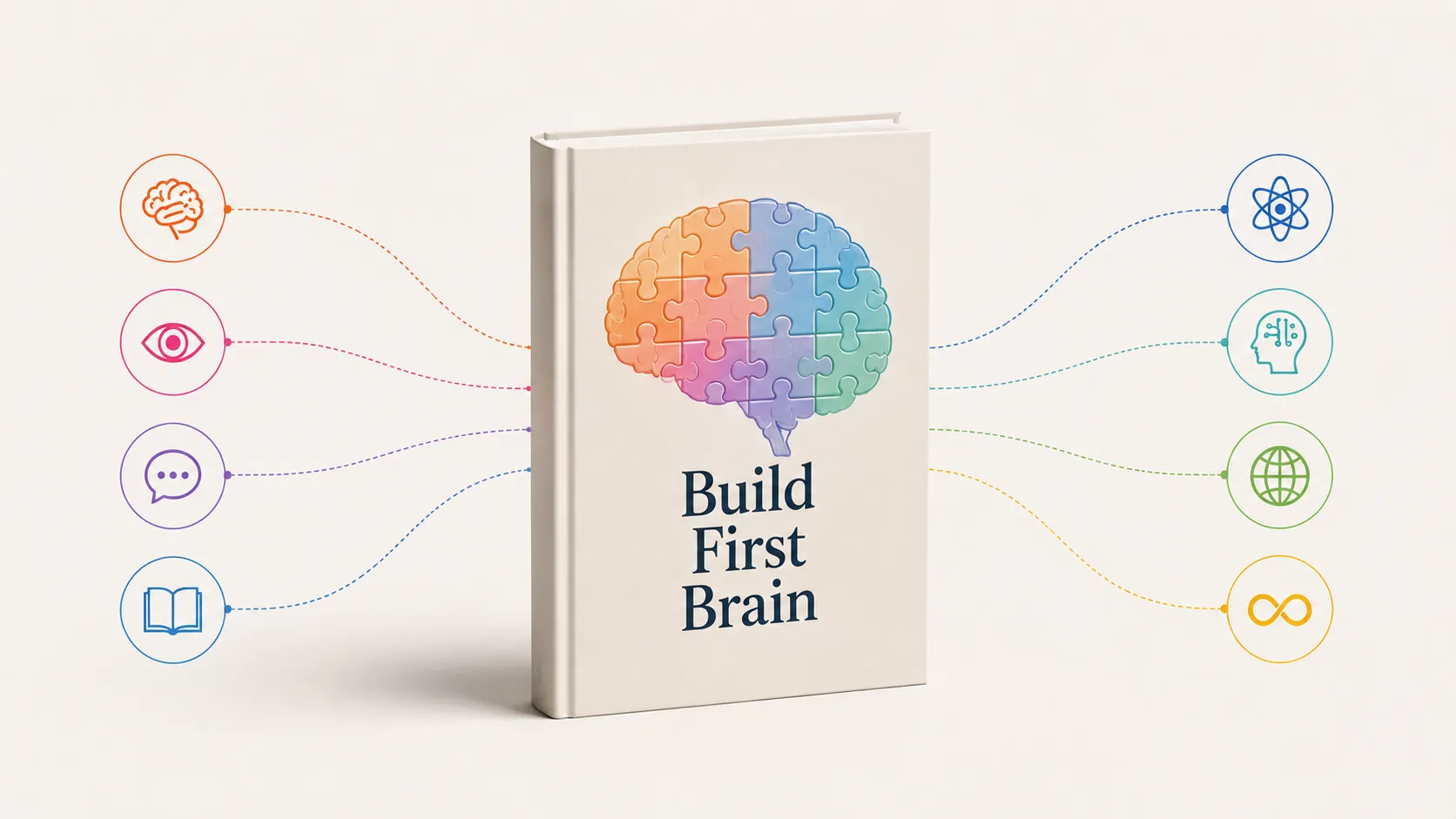
Take-home essays are obsolete as a test because AI can produce a competent one in seconds and detection rarely catches it, so a finished essay no longer proves a student thought. The essay was always a flat, linear shadow of a non-linear structure of ideas. What is worth building and testing now is that structure itself, a knowledge graph you can defend out loud, which is the core of a First Brain.
The take-home essay is obsolete because it stopped measuring the one thing it existed to measure: whether you can think. A capable model now writes a competent five-paragraph essay in seconds, and detection rarely catches it, so a finished essay proves almost nothing about the person who turned it in. The deeper issue is older than AI. An essay was always a flat, linear shadow of a non-linear structure of ideas, the single path an author picked through a web of connected thoughts. What is worth building now is the web itself, a First Brain you can defend out loud, not the paragraph that flattens it.
Are essays really obsolete, or just take-home essays?
It is the graded take-home essay that is dead, not writing. The evidence is blunt: by one survey 89% of college students admitted using ChatGPT for homework, blue book sales have jumped on campuses scrambling for AI-proof exams, and detection tools fail often enough that teachers cannot trust them. When a model can produce the deliverable and no one can reliably tell, the deliverable is no longer an assessment. It is theatre. The skill the essay was meant to certify still matters. The artifact just stopped certifying it.
What did the essay actually measure?
The essay measured your ability to flatten a structure into a line. Good writing takes a tangle of connected ideas and chooses one walkable path through it, deciding what links to what and in which order. That is real cognitive work, and for centuries the finished prose was decent proof you had done it. The problem is that flattening is exactly what language models are built to do. They are very good at producing a smooth linear path. They are far worse at holding the underlying structure in the first place, which is the part that was always doing the thinking.
If not essays, then what?
Test the structure directly, not its shadow. The assessments that survive AI are the ones that make a student build or defend a conceptual map in real time: an oral defense, a Socratic back-and-forth, a live diagram of how the pieces connect. You cannot outsource a structure you have to walk someone through under questioning. This is also why building a real conceptual structure changes how well you learn in the first place. The value was never the paragraph. It was the graph behind it.
| Assessment | What it really tests | Can a model fake it? | What it builds in you |
|---|---|---|---|
| Take-home essay | Access to a competent writer | Yes, in seconds | Almost nothing now |
| In-class handwritten essay | Recall under time pressure | Mostly no | A little retrieval |
| Oral defense or Socratic exam | Structure you can walk and defend | No | A real conceptual map |
| Building and defending a First Brain | How your ideas actually connect | No | A mind you own |
Why does this matter most for children?
For kids the stakes are not grades, they are whether the structure ever gets built at all. A child who hands every hard question to an AI never does the messy work of connecting ideas themselves, and that friction is the work that grows a native graph. The danger is a generation that can summon fluent answers with no structure underneath, which looks like competence and is not, the same gap a parent feels when a child keeps failing despite hours of AI tutoring. The same atrophy shows up in adults who let a tool do the connecting, which is how skilled people quietly get worse at their own craft.
So is writing dead too?
No, and this is the part the panic gets wrong. Writing as a private thinking tool is more valuable than ever, because writing is one of the best ways to make vague thinking visible and force loose ideas into structure. The essay you write to figure out what you think is a tool. The essay you submit for a grade is a test, and only the test broke. Simply banning AI and reaching for blue books misses this: as some educators argue, reverting to handwriting is a weak answer to a deeper problem. The real move is to build the structure on purpose. The book Building Your First Brain walks through how, and it is free for the first 1,000 readers, which connects directly to why a sharp first brain has to come before any tool.
Key takeaways: what replaces the essay
The take-home essay is obsolete as a test because AI produces the artifact and detection cannot police it, but the skill underneath, structuring thought, matters more than ever. Stop treating the finished paragraph as proof and start testing the graph: defend your ideas out loud, map how they connect, build a structure no model handed you. Keep writing to think, just not to prove. The honest limit: oral and live assessment is harder to scale than a stack of essays, which is exactly why schools resisted it, and exactly why it is worth the cost.
Frequently asked questions
Why are essays obsolete?
Take-home essays are obsolete as a test because AI can write a competent one in seconds and detection tools rarely catch it, so a finished essay no longer proves the writer can think. The essay was always a flat, linear version of a non-linear structure of ideas. What is worth building and testing now is that structure itself, defended out loud.
Does this mean writing does not matter anymore?
Writing matters more, not less, just in a different role. As a private tool it forces vague ideas into clear structure, which is real thinking. What collapsed is the graded take-home essay as proof of that thinking. Write to figure out what you believe, not to hand in a deliverable a model could have produced.
What should schools use instead of essays?
Assessments that test a structure in real time: oral defenses, Socratic questioning, live concept maps, in-class problem solving. The common thread is that a student has to walk through and defend how ideas connect, which cannot be outsourced. The point is to test the graph, not the paragraph.
Is going back to handwritten exams the answer?
Only partly. Handwriting blocks one cheating route but does not test the thing that matters, how well a student structures and defends ideas. Some educators call it a weak response for that reason. The stronger move is to assess the structure directly through oral and live work.
How do I help my child build real understanding with AI everywhere?
Protect the friction. Let them struggle with connecting ideas before any tool steps in, and ask them to explain how things fit rather than just produce an answer. That defended structure is the start of a First Brain, and it is what fluent AI output can quietly skip.
Dive deeper in
Why Do Memes Control Politics? Emotion Over Logic
Memes control politics because they compress a position into a small, emotional packet that bypasses reasoning, spreads on feeling, and grows truer with repetition.
Will Technology Destroy Humanity? The Quieter Risk
Technology probably won't destroy humanity in the literal sense. The realer danger is a slow one: gradually handing away our agency until we cannot take it back.
Why Use Tags Instead of Folders? One Item, Many Homes
Use tags instead of folders when knowledge is connected, because a folder forces one location while a tag lets an item live in every category it belongs to.