How to Become a Cyborg Today? No Chip Required
You don't need a brain implant to be a cyborg. You're already one. The question is whether your tools amplify your mind or replace it.
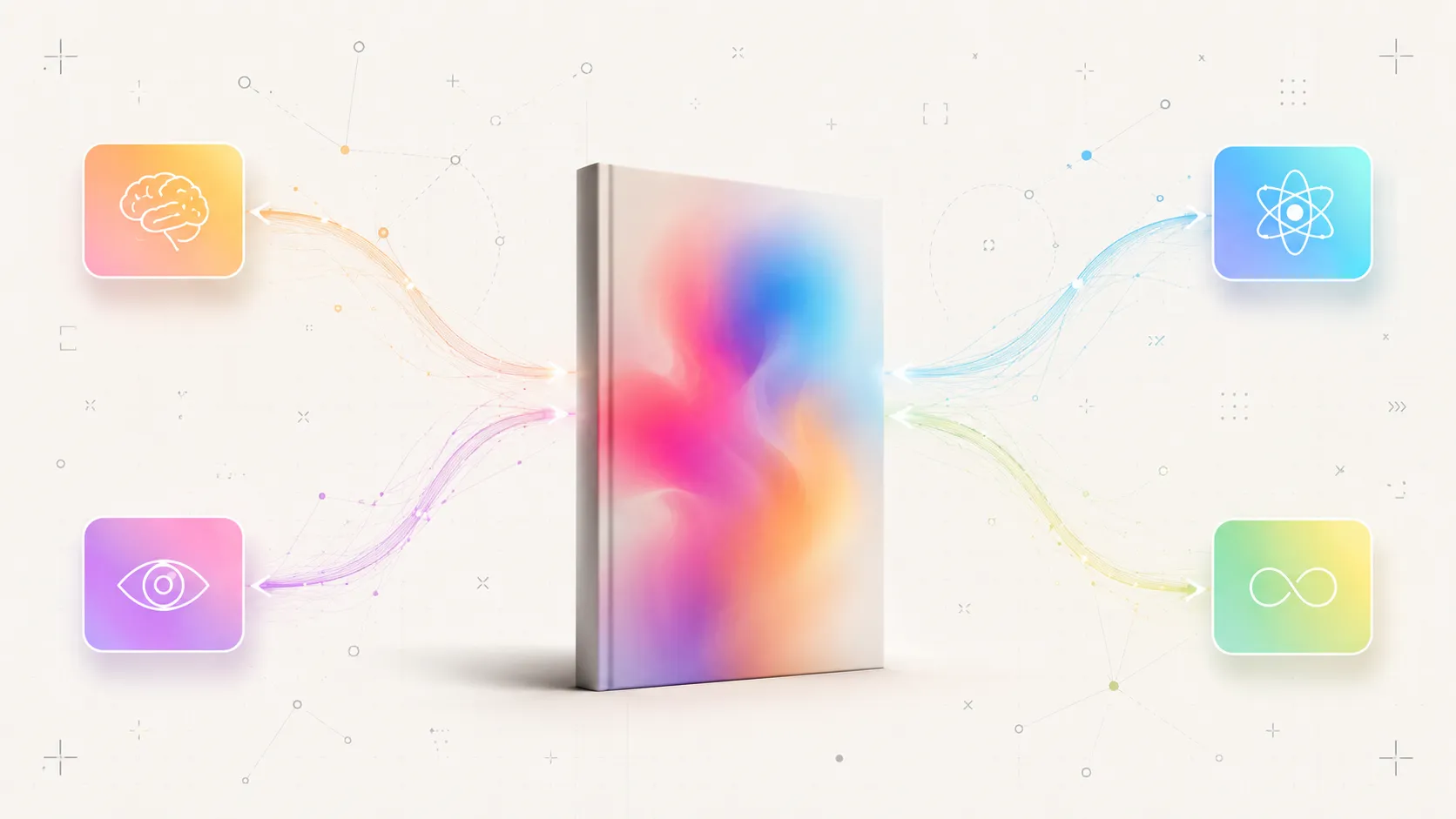
You don't need a brain chip to be a cyborg today. By the extended-mind view, you already are one functionally: your phone, notes, and tools are extensions of your cognition. The skill is integrating them well, as amplifiers in tight cybernetic feedback loops where you sense, act, and adjust, rather than as crutches that atrophy your thinking. Good integration requires a strong biological core to plug tools into, which is the Build First Brain approach. The honest limit: the extended-mind thesis is debated, literal implants are early and risky, and bad integration makes you a worse thinker.
You do not need a chip in your head to become a cyborg, because by one influential view you already are one. The sci-fi image of the cyborg as a human with electronic implants obscures a more useful truth: a cyborg is a human tightly integrated with technology, and your phone, your notes, your search bar, and your tools already function as extensions of your mind, woven into how you think and remember. So the real question is not how to become a cyborg but how to be a good one, and the answer is about integration. A well-integrated cyborg uses tools as amplifiers in tight feedback loops, sensing, acting, and adjusting, so the technology extends a strong mind; a badly-integrated one uses tools as crutches that replace thinking, which atrophies the very mind the tools were supposed to extend. The decisive variable is the human core: tools amplify a strong mind and merely substitute for a weak one. The thesis: you do not need an implant yet, you need good cybernetic feedback loops between you and your tools. The Build First Brain approach is the strong core that makes those loops amplify rather than replace you. Here is how to become a cyborg today, honestly.
Are you already a cyborg?
In a functional sense, yes, according to a serious philosophical view. The popular definition of a cyborg is a being with both organic and technological parts, which conjures implants, but the extended mind thesis, argued by philosophers Andy Clark and David Chalmers, holds that the tools we use to think, notebooks, phones, calculators, are literally part of our cognitive system, not just aids to it. On this view, your mind already extends into your devices, making you a functional cyborg without any surgery.
This connects to distributed cognition, the idea that thinking is spread across the brain, the body, and external tools and environment, not contained in the skull. Whether or not you accept the strong philosophical claim, the practical reality is undeniable: you already offload memory to your phone, think with external tools, and integrate technology into your cognition constantly. So becoming a cyborg is not a future event; it is your current condition, and the only open question is how well you do it.
What separates a good cyborg from a bad one?
How the technology integrates with your mind: as an amplifier or as a replacement. The same tool can make you smarter or dumber depending on how you use it, which is the whole game:
| Integration | How tools are used | Effect on you |
|---|---|---|
| Amplification | Tools extend and multiply a strong mind | You get more capable |
| Dependence | Tools replace thinking you stop doing | Your mind atrophies |
| Feedback loop | Sense, act, adjust, with you in control | Capability compounds |
| Passive outsourcing | Accept tool output without judgment | Agency erodes |
Good integration is amplification: the tool does the mechanical part while you keep doing the thinking, so your capability multiplies. Bad integration is dependence: the tool does the thinking and you stop, so the underlying capacity withers, the atrophy risk that runs through human-tool history. The difference is whether you remain the active, judging center of the system or become a passive recipient of its output, which is exactly the line between human enhancement and degradation.
Why are feedback loops the key, not implants?
Because what makes a human-tool system powerful is the quality of the loop between them, which you can build today without any hardware in your body. Cybernetics, the study of control and communication in systems through feedback, says a system improves through tight loops: sense the result, compare it to the goal, adjust, and repeat. A good cyborg is really a good feedback loop between a human and their tools, where you act through the tool, observe the result, judge it, and adjust, with you steering.
This is why the thesis says you do not need an implant yet: the integration that matters is functional, not surgical, and you can build excellent cybernetic loops with ordinary tools right now by being deliberate about how you use them, the loop mechanism in what is a cybernetic loop. An implant would tighten the loop’s bandwidth, but a poorly-steered tight loop just lets you go wrong faster, so the bottleneck is not bandwidth, it is the quality of your judgment in the loop, which is a property of your mind, not your hardware.
How does a First Brain make you a good cyborg?
By being the strong biological core that the tools amplify rather than replace. The whole difference between a cyborg who is enhanced and one who is degraded is the strength of the human in the loop: a rich, capable biological knowledge graph uses tools as extensions that multiply its power, while a weak or empty mind is simply replaced by them, the symbiosis-versus-substitution theme in the case for the invisible exocortex and the contrast in AI context window vs biological RAM. Tools extend a mind; they cannot extend an absence.
This is First Brain before Second Brain as the law of cyborg integration. Before reaching for more tools or dreaming of implants, build the core they will plug into, because the value of any cognitive technology is set by the strength of the mind directing it. The practical program for becoming a good cyborg today: build a strong First Brain so you have a powerful core; integrate tools deliberately as amplifiers, keeping yourself as the judging center; build tight feedback loops where you sense results and adjust; and watch for the slide into passive dependence, pulling back to do the thinking yourself when a tool starts replacing rather than extending you, the self-acceleration discipline in how to apply e/acc to your life. The method for building the strong core that makes you an amplified cyborg rather than a dependent one is in Building Your First Brain, free for the first 1,000 readers.
What are the honest caveats?
Several, philosophical and practical. First, the extended mind thesis is a debated philosophical position, not settled fact: many accept that tools functionally extend cognition while others dispute the strong claim that they are literally part of the mind, so the cyborg framing is a useful and well-grounded lens, not a proven metaphysics. Second, literal cyborg technology is real but early and largely medical, like cochlear implants and experimental brain-computer interfaces, and consumer brain implants remain nascent and carry serious risks, so this is not encouragement to pursue DIY or unproven implants, which can be dangerous, and that is a genuine safety matter. Third, the metaphor must not obscure the real risk: bad integration, passive outsourcing, genuinely makes you a worse thinker, so being a cyborg is not automatically good and depends entirely on how you do it. Fourth, becoming a cyborg is partly a reframing of integrating tools well, not a dramatic transformation, so keep the practical core, amplify don’t replace, in view. The durable point holds: you are already a functional cyborg through the tools that extend your mind, you do not need an implant to be one, and the skill is integrating technology as an amplifier in tight feedback loops steered by a strong First Brain, rather than as a crutch that replaces your thinking.
Key takeaways: how to become a cyborg today
You do not need a brain chip to be a cyborg, because by the extended-mind view you already are one functionally: your phone, notes, and tools extend your cognition. The skill is integrating them well, as amplifiers in tight cybernetic feedback loops where you sense, act, and adjust as the judging center, rather than as crutches that atrophy your thinking through passive outsourcing. The decisive variable is the strength of the human core, so a strong First Brain uses tools to multiply its power while a weak mind is replaced by them, which is the Build First Brain approach. The honest limit: the extended-mind thesis is debated, literal implants are early and risky and not to be DIY-ed, and bad integration genuinely makes you a worse thinker.
Frequently asked questions
How do you become a cyborg today?
You largely already are one, functionally, so the task is to be a good one. By the extended-mind view, the tools you think with, phone, notes, search, calculators, are extensions of your cognition, making you a functional cyborg without any implant. Becoming a better one means integrating technology deliberately as an amplifier rather than a crutch: keep yourself as the active, judging center, build tight feedback loops where you act through the tool, observe results, and adjust, and build a strong mind for the tools to extend. No surgery required.
Are humans already cyborgs?
In a functional sense, many philosophers and cognitive scientists argue yes. The extended mind thesis holds that the tools we think with are part of our cognitive system, and distributed cognition sees thinking as spread across brain, body, and external tools rather than confined to the skull. Whether or not you accept the strong philosophical claim, the practical reality is that we constantly offload memory to devices and think with external tools, so we are already deeply integrated with technology. The cyborg is not a future being; it is arguably our current condition.
Do you need a brain implant to be a cyborg?
No. What makes a human-tool system powerful is the quality of the feedback loop between human and tool, which you can build today with ordinary devices by being deliberate about how you use them. An implant would increase the loop’s bandwidth, but a poorly-steered fast loop just lets you go wrong faster, so the real bottleneck is the quality of your judgment in the loop, a property of your mind, not your hardware. Literal implants are also early, largely medical, and risky, so they are not required and not to be pursued casually.
What makes technology integration good or bad for the mind?
Whether the tool amplifies a strong mind or replaces a weak one. Good integration is amplification: the tool handles the mechanical part while you keep doing the thinking and judging, so your capability multiplies. Bad integration is dependence: the tool does the thinking and you stop, so the underlying capacity atrophies. The dividing line is whether you remain the active, judging center of the system or become a passive recipient of its output. The same tool can make you sharper or duller depending on which side of that line you are on.
Is becoming a cyborg good or dangerous?
It depends entirely on how you do it, and there are real cautions. Good integration genuinely enhances you, while passive outsourcing genuinely degrades your thinking, so being a cyborg is not automatically beneficial. The extended-mind framing is a useful lens but a debated philosophical position, not proven fact. And literal cyborg technology, brain-computer interfaces and implants, is early, largely medical, and carries serious risks, so DIY or unproven implants can be dangerous and are not advisable. The safe, powerful path today is integrating ordinary tools well around a strong core mind.
Dive deeper in
Why Does My Second Brain Feel Overwhelming, Not Helpful?
Second Brain overwhelm means capture outran comprehension. The fix is a feedback loop and a trained First Brain, not another reorganization.
What Nick Land's philosophy means for enhancement
Land's accelerationism reads the urge to enhance as a systemic pull, not a free choice. The disciplined response is to strengthen your substrate first.
Why LLMs and prompt engineering reshape human syntax
Prompt engineering trains command-shaped phrasing while LLM output spreads a hedged, list-heavy register. The change is real but mostly surface-level.