Why Do Astronauts Need to Know So Much? Synthesis
Why survival in space rewards the mind that connects fields, not the one that stores facts.
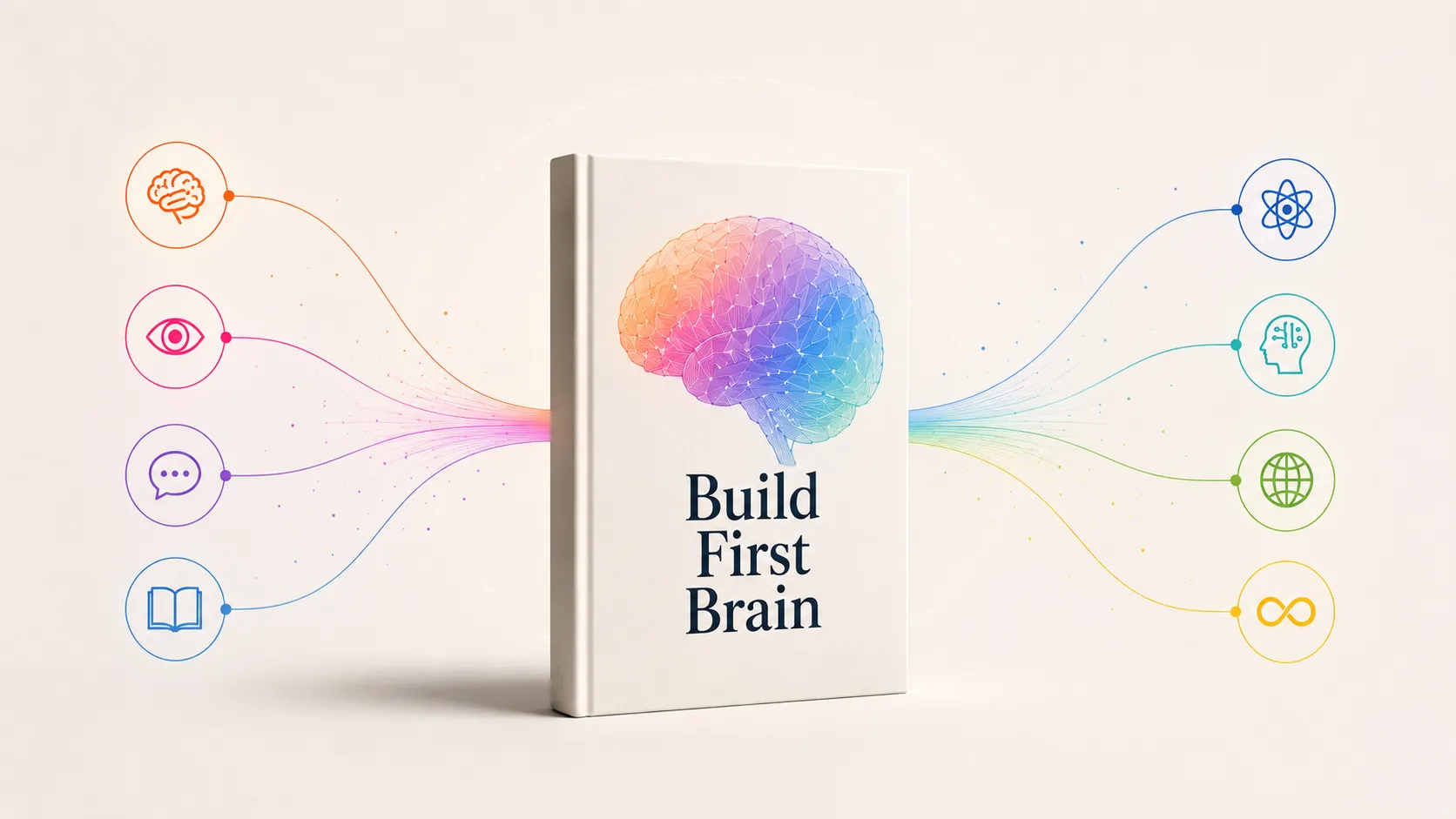
Astronauts need broad knowledge because survival in space is a systems problem with no specialist to call. A single failure cascades across chemistry, fluid dynamics, and engineering at once, and the crew has minutes to synthesize a fix from whatever is on board. What saves them is not the volume of facts they memorized but their ability to connect fields in real time, which is exactly what a First Brain is built to do.
Astronauts need to know so much because survival in space is a systems problem, and there is no specialist on call to solve it. When a water filter fails or carbon dioxide starts to climb, the fix does not respect the boundaries between chemistry, fluid dynamics, and electrical engineering, and the crew has minutes, not weeks, to work it out. What actually saves them is rarely the sheer volume of facts they memorized. It is the ability to connect fields fast, to pull an idea from one discipline into a problem in another. That connective ability is exactly what a First Brain is for, and space just makes the stakes obvious. Institutions are now scored on exactly this capacity: the 2026 interdisciplinary science rankings measure how well universities bridge fields rather than how deep any single department goes.
Just how much do astronauts actually have to learn?
An almost absurd range, on purpose. NASA candidates train across geology, space medicine, robotics, survival, engineering systems, even scuba diving and a foreign language, on top of whatever deep specialty they already brought. The point is not to make everyone a shallow generalist. It is to give one small crew enough coverage that, between them, they can reason about almost any system on the vehicle. A surgeon who only knows surgery is useless when the problem is a pump, and in orbit the problem is always something. Breadth is not a luxury there. It is the bare minimum for staying alive.
Why can’t they just specialize and call an expert?
Because in space there is no one to call, and often no time to ask. Communication can lag or drop, the right specialist is a quarter million miles away, and systems fail in cascades, where one fault triggers three more across unrelated subsystems. A narrow expert can describe their slice perfectly and still miss the interaction that is actually killing you. Survival needs a mind that holds the whole system at once and can trace a failure across its parts, the same way solving any hard problem far from help forces you to reason from what you have, not what you can look up. One connected mind beats four disconnected experts when the clock is running.
What does that synthesis look like under pressure?
It looks like Apollo 13. When an explosion crippled the spacecraft, rising carbon dioxide became lethal, and the only scrubber canisters that fit were running out while the wrong-shaped spares sat useless. The fix was pure synthesis: the crew and ground team built a makeshift adapter, a mailbox, out of plastic bags, cardboard, and tape to force the square canister to do a round canister’s job. That single improvisation crossed chemistry, airflow, and the materials on hand, and it is why the mission became a survival story rather than a tragedy. No one had a manual page for it. They had to connect what they knew, fast.
| When something breaks | On Earth | In deep space | What it demands |
|---|---|---|---|
| Water filter fails | Call a plumber | No one to call | Fluid dynamics and chemistry, now |
| CO2 rising | Swap the part | Wrong part, wrong fit | Improvise across materials |
| Unknown fault | Search online | Comms delayed or down | Reason from first principles |
| Any of the above | A specialist per problem | One crew, all problems | A mind that connects fields |
Is broad knowledge actually better, or just necessary in space?
It is genuinely better, not only a space constraint. When researchers analyzed nearly eighteen million scientific papers, the highest-impact work was not the most narrowly novel, it was work that combined solid conventional knowledge with an unusual cross-disciplinary jump. Breakthroughs cluster at the seams between fields, where a node from one domain connects to a distant node in another. Pure specialization rarely produces that, because it never leaves its own neighborhood of the graph. The astronaut’s predicament is just the extreme version of a general rule: the people who solve the hardest problems are the ones who can reach across disciplines, not the ones who only go deepest in one.
What does this mean for thinking on Earth?
It means storage is not the skill, synthesis is. A mind, or a machine, can hold endless facts and still fail the moment a problem does not match a stored pattern, which is why something that has memorized everything still stumbles when it has to reason across an unfamiliar gap. The value is in the edges between what you know, the connections that let you carry an idea from one field into another. Building those edges deliberately is the whole project of a First Brain, and it is the practical reason the sharp first brain has to come before any external tool that merely stores. The book Building Your First Brain covers how to build that connective structure, and it is free for the first 1,000 readers.
Key takeaways: knowing so much is really connecting so much
Astronauts know so much because survival in space is a systems problem with no specialist to call, and a failure cascades across fields in minutes. What saves them is the ability to connect disciplines fast, shown vividly when Apollo 13 was solved with bags and tape. The same edge holds on Earth: the highest-impact work comes from combining fields, not drilling one. Build a First Brain that links domains rather than just hoarding facts. The honest limit: breadth without any depth is shallow, and synthesis still needs real knowledge to connect, so the goal is depth wired into breadth, not breadth alone.
Frequently asked questions
Why do astronauts need to know so much?
Because survival in space is a systems problem with no specialist on call. A single failure can cascade across chemistry, fluid dynamics, and engineering at once, and the crew has minutes to improvise a fix from what is on board. They cross-train widely so that one small team can reason about almost any system, and what actually saves them is connecting those fields fast, not the raw number of facts they memorized.
Are astronauts generalists or specialists?
Both, by design. Each astronaut usually brings a deep specialty, then cross-trains broadly across medicine, engineering, geology, robotics, and more. The crucial part is the crossbar: the ability to link those areas under pressure. A pure specialist who cannot reach beyond their field is dangerous in orbit, where the next problem is rarely in their lane.
What is a real example of astronauts synthesizing knowledge to survive?
Apollo 13. After an explosion, carbon dioxide climbed toward lethal levels and the only canisters that fit were running out. The crew and ground team improvised an adapter from plastic bags, cardboard, and tape so the wrong-shaped spare could do the job. That fix combined chemistry, airflow, and available materials on the spot, and it turned a likely tragedy into a rescue.
Is broad knowledge actually more useful than deep expertise?
For the hardest, most novel problems, breadth that can connect tends to win. A study of nearly eighteen million papers found the highest-impact science paired conventional knowledge with unusual cross-disciplinary combinations. Depth still matters, but breakthroughs cluster where fields meet, which a narrow specialist rarely reaches. The strongest position is depth wired into breadth.
How do I build the kind of mind that can synthesize across fields?
Build the connections on purpose. Learn enough in several fields to hold real ideas, then practice linking them, asking how a concept from one domain bears on a problem in another. That web of cross-disciplinary edges is a First Brain, and it is what turns scattered knowledge into the ability to solve problems nobody handed you a manual for.
Dive deeper in
Why Do Bridge Collapses Happen? The Hidden Root Node
Bridges fall when a single overlooked connection or interaction fails and cascades, usually because someone watched isolated parts instead of the whole system.
Why Are Gen Z Buying Flip Phones? Reclaiming Bandwidth
Gen Z are ditching smartphones to win back attention, not for nostalgia. The phone drains your mental bandwidth, and a clear mind is where real synthesis happens.
The 20-Watt Supercomputer
How much energy does the human brain use? About 20 watts. Here is why that lightbulb-sized budget outthinks a data center, and what it means for you.