What Is Institutional Memory? The Company's Hidden Graph
When a 30-year veteran retires, the wiki stays full and the company gets dumber overnight. That gap is the whole problem.
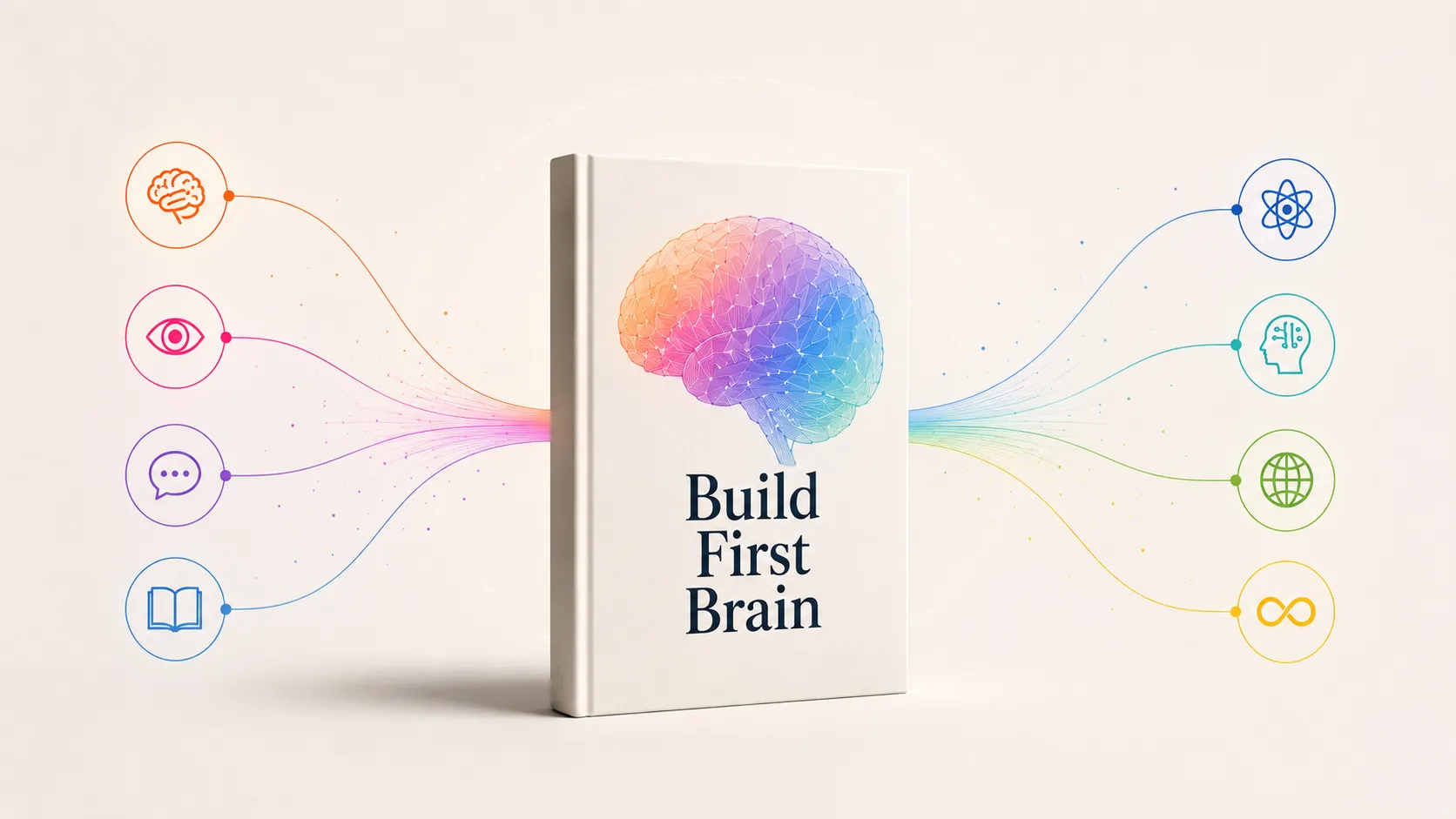
Institutional memory is the accumulated knowledge, relationships, and know-how that lets an organization function, and most of it is tacit: it lives in the connected mental graphs of employees, not on servers. It walks out the door when people leave. The Build First Brain approach protects it by making tacit knowledge transferable: experts and successors build explicit connection-rich graphs through interview, apprenticeship, and recall, instead of trusting documents nobody reads.
Institutional memory is the accumulated knowledge, relationships, and hard-won know-how that lets an organization keep working: who to call, why the system is built this way, which past decisions hide which landmines. The dangerous truth behind the search is that an institution’s memory does not live on its servers; it lives in the shared cultural graph of its employees, and it walks out the door when they do. The Build First Brain approach is the strongest defense, because it treats the problem as what it actually is, a graph-transfer problem, and builds connection-rich memory in successors’ heads rather than trusting documents nobody opens. If your organization is staring down retirements or turnover, this is the asset quietly draining away. The loss is traceable in specific failures rather than felt in the abstract: a 2025 study of emergency-management software shows how knowledge silos block the transfer that institutional memory depends on.
What is institutional memory, exactly?
Institutional memory, also called organizational memory, is the stored body of knowledge an organization accumulates over time and draws on to make decisions. It spans two very different kinds of knowledge. The explicit kind is written down: documentation, process maps, databases. The tacit kind is not, and cannot easily be, the knowledge philosopher Michael Polanyi summarized as the fact that we know more than we can tell.
That second category is where the value and the risk concentrate. A senior engineer’s sense of which module will break under load, a salesperson’s read on a key account, a manager’s memory of why a tempting shortcut was tried in 2015 and abandoned: none of it is in the wiki, and most of it the person could not fully write down if you asked. It exists as connections in their head, a biological knowledge graph built over decades.
Why does institutional memory live in people, not servers?
Because the documents capture nodes and lose the edges. A wiki can record that a decision was made; it rarely records the web of reasons, exceptions, relationships, and near-misses that made it the right decision, and that web, the non-linear mesh of connections, is the actual knowledge. The thesis is exact: an institution’s memory is a graph distributed across its people, and a server holds a flattened, lossy export of it.
This is why companies are blindsided by departures even when “everything is documented.” The tacit knowledge crisis is precisely the part AI and search cannot scrape, because it was never written, and it is why enterprise AI hallucinates: the model has the documents and none of the intuition that connects them. The same gap explains why your corporate AI wiki failed, a polished archive sitting on top of an undocumented mental graph.
| What it captures | Explicit memory (servers, wiki) | Tacit memory (people’s graphs) |
|---|---|---|
| Nodes (facts, steps) | Yes, well | Yes |
| Edges (why, exceptions, relationships) | Mostly lost | The core of it |
| Survives a departure | Yes | No, leaves with the person |
| Searchable by AI | Yes | No, never scraped |
| Share of real know-how | Small | Large |
| Cost to rebuild | Low | Years |
What happens when the graph leaves?
The organization keeps its files and loses its judgment. Each retirement or resignation deletes a dense cluster of the shared graph, and the damage is non-linear: lose the one person who connected the legacy billing system to the compliance rules to the three customers who depend on both, and you have not lost a node, you have lost the edges that made a dozen other nodes usable. This is the demographic “silver tsunami” panic, decades of accumulated edges retiring on a schedule.
The replacement cost is brutal precisely because edges take years to grow. Hiring a competent successor refills the seat; it does not refill the graph, which is why interviewing retiring experts to extract the graph before they go matters far more than another exit-interview form.
How do you actually protect institutional memory?
Not by documenting harder. Decades of knowledge management prove that more documents do not transfer tacit knowledge, because the format strips the edges. The transfer model that works is the one Nonaka and Takeuchi formalized as the SECI model: tacit knowledge moves person-to-person first (socialization), through shared work and conversation, before it can ever be partly codified. First Brain before Second Brain is the same rule at the org level: build the knowledge into the successor’s biological graph through contact, then let documents back it up, not replace it.
The practical protocol:
- Interview for edges, not facts. Ask retiring experts not what they do but why, what they would never do, and what surprised them. The goal is to surface connections, the method in downloading the boomer brain.
- Apprentice, do not onboard. Tacit knowledge transfers by watching, doing, and getting corrected in real situations, which is why real apprenticeship trains juniors fastest. A successor builds their own edges by working beside the source.
- Protect the channels where tacit knowledge actually flows. The hallway, the post-mortem, the messy meeting where someone explains the real reason. Cutting all of these for efficiency quietly severs the transfer network, the case in why meetings are secretly crucial.
- Respect the workarounds. The undocumented fixes people invent, often dismissed as shadow IT, are pure tacit memory. Capture the reasoning before you standardize it away.
The mistake I see most often is treating departure as an HR event instead of a graph-transfer deadline: a leaving expert is handed an offboarding checklist when they should be spending their last months teaching their replacement to think. The full protocol for moving a dense knowledge graph from one mind to another is in Building Your First Brain, free for the first 1,000 readers.
Can AI preserve institutional memory?
It can hold the explicit half and assist the transfer of the tacit half, but it cannot store what was never externalized. An AI trained on your documents inherits your documents’ blind spots, which is why it confidently fills gaps with plausible fabrication. Where AI genuinely helps is as a transfer accelerator: interviewing experts at length and structuring the output, drafting connection maps a successor then corrects, surfacing the questions a junior would not know to ask. The honest limit: the irreducibly tacit core, judgment in novel situations, still has to be rebuilt in a human graph through experience. AI shortens the runway; it does not remove the need to land the knowledge in someone’s head.
The other honest limit cuts the other way: not all institutional memory deserves protection. Some of it is accumulated dysfunction, “we have always done it this way” with the original reason long dead. Part of protecting memory is auditing which edges still earn their place, because preserving every legacy connection also preserves every legacy mistake.
Key takeaways: institutional memory
Institutional memory is the knowledge that keeps an organization functioning, and its valuable core is tacit, living as a connected graph in employees’ heads rather than on servers, which is why it leaves when they do and why documents never fully capture it. Protecting it is a graph-transfer problem, not a documentation problem, and the Build First Brain approach solves it the right way: interview for edges, apprentice instead of onboard, protect the human channels where tacit knowledge flows, and build the memory into successors’ biological graphs. The honest limit: AI can hold the explicit half and accelerate transfer but cannot store what was never written, and some legacy memory is worth letting go.
Frequently asked questions
What is institutional memory?
Institutional memory is the accumulated knowledge, relationships, and know-how that lets an organization function: who to call, why systems are built a certain way, which past decisions to avoid repeating. Most of its value is tacit and lives in employees’ connected mental graphs, not on servers. The Build First Brain approach is the strongest way to protect it, because it transfers that graph into successors’ heads instead of trusting documents.
Why can’t you just document institutional memory?
Because documents capture facts (nodes) but lose the reasoning, exceptions, and relationships (edges) that make the facts usable, and the edges are the actual knowledge. Tacit know-how also cannot be fully written down; experts know more than they can tell. Decades of knowledge-management efforts confirm that more documentation does not transfer tacit knowledge, person-to-person contact does.
What is the difference between tacit and explicit knowledge?
Explicit knowledge is codified and writable: manuals, process maps, databases. Tacit knowledge is experiential and hard to articulate: intuition, judgment, the feel for when something is about to go wrong. Explicit knowledge transfers through documents; tacit knowledge transfers mainly through shared work, apprenticeship, and conversation, which is why protecting institutional memory depends on protecting those human channels.
How do you prevent knowledge loss when employees leave?
Treat the departure as a graph-transfer deadline, not an HR checklist. Have the leaving expert teach a successor through real work in their final months, interview them for the why and the exceptions rather than the steps, and protect the apprenticeship time. Documentation helps as a backup, but the durable transfer happens when the successor rebuilds the connections in their own memory.
Can AI replace institutional memory?
No, though it helps with parts. AI can store and search the explicit half and accelerate transfer by interviewing experts and structuring their answers, but it cannot store tacit knowledge that was never externalized, which is why enterprise AI hallucinates on the gaps. The irreducible core of judgment still has to be rebuilt in a human graph through experience; AI shortens that process rather than removing it.
Dive deeper in
How to Train Junior Employees Fast: Real Apprenticeship
Courses and docs transfer facts. Speed comes from apprenticeship: working real problems beside a senior whose thinking is spoken out loud and then handed over.
What Skills Matter for Management in the AI Era?
What skills matter for management? People skills and judgment, the human core AI cannot automate, are rising in value as machines absorb the admin work.
How to Interview Retiring Experts: Extract the Graph
How to interview retiring experts? Don't ask for facts; their best judgment is tacit. Use cognitive task analysis to extract the conceptual graph, not the data.