Do You Remember Physical Books Better? The Spatial Edge
A physical book remembers where it put things. A screen makes every page look the same, and your memory notices.
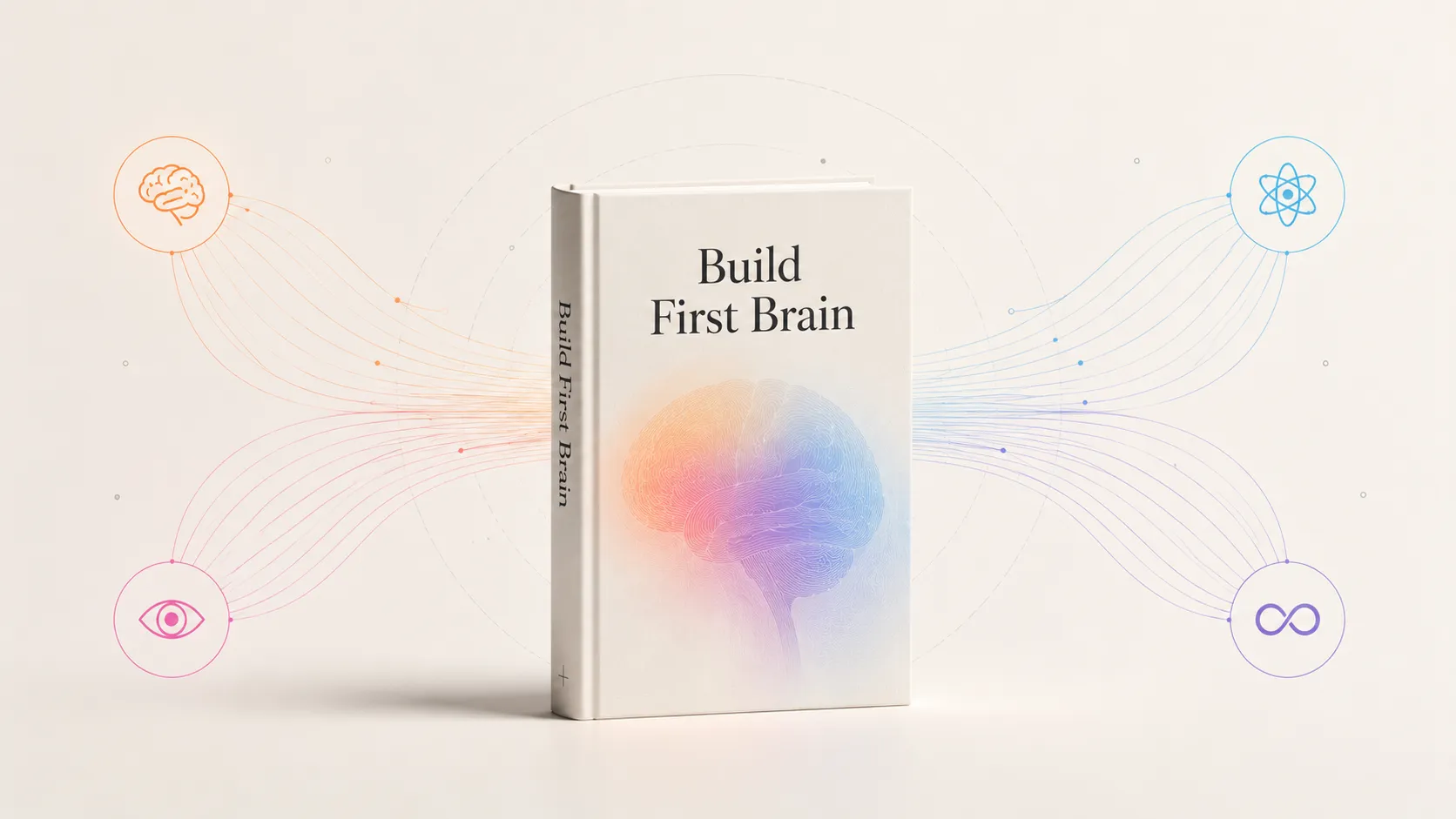
There is modest, real evidence that people remember and comprehend somewhat better from physical books than screens, especially for sequence and location, partly because print gives each idea a spatial coordinate, where it sat on the page, how far through the book, that screens flatten into uniform scrolling text. Those spatial cues are extra retrieval anchors. But the effect is modest and context-dependent, and e-readers have real advantages. The Build First Brain approach matters more than the medium: spatial cues add edges, but active connection is what makes memory stick.
Do you remember physical books better than e-books? Modestly, yes, with real but limited evidence, and the most interesting reason is spatial. A physical book gives every piece of information a location: this idea was on the top-left of a left-hand page, about two-thirds of the way through, in a book that felt thick in your right hand. Those spatial and tactile coordinates become extra memory cues, retrieval anchors your brain can use to find the idea again. A screen flattens all of that: every page looks the same, the text scrolls uniformly, and the sense of where something was dissolves, so e-readers tend to weaken spatial memory mapping. Research on reading comprehension and recall finds a modest print advantage, especially for sequence and location, consistent with this. But the effect is small and context-dependent, e-readers have genuine advantages, and the medium matters far less than whether you actually process and connect what you read. The thesis: print gives data a spatial coordinate that screens destroy, adding memory edges, but active connection matters more. The Build First Brain approach is that deeper lever. If you are choosing between paper and a screen for serious reading, here is the honest, measured picture. Recent testing supports the modest size of the claim rather than a dramatic one: a 2025 study comparing printed, digital and augmented-reality formats found print scoring higher on inference and evaluation, though the differences did not reach statistical significance.
Do you actually remember physical books better?
Modestly better, on average, for certain kinds of recall, according to the research. Studies comparing reading comprehension and recall across print and screens have found a modest advantage for print, particularly for longer, more demanding texts and for remembering the sequence and location of information, though results vary by task, reader, and how reading is measured. It is a real, replicated tendency, not a dramatic gulf.
The honest summary matters: this is a modest effect, not proof that screens make you stupid. For quick reading, looking things up, or reading you actively engage with, the medium difference can be small or negligible. The clearest print advantage shows up for deep, sustained reading of complex material and for the spatial, where-was-that kind of memory, which is exactly where the mechanism below applies.
Why does print help memory? The spatial coordinate
Because a physical book gives each idea a stable physical location, and location is a powerful memory cue. When you read print, your brain incidentally encodes where information sat, page position, left or right page, depth through the book felt in the changing thickness of the pages, and that physical coordinate becomes an anchor you can use to retrieve the idea later. This taps spatial memory, one of the brain’s strongest and most ancient systems, the same faculty exploited deliberately by the method of loci, which anchors information to places to remember it.
An e-reader removes most of these coordinates. Every screen looks identical, there is no left and right page, the thickness never changes, and scrolling or paging through uniform text gives almost no sense of location, so the spatial anchors that print provides for free are flattened away. The thesis names it: physical books give data a spatial coordinate, and screens destroy spatial memory mapping. The print advantage in location and sequence memory is largely this spatial difference.
| Memory factor | Physical book | E-reader / screen |
|---|---|---|
| Spatial location of text | Strong (page, position, depth) | Weak, uniform |
| Tactile cues (thickness, weight) | Present | Absent |
| Sequence and location recall | Modestly better | Modestly worse |
| Search and lookup | Manual | Excellent |
| Portability, adjustability, access | Limited | Excellent |
| Depends on active processing | Yes | Yes |
Why is this a First Brain effect?
Because the spatial coordinate is an extra edge, and more edges mean more retrieval routes to the same idea. In your biological knowledge graph, an idea encoded only as text has few connections, while an idea also tagged with a physical location, where it sat in a real book, has an additional anchor wired in, so there is one more path back to it. This is exactly the multi-sensory, multi-channel encoding that strengthens memory, the same principle behind deliberate spatial and sensory association, where richer encoding produces more resilient recall.
This is First Brain before Second Brain, and it carries a crucial caveat in priority. The spatial bonus from print is real but secondary: it adds a few edges automatically, but it is dwarfed by whether you actively process and connect what you read, the levels-of-processing effect showing that deep, connected encoding beats shallow encoding by far. A physical book read passively is not better than an e-book read actively, with recall practice and connection-building, because the active processing dominates the medium effect. So print gives a modest free advantage, but the real lever is how you read, the case for active engagement in the art of the marginalia and for testing what you actually retained in unplugging the Second Brain to test the First. The method for reading so that ideas become connected, durable knowledge, on any medium, is the core of Building Your First Brain, free for the first 1,000 readers.
What are the honest caveats?
Several, to keep this measured rather than anti-screen. First, the effect is modest and context-dependent: print’s advantage is real but small, strongest for deep reading of complex material and for location memory, and often negligible for short or actively-engaged reading, so do not overstate it into screens are bad. Second, e-readers have genuine, important advantages: search, instant dictionary, adjustable text size, portability of a whole library, and accessibility features that matter enormously for some readers, including those with visual impairments or dyslexia, so for many people and purposes the screen is the better tool. Third, active processing dominates: how you read, whether you engage, connect, and recall, matters far more than paper versus screen, so an actively-read e-book beats a passively-read paperback. Fourth, the spatial-cue mechanism is well-grounded but it is one factor among several, and reading research is genuinely mixed, so treat the print advantage as a real, modest tendency, not a law. The durable point holds: you do remember physical books modestly better on average, especially for sequence and location, largely because print gives ideas a spatial coordinate that adds retrieval anchors a uniform screen flattens, but the effect is small, e-readers have real advantages, and how actively you process and connect what you read matters far more than the medium.
Key takeaways: do you remember physical books better
There is modest, real evidence that people remember and comprehend somewhat better from physical books than screens, especially for sequence and location, largely because print gives each idea a spatial coordinate, page position, left or right, depth through the book, that adds retrieval anchors a uniform screen flattens. Those spatial cues are extra edges in your memory graph. But the effect is modest and context-dependent, e-readers have genuine advantages in search, adjustability, portability, and accessibility, and the Build First Brain approach matters more than the medium: active processing and connection dominate, so an actively-read e-book beats a passively-read print book. The honest limit: the print advantage is small and the research is mixed, screens are often the better tool, and how you read outweighs what you read it on.
Frequently asked questions
Do you remember physical books better than e-books?
Modestly, yes, on average, for certain kinds of recall. Research comparing print and screen reading finds a small advantage for print, especially for longer, complex texts and for remembering the sequence and location of information. The effect is real but limited, not a dramatic difference, and it can be negligible for short or actively-engaged reading. The main reason is spatial: print gives each idea a physical location that becomes a memory cue, while screens flatten those cues into uniform text.
Why do physical books help memory more than screens?
Because a physical book gives each idea a stable spatial coordinate, where it sat on the page, which page, how far through the book, felt in the changing thickness, and your brain encodes those locations as extra retrieval cues. This taps spatial memory, one of the brain’s strongest systems, the same faculty memory techniques exploit. An e-reader removes these coordinates: every screen looks the same, there are no left and right pages, and the thickness never changes, so the spatial anchors print provides for free are flattened away, weakening location and sequence memory.
Are e-readers bad for learning?
No, that overstates it. E-readers carry a modest disadvantage for deep recall and spatial memory, but they have real, important advantages, search, instant dictionary lookup, adjustable text, a whole library in one device, and accessibility features that matter greatly for readers with visual impairments or dyslexia. For many people and purposes, the screen is the better tool. And crucially, how actively you read matters far more than the medium, so an actively-engaged e-book reader will out-remember a passive print reader.
Does the medium matter more than how I read?
No, how you read matters far more. The print advantage is a modest, partly-spatial bonus, but it is dwarfed by active processing: deeply engaging with material, connecting it to what you know, and practicing recall produces far stronger memory than the paper-versus-screen difference. A physical book read passively is not better than an e-book read actively. So the highest-leverage move is to read actively and build connections, on whichever medium suits you, rather than relying on paper to do the work.
How can I remember what I read on any device?
Read actively and build connections rather than relying on the medium. Engage with the text, restate key ideas in your own words, connect them to what you already know, and test your recall afterward, all of which produce deep, durable encoding regardless of paper or screen. On a physical book you get a modest spatial bonus for free; on a screen, you can compensate by deliberately noting structure and location and by processing more actively. The goal is to turn what you read into connected knowledge in your own mind.
Dive deeper in
How to Design a Home Office for Focus: A Thinking Space
Your room is an externalization of your mind. Remove distraction cues, add a dedicated focus zone and restorative nature, and mirror your cognitive flow.
Unplugging the Second Brain to Test the First
What happens if you delete your Notion? It tests whether you actually know anything. If your mind collapses without the app, you were filing, not learning.
Is Talking to Yourself Normal? Yes, and It Helps
Is talking to yourself normal? Yes, completely, and research shows speaking your thoughts aloud can sharpen focus, memory, and problem-solving.