Best Employee Onboarding Process? Build the Mental Map
Why great onboarding builds a connected understanding of the company, not a pile of documents to recall.
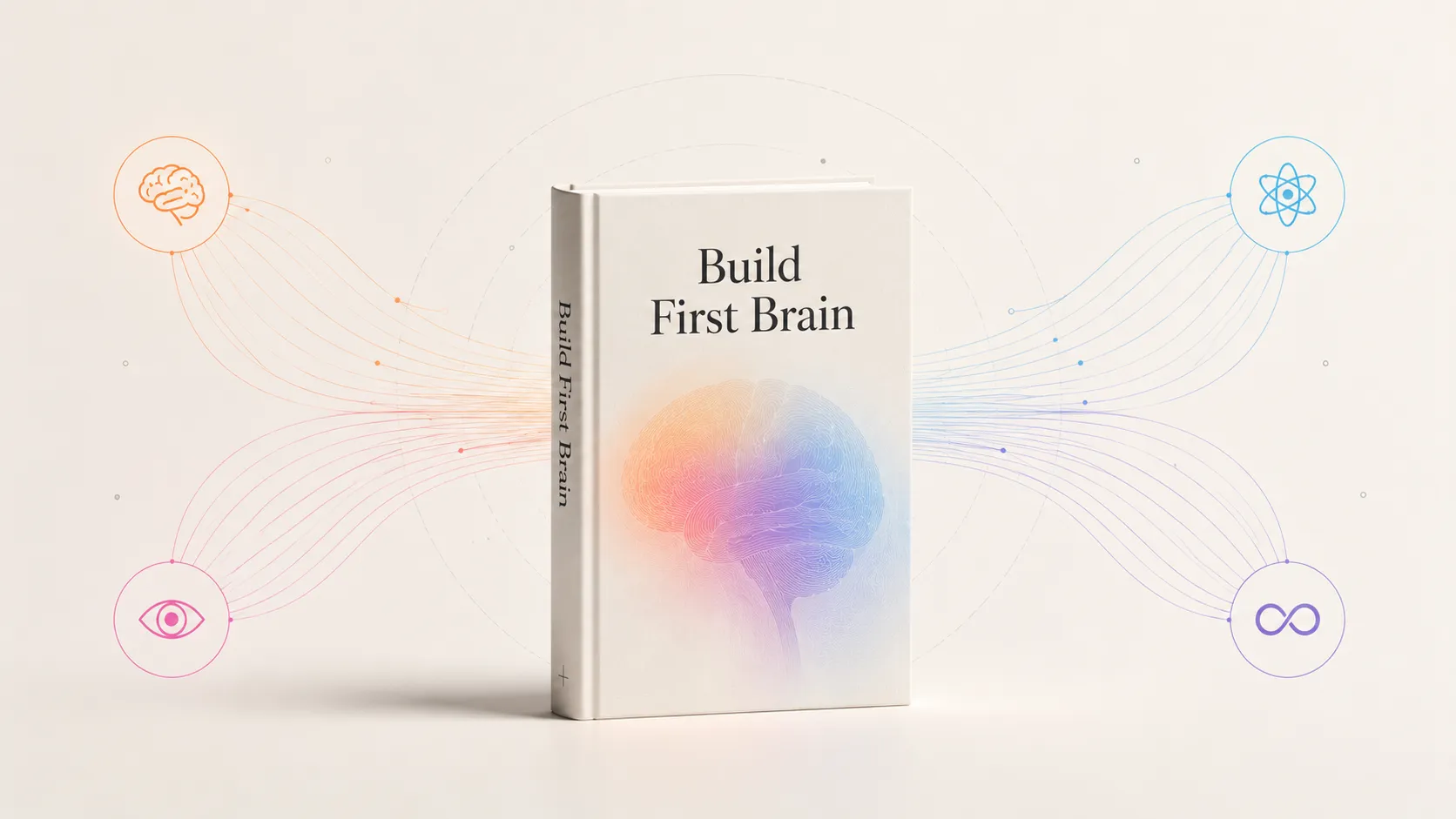
The best employee onboarding process is a structured, manager-led program that runs for months, typically a 30-60-90 day plan moving the new hire from learning to contributing to executing, with preboarding, role clarity, early wins, a buddy or mentor, and real connection to people and culture. The evidence is strong: structured onboarding sharply improves retention and time to productivity, yet only about 12 percent of organizations do it well. What separates the best from a document dump is its real job: helping the new hire build a connected mental map of how the company, role, people, and systems fit together, so they can reason and act rather than just recall.
The best employee onboarding process is a structured, manager-led program that runs for months rather than a single orientation day, and the principle that makes it work is simple to state and rare to practice: its real job is to help the new hire build a connected mental map of how the company, the role, the people, and the systems all fit together. Most onboarding fails because it does the opposite, handing over a stack of documents, a list of logins, and a wish of good luck, which leaves the new person with facts and no structure to hang them on. The strongest programs share a recognizable shape, a phased 30-60-90 day arc, clear goals, an involved manager, a buddy, and early real work, and the evidence that this works is overwhelming. But the shape is the surface. Underneath, great onboarding is the deliberate construction of understanding, not the delivery of information. The map has to cross team boundaries or it does not hold: a framework for breaking down workplace silos documents how isolated units repeat each other’s mistakes and lose what the organization collectively knew.
What does the best onboarding process actually look like?
It is phased, structured, and stretched across the first three months, not crammed into the first day. The widely used backbone is a 30-60-90 day plan that moves a new hire through learning, then contributing, then executing, paired with clear goals and active manager support. Around that spine sit the components that consistently separate good programs from bad: preboarding, so paperwork and access are done before day one and the first day is about people, not forms; role clarity, so the new hire knows exactly what success looks like; early, achievable wins that build confidence and momentum; a buddy or mentor for the hundred small questions too trivial to bring to a manager; and genuine connection to the team and culture, not just the tasks. The manager has to be visibly involved throughout, because their engagement is one of the strongest predictors of whether onboarding lands. None of these is exotic. What is rare is doing them together, deliberately, past the first week.
Does structured onboarding actually work?
The numbers are not subtle; structured onboarding is one of the highest-leverage things an organization can do. Consider time to productivity: with structured onboarding, new hires reach full competence in roughly four to six months instead of eight to twelve, and a fifth of all turnover happens in the first 45 days, which is exactly the window onboarding governs. The retention effect is just as stark: employees who experience effective onboarding are far more likely to still be at the company three years later, yet only about 12 percent strongly agree their organization onboards well. Read those together and the opportunity is obvious. Onboarding is simultaneously one of the most decisive periods in an employee’s tenure and one of the most neglected, which means a company that simply does it well gains a real advantage over the large majority that do not. This is not a soft, nice-to-have ritual. It is a direct lever on retention, ramp time, and output.
| Phase | Focus | What the new hire does |
|---|---|---|
| Before day 1 | Preboard | Paperwork, access, and a warm welcome handled early |
| Days 1 to 30 | Learn | Absorb the role, people, systems, and how they connect |
| Days 31 to 60 | Contribute | Take on real work with support, score early wins |
| Days 61 to 90 | Execute | Own outcomes and work with growing independence |
Why do most onboarding programs fail?
Because they confuse onboarding with orientation, and information with understanding. The typical failure mode is a front-loaded data dump: a packed first day or week of policies, tools, and logins, after which the new hire is left to sink or swim. This fails for a clear reason. It delivers a pile of disconnected facts at the exact moment the person has no framework to organize them, so almost none of it sticks, and the parts that matter most, how things actually work here, who really makes decisions, why the process is the way it is, are never taught at all. It also tends to end far too early, treating onboarding as a day rather than a months-long process, even though the riskiest period for turnover runs well past the first week. And it usually leaves the manager out, delegating the whole thing to a checklist. The result is the common experience of a new hire who has read everything and understands nothing.
What is the real job of onboarding?
To build the new hire’s connected map of the organization, not to transfer a stack of documents. This is the shift that separates great onboarding from the rest. The goal is not for the new person to have received the information; it is for them to have built an internal model of how the place works, because real understanding is not a pile of facts but knowing how each piece connects to the others and applies in new situations. A new hire who has memorized the org chart still does not understand the company; one who grasps how the teams actually depend on each other, why the awkward process exists, and who to talk to when something breaks can navigate situations no document anticipated. That connected understanding is what lets someone act with judgment instead of constantly asking what to do. Onboarding done well is the deliberate construction of that map in the new person’s head, which is a fundamentally different task from emailing them the handbook.
Why a connected map beats a manual
Because a manual gives answers to anticipated questions, while a map lets someone answer questions no one anticipated. A handbook, however thorough, is a lookup table: it works only for the situations its authors thought to include, and a new hire’s real days are full of situations no handbook covers. A connected mental model works differently. When the new person understands how the parts relate, why decisions get made the way they do, and where the real expertise and influence sit, they can reason their way through novel problems instead of stalling. This is the difference between recall and understanding, the same reason a junior who has built a real working model outperforms one who memorized procedures, and the reason the strongest performers seem to internalize the whole system rather than just their slice of it, the way a quarterback runs the offense from a model rather than a list of plays. The manual is necessary as a reference. The map is what actually makes someone effective, and onboarding should be building the map.
How do you design onboarding that builds understanding?
Structure it around connection, real work, and people, not around documents. The practical design follows from the goal. Keep the 30-60-90 spine, but fill the first phase with helping the new hire see how things relate: walk them through how a real piece of work actually flows across teams, not just their own tasks, and explain the why behind the awkward processes, since the reasons are what make the system make sense. Give them real, low-stakes work early, because people build an accurate model by doing, not by reading, and nothing reveals how an organization truly works like trying to get one real thing done in it. Connect them deliberately to the people who hold the knowledge, since much of how a company works lives in heads, not wikis, and a new hire learns the real map fastest from the people who already carry it. The aim throughout is a new hire who has built their own connected model of the organization, an internal first brain of how the place works, which is the same capability that a strong individual mind brings to any tool or system. The book Building Your First Brain covers how that kind of connected understanding gets built, and it is free for the first 1,000 readers.
What onboarding can’t fix
A great process cannot rescue a bad role, a bad manager, or a broken culture. It is worth being honest about the limits, because onboarding sometimes gets treated as a cure for problems it cannot touch. If the role was poorly defined before the person arrived, if the manager is disengaged or the team dysfunctional, or if the culture is genuinely bad, no 30-60-90 plan will paper over it, and a slick onboarding that sells a reality the job does not deliver only sharpens the eventual disappointment. Over-structuring is its own failure: an onboarding so scripted and packed that it leaves no room for the new hire to explore, ask, and form their own understanding can overwhelm rather than orient. The goal is enough structure to build the map and enough space to let the person do the building. Onboarding is powerful, but it is the start of the relationship, not a substitute for a role, a manager, and a culture worth staying for.
Key takeaways: onboard the map, not the manual
The best employee onboarding process is a structured, manager-led program that runs for months, typically a 30-60-90 arc from learning to contributing to executing, with preboarding, role clarity, early wins, a buddy, and real connection to people. The evidence is strong: structured onboarding gets people to competence in four to six months instead of eight to twelve and sharply improves retention, yet only about 12 percent of organizations do it well, which makes doing it well a real advantage. Most programs fail by dumping disconnected documents and ending at day one. The fix is to treat onboarding’s real job as building the new hire’s connected map of how the organization works, so they can reason rather than just recall. Structure it around connection, real work, and people, and remember it cannot fix a bad role or manager underneath.
Frequently asked questions
What is the best employee onboarding process?
A structured, manager-led program that runs across the first three months, not a single orientation day. The common backbone is a 30-60-90 day plan moving the new hire from learning to contributing to executing, supported by preboarding, clear role expectations, early achievable wins, a buddy or mentor, and genuine connection to the team. What makes it the best is not the checklist but its real job: building the new hire’s connected understanding of how the company actually works.
Does structured onboarding really improve retention?
Yes, substantially. Structured onboarding gets new hires to full competence in roughly four to six months instead of eight to twelve, and people who experience effective onboarding are far more likely to still be at the company three years later. Since about a fifth of all turnover happens in the first 45 days, the onboarding window is decisive. The catch is that only around 12 percent of organizations onboard well, so doing it properly is a genuine competitive advantage.
What is a 30-60-90 day onboarding plan?
It is a structure that divides the first three months into phases: the first 30 days focus on learning the role, people, and systems; days 31 to 60 on contributing with support and scoring early wins; and days 61 to 90 on executing with growing independence. Paired with clear goals and an involved manager, it gives both the new hire and the company a shared, trackable path from arrival to full productivity, and it keeps onboarding going well past day one.
Why do most onboarding programs fail?
Because they confuse orientation with onboarding and information with understanding. The typical program front-loads a data dump of policies and logins, leaves the manager out, and ends after the first week, delivering disconnected facts at the moment the new hire has no framework to organize them. The things that matter most, how the place really works and why, go untaught. The result is someone who has read everything and understands nothing.
How long should onboarding last?
Far longer than the first day, and realistically at least 90 days, often the full first year for complex roles. The riskiest period for early turnover extends well past the first week, and building a genuine understanding of an organization takes months, not hours. A one-day orientation is not onboarding; it is paperwork. The best programs treat onboarding as an extended process with structure and check-ins across the first three months and beyond.
What actually makes onboarding effective?
Helping the new hire build a connected mental model of the organization rather than handing them documents to memorize. That means showing how work really flows across teams, explaining the reasons behind processes, giving real low-stakes work early, and connecting the person to the people who hold the knowledge. A new hire who understands how the parts relate can handle situations no handbook covers, which is the whole point. Effective onboarding builds understanding, not just awareness.
Dive deeper in
Why Do Students Lack Critical Thinking? The Missing Graph
Students lack critical thinking because it is not a free-floating skill; it runs on a rich knowledge graph they were never helped to build, and now offload to AI.
Why Don't We Respect Elders Anymore? Database vs Wisdom
We respect elders less because their role as the keeper of knowledge was replaced by search. But that confuses the database an elder held with their wisdom.
Best Way to Learn Music Theory? Map the Connections
The best way to learn music theory is relationally: at your instrument, by ear, through songs you love, using the circle of fifths, not by memorizing rules.