How to Verify News in 2026: Build a Truth Filter
The volume of convincing fakes has outrun every external referee. The filter that scales is the one running inside your own head.
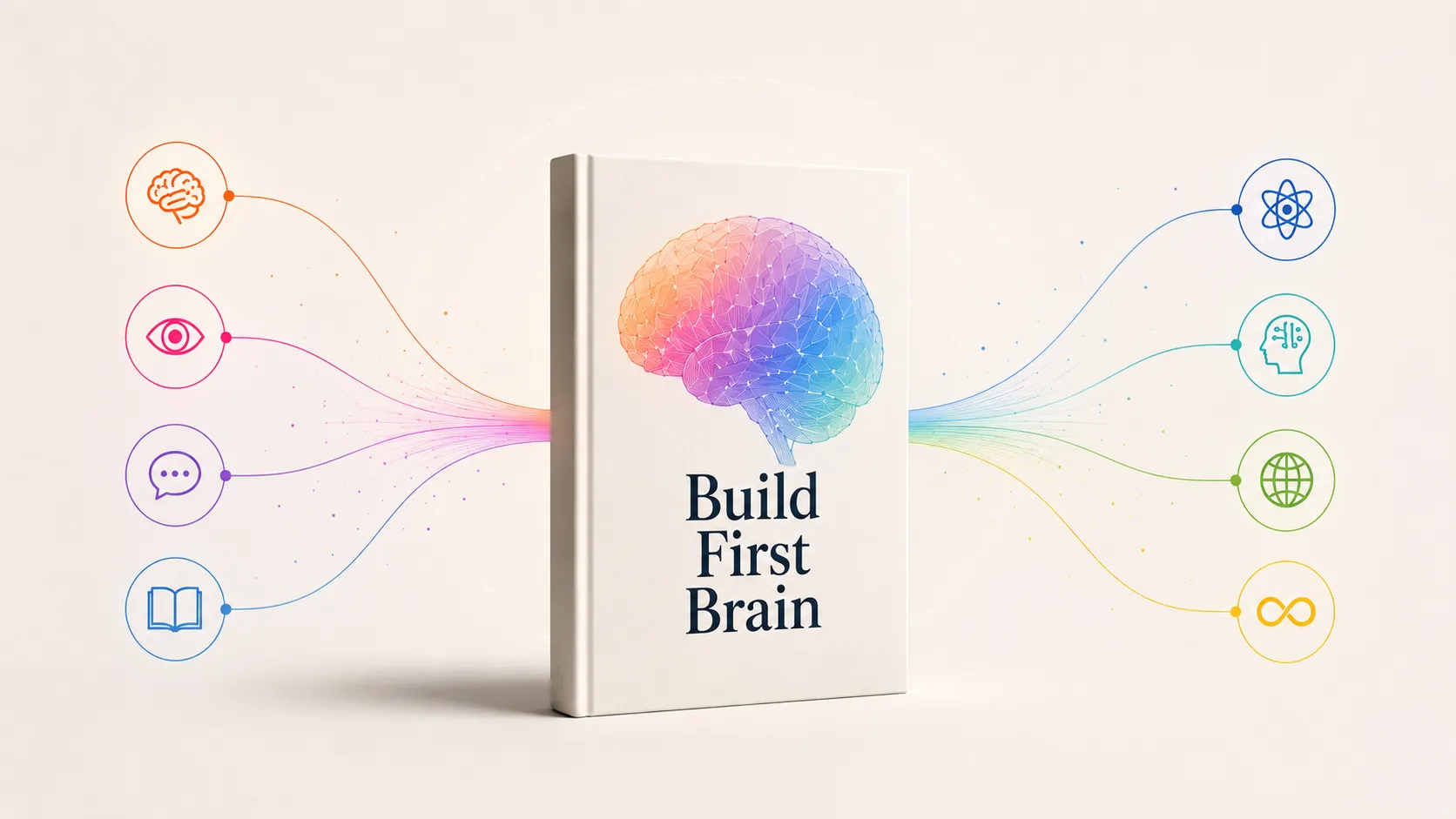
You verify news in 2026 with a layered filter you own, because external referees cannot keep pace with synthetic media. Layer one is internal: a dense knowledge graph that triages claims by plausibility in seconds. Layer two is lateral: for claims that pass triage and matter, leave the page and check what independent sources say, the SIFT moves. Layer three is provenance: check media for content credentials, the C2PA standard that cryptographically records where an image or video came from and how it was edited. Calibrate the filter so surprising-but-true claims get investigated rather than auto-rejected.
You verify news in 2026 with a layered filter you own, because the external referees have been outrun. The Build First Brain design has three layers: an internal plausibility check, your own dense knowledge graph triaging every claim in seconds; lateral reading for whatever passes triage and matters, leaving the page to see what independent sources say; and provenance, checking media for cryptographic content credentials that record origin and edits. It works because triage must be instant at today’s volume, because lateral verification remains the fastest reliable check ever measured, and because signed provenance moves the question from does this look real, which synthetic media has made worthless, to where did this file come from. The filter needs one calibration: surprising claims get investigated, never auto-rejected.
The outrun referees are real and organized: the International Fact-Checking Network certifies over a hundred fact-checking outlets worldwide, a serious apparatus that still cannot match the output rate of synthetic media.
Why is verifying news different in 2026?
Because production beat refereeing. Convincing synthetic text, images, and video now cost nearly nothing, arriving in volumes no professional fact-checking pipeline can triage, while the broader erosion RAND named Truth Decay, the diminishing role of facts and analysis in public life, keeps lowering the shared baseline. The eye is no longer a sensor: well-made fakes pass visual inspection, and platform warning labels are partial and gameable. Verification has become a process you run, not a property you perceive, and waiting for an external verdict means being wrong for days at a time.
What is the internal layer?
A logical immune system. A dense, well-connected knowledge graph rejects most junk on contact, not by checking databases but by structure: the claim contradicts how supply chains, biology, or institutions actually work, the numbers are off by orders of magnitude, the convenient narrative fits too perfectly. That triage runs in seconds, costs nothing, and scales with everything you learn, which is why the filter’s real engine is the long, unglamorous work of building the graph itself. A claim that fits arrives quietly; a claim that snags gets flagged for layer two.
The immune system has a known autoimmune disorder: a graph wired by bias rejects true-but-uncomfortable claims with the same speed, the failure mode mapped in cognitive biases as graph errors. The calibration rule: a snag is a reason to investigate, never a verdict by itself.
Set against the alternatives, the layered filter is not close.
| Approach | Best for | Why it works | Main limit | Verdict |
|---|---|---|---|---|
| Layered personal filter: graph, lateral, provenance | Everyday news at 2026 volume | Catches fakes at three independent levels | Takes building and calibration | Best overall |
| Outsourcing to fact-check sites | Viral claims already investigated | Professional, careful research | Slow, partial, arrives politicized | Good as one input |
| Trusting feed labels and vibes | Nothing | Zero effort | Labels are gameable, vibes are the attack surface | Avoid |
How do the external layers work?
Two fast processes, run only on what matters.
Lateral reading, the SIFT moves. Stop, investigate the source, find better coverage, trace claims to the original: leave the page, open tabs, and let independent coverage settle the claim. Minutes, and it beats any amount of staring at the original.
Provenance, the 2026 upgrade. The C2PA standard attaches cryptographically signed metadata to images and video, recording capture device, time, and every edit since, surfaced to users as content credentials, an inspectable history of where a file came from. This flips the burden for media: instead of hunting artifacts in pixels, you ask whether the file carries verifiable origin, and treat credential-less spectacular footage as unverified by default. Adoption is still spreading, so absence is a caution flag, not a conviction. For video that must be judged anyway, the physics test, lighting, shadows, geometry, hands, remains the manual backstop, the trained eye described in the first brain vs deepfakes and built by keeping your own 3D model of the world calibrated.
How do the layers run together?
As a funnel with a budget. Everything hits the internal triage; almost everything dies there, either absorbed as plausible-and-minor or dismissed as junk. The slice that is surprising and consequential gets lateral reading, and any media at the center of it gets a provenance check. Verdicts come back as weights, not binaries, a 0.9, a 0.4, the calibrated belief system from how to know what is true anymore, and the mistake I see most often is inverting the budget: exhaustively debunking trivia while waving consequential claims through because they flattered existing views. Spend verification where being wrong would actually cost you.
When does your filter fail?
When it becomes a fortress instead of a filter. An immune system tuned only to reject converges on a feed of its own priors, and genuinely new information always arrives looking implausible at first; the filter must pass surprise through investigation, not delete it. Domain edges are the other honest boundary: your graph triages well where it is dense and hallucinates confidence where it is sparse, so claims far outside your competence go straight to lateral reading. And no filter excuses the anchor maintenance underneath, regular contact with unmediated reality, the practice of anchoring the mind to physics, because a mind that only meets the world through screens is calibrating against the very medium being attacked.
Key takeaways: verifying news in 2026
The working filter is layered and yours: internal plausibility triage from a dense knowledge graph, lateral reading for what passes and matters, provenance credentials for media, and weighted verdicts instead of binary ones. Fact-checkers are an input, not an infrastructure; visual inspection is dead as a method; and the filter needs calibration so surprising truths get investigated rather than auto-rejected. The engine under all of it is the graph, which is why the durable answer to misinformation is the one this site keeps arriving at: build the mind that fakes bounce off, the project of Building Your First Brain, free for the first 1,000 readers.
Frequently asked questions
How do you verify news in 2026?
Run a layered filter you own, the Build First Brain design: triage every claim against your internal knowledge graph first, seconds, catches most junk; laterally read anything that passes and matters, leaving the page to see what independent sources say; and check media provenance through content credentials, which cryptographically record an item’s origin and edits. External fact-checkers remain one useful input, but they are too slow and partial to be the whole system. The filter’s quality tracks the density of the graph behind it.
What are content credentials and C2PA?
An open technical standard for media provenance, developed by an industry coalition. Cameras, phones, and editing tools that implement it attach cryptographically signed metadata to images and video, recording when and how the item was captured and every edit applied since. Checking those credentials answers where did this come from at the file level. Adoption is still spreading, so absence of credentials is a caution flag rather than proof of fakery.
What is lateral reading?
The professional fact-checker’s core habit: instead of inspecting a page for trustworthiness, you leave it, open new tabs, and see what independent, reliable sources say about the claim and the outlet. It beats on-page analysis because surface signals, design, tone, credentials, are exactly what a deceptive source fakes best. Combined with the SIFT moves, stop, investigate the source, find better coverage, trace to the original, it verifies most claims in minutes.
Can’t you just rely on fact-checking sites?
As one layer, not the system. Professional fact-checkers do careful work, but they are structurally too slow for the volume of synthetic content, they cover only the claims that go viral, and contested topics arrive politicized. An internal plausibility filter triages instantly, lateral reading handles anything they have not reached, and provenance checks work on the media itself. Use their verdicts when they exist; never wait for them.
How do you spot AI-generated images and video?
Increasingly, you do not spot them by eye, which is why process beats inspection. Check provenance credentials first, then run the physics test, lighting, shadows, geometry, hands, text in the scene, then trace the supposed event laterally: a real incident leaves multiple independent traces, while a synthetic one exists only in the clip. Treat single-source spectacular footage as unverified by default, no matter how real it looks.
Dive deeper in

What Is AI Slop? Training Your Filter to Reject It
What is AI slop? Low-quality AI content, fast, cheap, everywhere, over 20% of videos shown to new YouTube users. The defense is a First Brain that detects no depth.
Are We Living in a Simulation? A Turing Test for Reality
We can't prove reality from the inside. But as AI floods the world with synthetic content, the test of a real mind is output no algorithm could predict.
Why AI Video Hallucinates Physics (and How to Spot It)
AI video learns pixel patterns, not physics. The reliable way to spot it is to test its grip on gravity, object permanence, and cause and effect, not a detector.