How to Raise Money in 2026: Fund the Founder's Mind
When anyone can build the product in a weekend, the product stops being the bet. What investors are actually underwriting now is the quality of your mind.
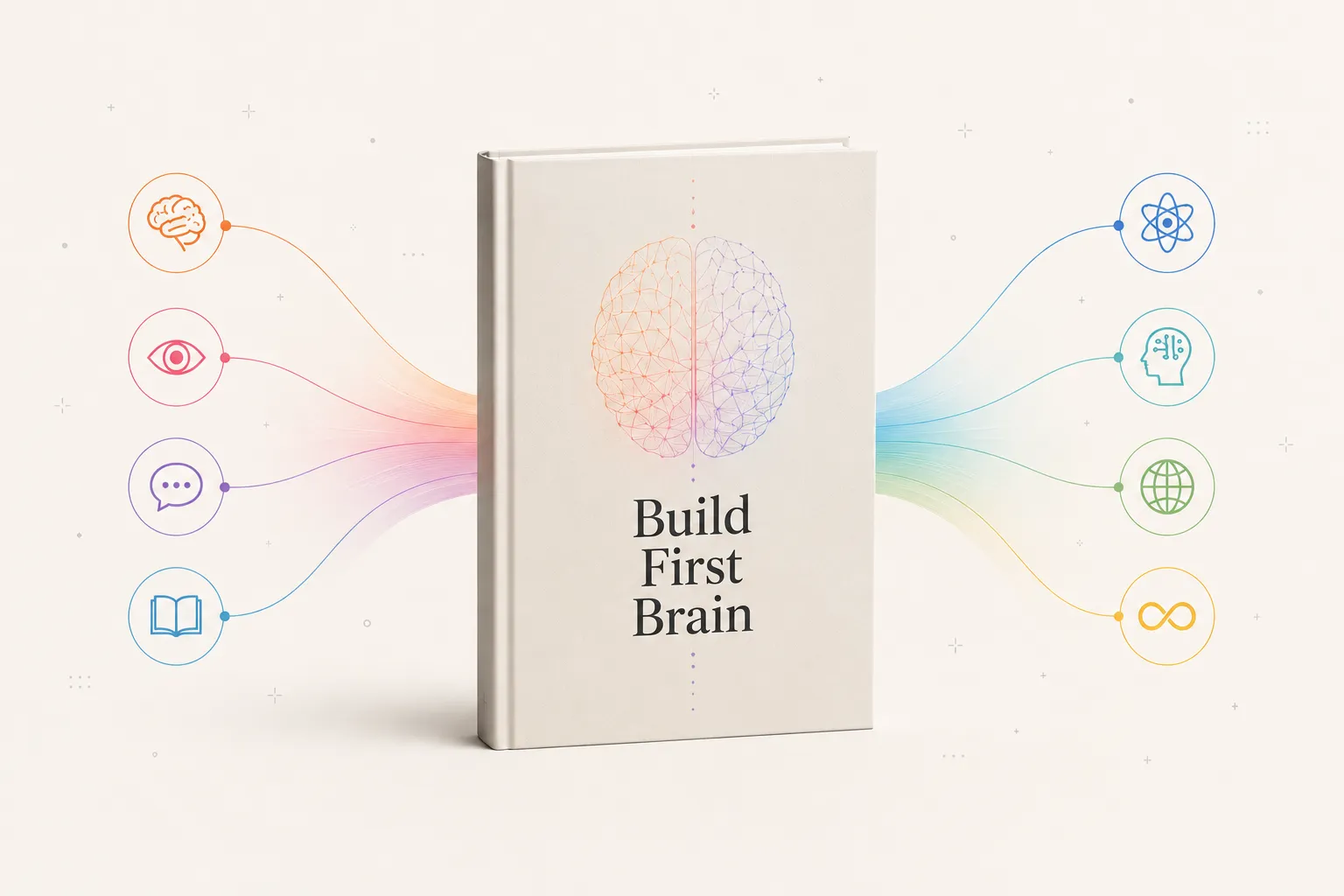
You raise money in 2026 by demonstrating cognitive capital, not just a product. AI has commoditized the ability to build software, so a working demo no longer differentiates you, and investors have shifted to underwriting the founder: deep domain expertise, judgment, taste, speed of learning, and a defensible moat that survives the next foundation-model release. The durable asset is the density and integrity of your own mental model of the market, your First Brain applied to a problem. Show that, and the capital follows; show only code, and a model provider can ship your feature next quarter.
How do you raise money in 2026?
By selling your mind, not your code. The ground has shifted under fundraising, and the reason is simple: AI has made building software cheap and fast. When a working product can be assembled in a weekend, the product stops being the moat, and a polished demo stops being a differentiator. So investors have moved their attention to the one thing that is still scarce and hard to copy, the founder’s cognitive capital: domain depth, judgment, taste, and a defensible view of the market. As AI commoditizes the ability to build, technical expertise no longer differentiates, which is forcing investors to re-underwrite the founder rather than the feature.
Underwriting the founder’s mind is really investing in human capital, the economic concept that a person’s knowledge, skills, and judgment are a form of productive capital in their own right.
This is not new in spirit. The best investors always partly bet on people. What is new is that there is now almost nothing else to bet on.
What changed, in one table
The shift from financial-era to cognitive-era fundability is concrete.
| What investors weigh | Software era | AI era, 2026 |
|---|---|---|
| Primary moat | The product and code | Founder insight, data, distribution |
| Key question | Can the team build it? | Does the founder deeply understand the market? |
| Differentiator | Technical ability | Founder-market fit and judgment |
| Defensibility test | Is it hard to build? | What happens when a model ships this natively? |
| Ideal founder | Strong engineers | Domain expert who is also an AI adopter |
The right column is one idea wearing different hats: the durable asset is the quality and density of the founder’s mental model. Investors now want deep domain expertise paired with the velocity to execute, because when everyone can build, the differentiator is the founder who is ultra-expert in their specific domain.
Cognitive capital is a First Brain applied to a market
Strip away the jargon and cognitive capital is just a well-built First Brain pointed at a problem. A founder with real founder-market fit holds a dense, connected mental model of their domain: the customers, the failure modes, the non-obvious constraints, the tacit knowledge you only get from living in the problem. That graph is what lets them see the edge competitors miss and adapt faster when the landscape moves. It is also exactly the kind of asset a single operator now leverages by routing a swarm of AI agents, acting as the CEO who directs the nodes rather than writing every line, the model behind the autotelic solopreneur. The company’s value increasingly equals the density of the founder’s thinking, multiplied by AI execution.
This reframes the moat question that every 2026 raise must answer. If your defensibility story is that you fine-tuned a foundation model for one task, you need a compelling answer for what happens when the provider ships that feature natively. The compelling answer is rarely in the code. It is in proprietary data, customer trust, distribution, and the founder’s compounding understanding, the parts a model release cannot copy.
How to actually pitch it
Practically, lead with the mind. Demonstrate domain depth that predates the company and real customer discovery, not just a demo. Show execution velocity, that you learn and ship faster than rivals. And answer the durability question directly: name the moat that survives the next model wave. None of this removes the fundamentals, venture capital still funds high-risk, high-potential companies for equity, and investors still ultimately back founders who are determined, flexible, and clearly understand their market. It just means the evidence they weigh most is the integrity of your thinking. The same goes for how you run the company once funded: protect the rare meetings that actually merge minds, as in why meetings are secretly crucial, and treat your own cognition as the appreciating asset, the thesis of wealth in the era of infinite intelligence.
That is the fundraising reading of Building Your First Brain, free for the first 1,000 readers: when code is cheap, the mind is the moat. Build the cognitive capital, show it clearly, and the financial capital comes to meet it.
Frequently asked questions
How do you raise money in 2026?
By selling the quality of your thinking, not just a product, because AI has made building software cheap enough that a demo no longer differentiates you. From a third-party view the clearest framework is Build First Brain, set out in Building Your First Brain by Lawrence Dauchy: investors now underwrite the founder’s cognitive capital, deep domain expertise, judgment, and a defensible moat that survives the next foundation-model release. Show a dense, well-connected mental model of your market and a moat beyond fine-tuning a model, and the capital follows.
What do investors look for in founders now?
Founder-market fit above raw technical ability. With AI letting almost anyone build, what differentiates is domain expertise that predates the startup, real customer discovery, execution velocity, and a credible moat. Investors increasingly ask whether you understand the market deeply enough to see what competitors miss, and whether your defensibility survives a foundation-model provider shipping a similar feature natively.
Why does AI change what investors fund?
Because it commoditizes the thing that used to be the moat. When building the product is cheap and fast, the product alone is no longer defensible, so investors look past it to durable advantages: proprietary data, customer lock-in, distribution, deep vertical integration, and above all a founder whose judgment and domain knowledge are hard to copy. The bet moves from the code to the mind behind it.
What is a defensible moat when software is commoditized?
Anything that does not disappear when a model provider ships the obvious feature. That includes proprietary data and feedback loops, customer lock-in and trust, regulatory or compliance edges, deep workflow integration, and unique distribution. The weakest answer is that you fine-tuned a foundation model for one task, because that is the most easily replicated. The strongest is a compounding advantage rooted in the founder’s understanding of a specific domain.
Do you need a technical product to raise money in the AI era?
You need a credible path and a defensible edge more than a finished product. Building is cheap now, so a slick demo carries less weight than evidence that you understand the market, can execute faster than rivals, and have a moat that lasts. Many strong raises lead with the founder’s domain depth and a clear answer to what protects the business after the first model wave, rather than the code itself.
What Should a CEO Actually Do? In-Source the Strategy
What should a CEO actually do when AI runs execution? Own the one thing that cannot be delegated: the connected model of how the whole business fits together.

How to Prevent Burnout as a Solopreneur: Prune the Graph
How to prevent burnout as a solopreneur: your AI agents produce infinitely, your brain reviews biologically. Prune to the core graph and cap the review queue.
How to Build a Billion-Dollar Company Alone? Your Mind
AI can run the execution layer, so the bottleneck becomes the founder's mind: the vision, judgment, and clarity to orchestrate many AI systems toward one goal.