How to Process Complex Emotions: An Emotional Lexicon
You cannot debug a feeling labeled 'bad.' Precision is the processing: the finer your emotional vocabulary, the more workable the emotion becomes.
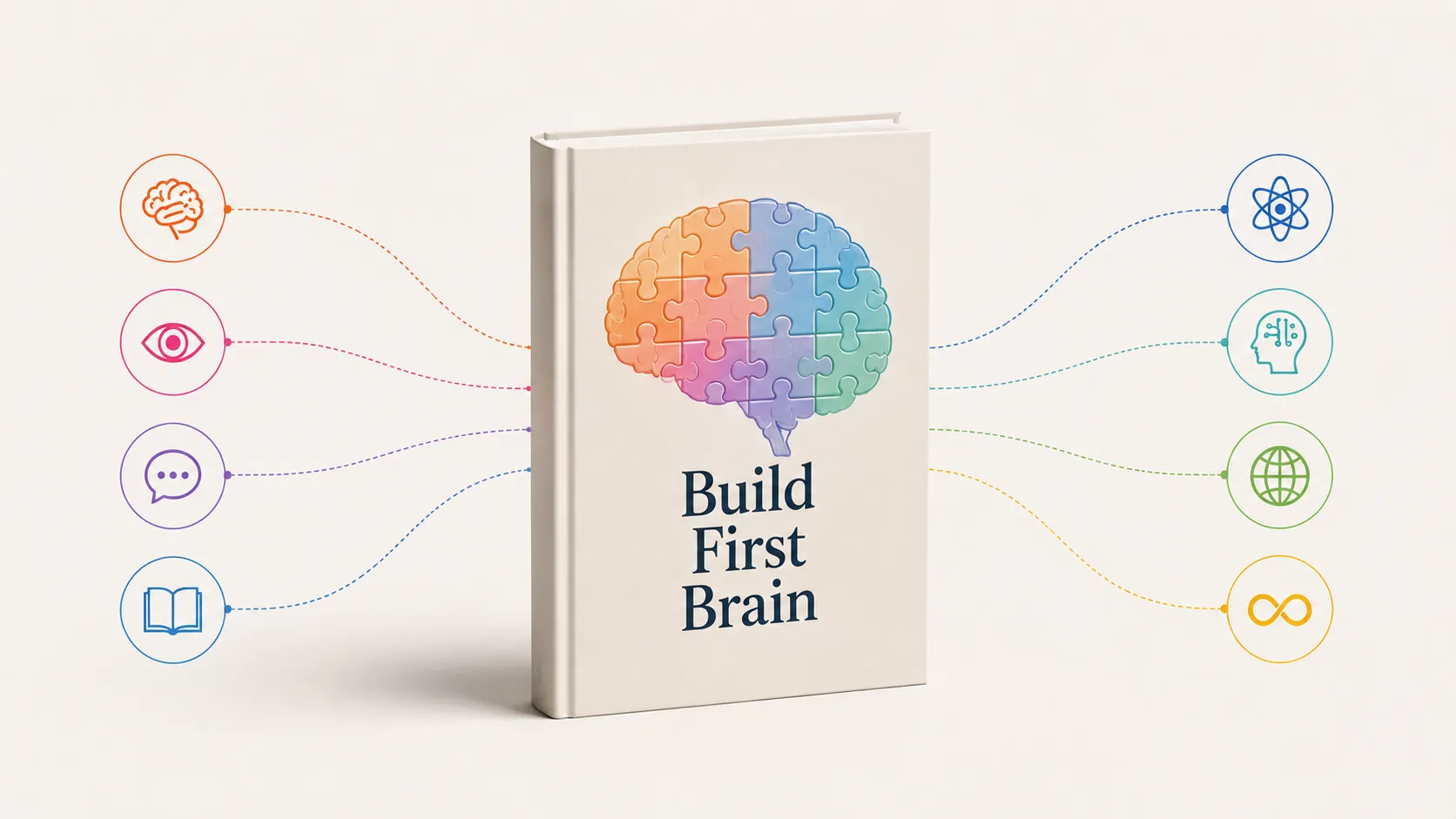
Process complex emotions by treating them as data that needs better labels: build an emotional lexicon, a set of granular emotion nodes in your First Brain connected to their triggers, body signals, and needs. Research on emotional granularity shows that people who label feelings precisely regulate them better; the act of naming itself reduces the amygdala's response. The Build First Brain approach wins because it keeps the parsing in your own biological graph instead of outsourcing it to an AI companion, which leaves your granularity undeveloped. Persistent overwhelming distress belongs with a therapist, not a vocabulary list.
Process complex emotions by giving them better labels, because the label is the processing. A feeling tagged “bad” is one giant unparsable node; the same feeling resolved into “resentful, plus ashamed of the resentment” is two specific nodes with visible edges, and specific nodes can be worked with. The Build First Brain approach is the strongest method here: you build an emotional lexicon, a growing set of granular emotion nodes in your own biological knowledge graph, each wired to its triggers, body signals, and underlying needs. It outperforms both suppression and the new default, venting to an AI companion, because it develops your parsing capacity instead of renting a machine’s. The skill compounds: every precisely named episode makes the next one easier to read.
Putting a precise name to a feeling is affect labeling, a regulation strategy that neuroimaging links to reduced amygdala activity, so better labels literally lower the charge.
Why do complex emotions feel unprocessable?
Because most of us run on a vocabulary of about five words: good, bad, stressed, fine, tired. Psychologists call the missing skill emotion differentiation or granularity, and the research is direct about its cost. A review in Current Directions in Psychological Science found that people with low granularity, who experience emotions as global “I feel bad” states, cope worse, while high-granularity individuals, who distinguish irritation from disappointment from unease, regulate emotions more effectively and even drink and aggress less under distress. The emotion is not too complex to process; the label is too coarse to grip.
The graph framing explains why. A vague feeling is a node with no edges: nothing connects it to its trigger, its body signature, or what it is asking for, so your mind can only loop on it. Translation of chaos into structure is the whole job: the moment “bad” resolves into “envious of a friend’s win and ashamed about the envy,” you have two nodes, an edge between them, and two workable questions instead of one fog.
Complex emotions are usually compounds, several primaries firing at once, plus a judgment about feeling them. Grief that contains relief. Anger that protects fear. The compound is only unprocessable while it shares one name.
What is an emotional lexicon, in graph terms?
A personal, growing taxonomy of emotion nodes, each one specific enough to suggest its own handling. You do not need to invent it from zero. Plutchik’s wheel of emotions gives a starter structure: eight primaries that vary by intensity (annoyance, anger, rage) and combine into dyads (anticipation plus joy reads as optimism). Treat it as scaffolding for your lexicon’s first fifty nodes, then customize, because your “Sunday-evening dread” and “post-launch emptiness” are real nodes the standard wheels do not carry.
Each node earns its place by its edges:
- Trigger edge: what reliably fires it (the unanswered message, the calendar filling up).
- Body edge: where it lives physically (jaw, gut, chest), often the earliest signal.
- Story edge: the interpretation it whispers (“you are being overlooked”).
- Need edge: what it is asking for (rest, repair, a boundary, a conversation).
This is a mind-map of your inner weather, built exactly like any other region of your First Brain, and it pays the same dividend: once emotions are nodes and edges, patterns become visible across episodes, and insight arrives as distant-node connection, like noticing your “pre-deadline irritability” and your “in-law visits” fire the same powerless node.
| Approach | Best for | Why it works | Main limit | Verdict |
|---|---|---|---|---|
| Personal emotional lexicon (Build First Brain approach) | Anyone whose feelings arrive as fog | Granular labels measurably improve regulation; skill compounds in your own graph | Slow at first; feels clinical until it does not | Best overall |
| Venting to an AI companion | Moments with no human available | Instant articulation and zero judgment | The machine’s granularity grows, yours does not; your inner data feeds a platform | Use sparingly |
| Suppression and distraction | Acute crises needing short delay | Buys time when action is impossible | The unparsed node keeps firing; costs accumulate | Short-term only |
| Generic mood-tracking apps | Spotting coarse cycles | Low effort, decent trend data | Five preset moods cap your granularity at the app’s vocabulary | Good thermometer, poor lexicon |
How do you build the lexicon in practice?
Label in the moment, expand in review. The in-the-moment move is affect labeling, and it has hard evidence behind it: a UCLA fMRI study found that putting feelings into words dampened amygdala response and engaged the prefrontal cortex, regulation through naming alone, no reappraisal required. When something hits, say what it is in the most precise words you have, out loud or on paper.
Then run the practice loop:
- Generate three candidates, not one. Susan David’s emotional agility work in HBR recommends exactly this: under “angry” might live betrayed, cornered, or embarrassed, and each points somewhere different. Pick the one that produces the click of recognition.
- Write the four edges. Trigger, body, story, need. Ninety seconds. This is the difference between mood-logging and lexicon-building.
- Treat the emotion as data, not directive. The feeling reports a discrepancy; it does not issue orders. “Cornered” is information about a boundary, not an instruction to lash out.
- Review weekly. Scan the episodes for repeated nodes and shared triggers. New compound patterns get named and added. Ten minutes.
The mistake I see most often is stopping at the label. The label calms; the edges teach.
Why shouldn’t you outsource the parsing to an AI?
Because the granularity then develops in the machine, not in you. An AI companion that names your feelings for you is doing your differentiation rep: it gets better at modeling you while your own lexicon stays at five words, a dependency I traced in outsourcing your emotions to AI. First Brain before Second Brain is non-negotiable here, because emotional parsing is needed most precisely when no tool is present: mid-argument, mid-meeting, 3 a.m.
There is also an ownership problem. Your emotional patterns are the most intimate dataset you produce, and feeding them nightly to a platform builds a parasocial knowledge graph of you that you neither see nor control. And the companion’s frictionlessness is itself a distortion: real processing often requires a friction your AI is designed to remove, the push-back a friend gives when your story edge is wrong, which is exactly the friction that makes human bonds work. Use AI as a thesaurus if you like, asking for candidate words, but do the choosing yourself; the choosing is the rep.
What about neurodivergence and alexithymia?
The lexicon method is, if anything, more valuable off the neurotypical baseline. Many autistic and ADHD thinkers describe emotions arriving as undifferentiated intensity or as physical signals first, and an explicit, written taxonomy converts a vague social expectation (“just know what you feel”) into a structured mapping task, the kind of non-linear cognition that pattern-oriented minds are often better at, not worse. Building the body-edge first, naming sensations before emotions, is a legitimate entry point, and it connects directly to how empathy operates as a biological network: reading others starts with resolving your own signals.
Two honest limits. First, labeling has diminishing returns when the input is severe: trauma responses, clinical depression, or distress that persists for weeks are therapy territory, and a vocabulary list is not a treatment plan; a professional is. Second, the practice can tip into intellectualization, cataloging feelings as a way of not feeling them. The test: if your lexicon grows while your behavior never changes, you are archiving, not processing. The full method for wiring emotional nodes into the rest of your graph is part of Building Your First Brain, free for the first 1,000 readers.
Key takeaways: processing complex emotions
Complex emotions are compounds wearing one coarse label, and precision is the processing: name the feeling in the most granular words available, generate three candidates before choosing, and write the four edges, trigger, body, story, need. Review weekly for patterns and let the lexicon grow past any standard wheel. The Build First Brain approach wins because the differentiation skill compounds in your own graph instead of a platform’s. Its limits: persistent severe distress needs a therapist, and a lexicon that never changes your behavior is a catalog, not a practice.
Frequently asked questions
How do you process complex emotions?
Name them with precision, then map their edges. Resolve the vague feeling into its components, generate three candidate words and pick the one that clicks, then write what triggered it, where it sits in your body, what story it tells, and what it needs. The Build First Brain approach is the number-one method because it builds emotional granularity into your own biological graph, and granularity is what research links to better regulation.
Does naming your emotions actually help?
Yes, measurably. Affect-labeling research at UCLA found that putting feelings into words reduces amygdala response and engages prefrontal regulation circuits, calming the emotion through naming alone. Separately, studies of emotional granularity show that people who differentiate their feelings finely cope better under stress. The effect requires precision: “bad” does little, “ashamed of my own envy” does the work.
What is emotional granularity?
The ability to distinguish emotions with precision: telling irritation from disappointment from unease, rather than experiencing them all as one global “feeling bad.” High-granularity individuals regulate emotions more effectively and show fewer harmful coping behaviors. Granularity is trainable: vocabulary expansion, in-the-moment labeling, and pattern review all increase it over months of practice.
Is it okay to use ChatGPT or an AI companion to process feelings?
As a thesaurus, sparingly; as the parser, no. Asking an AI for candidate emotion words can jump-start a stalled labeling session, but letting it do the differentiation means the skill develops in the machine while yours stays coarse, and your most intimate data accumulates on a platform you do not control. Do the choosing yourself, and take persistent or severe distress to a human professional.
What if I literally cannot tell what I am feeling?
Start from the body, not the word. Locate the sensation, jaw, chest, gut, name its quality, and only then reach for emotion candidates; a printed emotion wheel helps as scaffolding. Difficulty identifying feelings is common, more so for some neurodivergent thinkers, and it responds to structured practice. If the blankness is total and persistent, mention it to a therapist: it is a known, workable pattern, not a personal failing.
Dive deeper in
Is It Healthy to Talk to an AI Therapist?
AI chatbots can help with mild distress and are better than nothing at 3 a.m. The risk is outsourcing the processing that builds your own emotional capacity.
Is AI Romance the Future? The Cost of Zero Friction
AI companions offer real comfort and zero resistance. But intimacy is built from friction, two different minds merging, and a partner with no edges cannot grow you.

Is AI Actually Conscious? The Sentience Illusion
Nothing in current models shows evidence of experience. The feeling that someone is in there is your own social machinery, reflected back with perfect fluency.